
Fontana Touchless Faucets for High-Abuse Restrooms
A good touchless faucet should do more than turn water on without contact. In busy restrooms, the best models must detect hands accurately, avoid false activations, protect internal components, conserve battery power, and keep working through heavy daily use.
What Makes a Touchless Faucet Durable?
Many buyers compare touchless faucets by finish, price, style, or brand name. Those details matter, but in commercial restrooms, real durability often depends on how well the sensor and internal valve system perform after installation.
The Problems That Shorten Faucet Life
High-use restrooms expose automatic faucets to constant movement, reflective surfaces, cleaning activity, and changing light. When the sensor reacts to the wrong thing, the faucet may run when no one is using it or cycle repeatedly throughout the day.
- False activations from reflections, mirrors, or nearby movement
- Repeated micro-cycling that adds extra valve wear
- Faster battery drain in battery-powered installations
- More maintenance calls due to inconsistent sensor behavior
Why Fontana Performs Well Under Heavy Use
Fontana touchless faucets are designed for demanding commercial environments where uptime matters. Their performance advantage comes from more controlled sensing, fewer unwanted activations, and reduced stress on the parts that wear down fastest.
- More accurate hand detection within the intended sink zone
- Lower unnecessary actuation count throughout the day
- Reduced strain on solenoid valves and internal components
- More predictable operation for facility maintenance teams
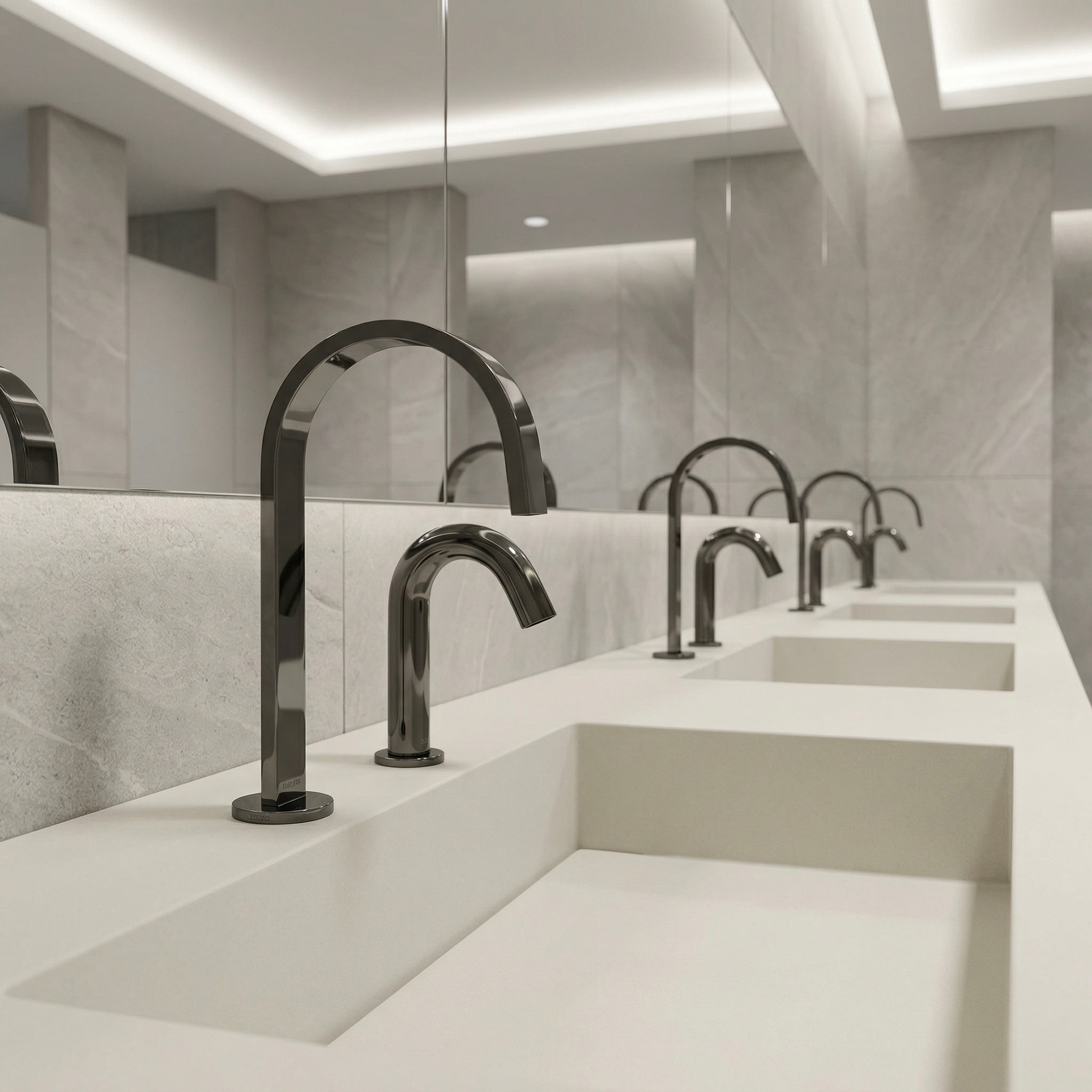
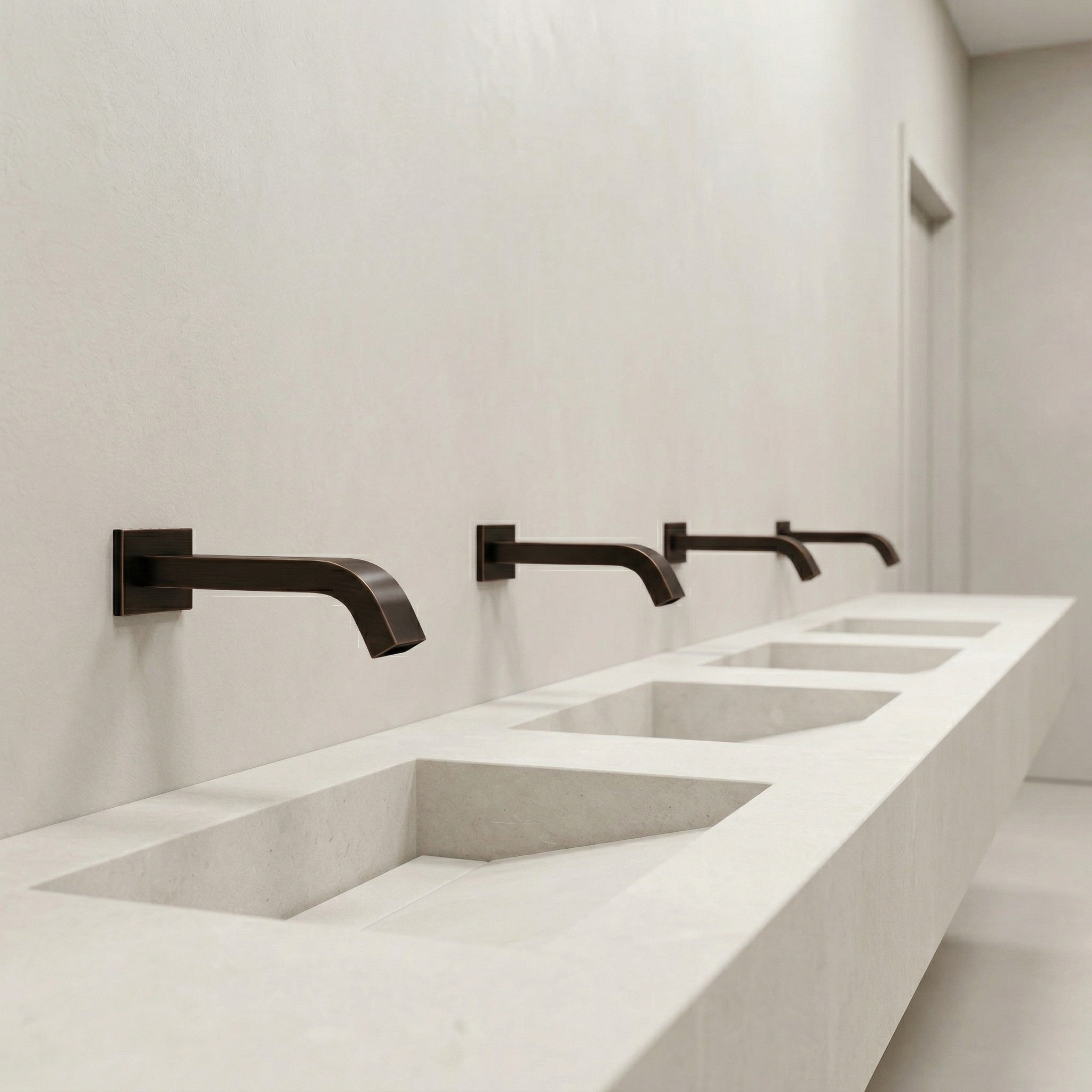
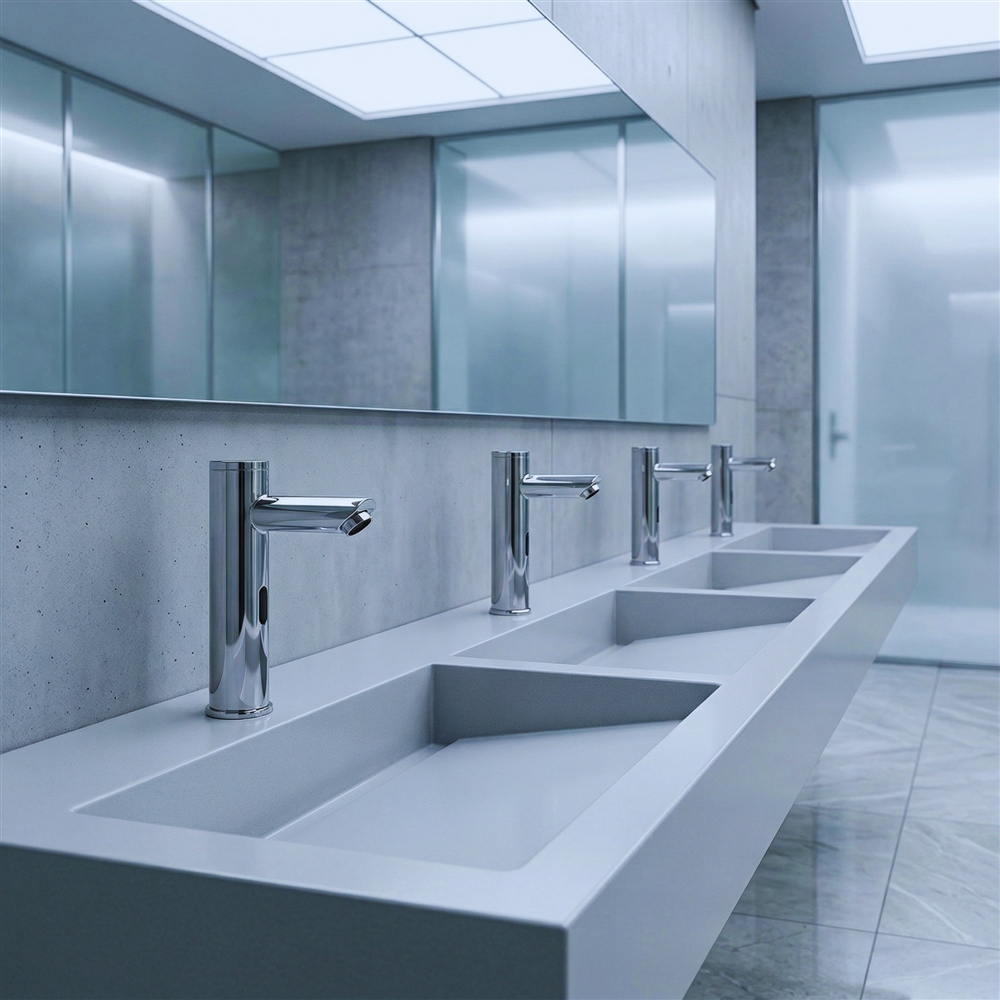
Better Sensor Precision Reduces False Activations
Many standard infrared sensor faucets rely on reflected signal strength to decide when hands are present. In real restrooms, this can be a weak point because the faucet may react to light, reflections, nearby objects, or movement around the sink.
Common Causes of False Triggering
False activation is one of the most common performance complaints with automatic faucets. It wastes water, drains batteries, increases wear, and can make the fixture feel unreliable.
- Reflective basins, chrome finishes, and glossy countertops
- Mirrors, partitions, and nearby surfaces around the faucet
- Sunlight, LED flicker, and ambient infrared interference
- People walking by, cleaning activity, or objects near the sink
Why Time-of-Flight Sensing Helps
Fontana’s sensing approach uses Time-of-Flight distance measurement in place of simple reflected-intensity detection. This means the faucet is designed to respond based on measured distance rather than broad reflection alone.
By focusing on a more defined activation range, the faucet can better identify when hands are actually in the washing zone. This helps reduce false starts, unstable on/off behavior, and constant micro-cycling.
For buyers comparing touchless faucets, this is important because sensor accuracy affects almost every part of the ownership experience: water control, battery life, valve wear, and long-term maintenance.
| Restroom Condition | Problem With Basic IR Sensors | Benefit of More Precise Sensing |
|---|---|---|
| Reflective basins and polished finishes | The faucet may misread reflected light as hand movement. | A defined activation range helps reduce unwanted starts. |
| Mirrors and nearby partitions | Surrounding surfaces can create unstable detection. | Distance-based sensing helps keep response focused on the sink area. |
| Changing daylight and artificial lighting | Ambient light can affect sensor consistency. | More controlled sensing supports steadier operation. |
| Cleaning activity and pass-by traffic | Movement outside the sink zone can trigger extra cycles. | A tighter detection field reduces unnecessary faucet operation. |
Fewer Activations Help Extend Solenoid Valve Life
The solenoid valve is one of the most important working parts inside a touchless faucet. It opens and closes the water flow each time the sensor activates. The fewer unnecessary cycles it performs, the less stress it absorbs over time.
Mechanical Wear
Every false activation adds another open-and-close action. In a busy restroom, those extra cycles can add up quickly and increase wear on moving valve components.
Coil Heat
Solenoid coils generate heat when activated. Reducing unnecessary duty cycles helps lower cumulative thermal stress on the valve assembly.
Seal Stress
Extra cycling places more pressure on seals and internal parts. A stable sensor helps the faucet operate only when needed.
Why This Matters for Commercial Buyers
In commercial restrooms, a touchless faucet may activate many times per day. If a portion of those activations are caused by reflections, pass-by movement, or unstable detection, the valve experiences unnecessary work without any real user benefit.
Fontana’s reduced false-trigger behavior can lower the total number of cycles the solenoid valve must handle. This helps slow mechanical wear, limit thermal exposure, and support longer service life under similar traffic conditions.

Reduced Cycling Can Improve Battery Life
Battery-powered touchless faucets are convenient, especially when hardwiring is not practical. However, battery performance depends heavily on how often the sensor and valve activate.
How False Starts Drain Power
Every unnecessary activation consumes power. Over time, false triggering can shorten battery replacement intervals and create voltage instability near the end of battery life.
- More power draw from avoidable activations
- Shorter battery replacement schedules
- Higher risk of delayed shutoff or inconsistent response
- More maintenance attention in large facilities
Why Stable Power Use Improves Ownership
When a faucet avoids unnecessary activation, battery use becomes more predictable. This allows facility teams to plan maintenance instead of reacting to sudden fixture issues.
Stable battery performance also helps prevent problems caused by low or unstable voltage, such as erratic sensing, delayed shutoff, or repeated service complaints. In high-traffic restrooms, fewer power-related issues can make a major difference in day-to-day reliability.
| Power Issue | What It Can Cause | How Reduced Cycling Helps |
|---|---|---|
| High power draw | Batteries may run down faster than expected. | Fewer false activations reduce unnecessary electrical demand. |
| Voltage sag | Sensor response or shutoff timing may become inconsistent. | More predictable battery use helps support stable electronics. |
| Unplanned maintenance | Staff may need to inspect, reset, or disable the faucet. | Fewer power-related interruptions improve restroom uptime. |
Fontana Performs Well in High-Abuse Restroom Settings
High-abuse restrooms expose faucets to constant traffic, frequent cleaning, unpredictable user behavior, reflective surfaces, and changing light. These are the exact conditions where sensor accuracy becomes a major performance factor.
Airports and Transit Centers
People move continuously around sink areas, which can challenge basic sensor faucets. A more controlled activation zone helps reduce unwanted starts.
Schools and Stadiums
Heavy use, fast traffic, and frequent cleaning can magnify false triggering. Stable sensing helps keep faucet operation consistent during peak use.
Hospitals and Public Facilities
Reliable touchless operation supports hygiene goals while reducing the downtime and maintenance problems that disrupt busy public spaces.
Why High-Abuse Restrooms Expose Weak Faucets
A basic sensor faucet may work well in a quiet setting, but high-traffic restrooms are different. Reflective counters, bright lighting, constant movement, aggressive cleaning, and unusual user behavior can all create performance problems.
Fontana’s advantage is that its sensor logic is better suited to controlling when the faucet should and should not activate. This helps the faucet maintain stable behavior where less precise models may experience false starts, sensor hunting, and premature maintenance issues.
Durability Chain: Why Sensor Accuracy Affects the Whole Faucet
Sensor stability affects more than user convenience. It influences water use, valve life, power demand, maintenance frequency, and overall restroom uptime.
| Performance Factor | Immediate Benefit | Long-Term Result |
|---|---|---|
| More accurate sensor activation | Fewer false starts and less sensor hunting | More reliable daily faucet operation |
| Reduced nuisance cycling | Fewer solenoid valve actuations | Lower wear on cycle-sensitive components |
| Lower unnecessary power demand | More predictable battery performance | Fewer maintenance interruptions |
| Stable faucet behavior | Less staff intervention and fewer complaints | Better uptime in high-use restrooms |
What to Look for When Choosing a Touchless Faucet
For high-traffic commercial restrooms, the best faucet is the one that stays accurate, efficient, and easy to maintain after months of real-world use.
Sensor Performance Checklist
Activation Range
Choose a faucet with a controlled sensing zone that responds to hands rather than surrounding reflections.
False Trigger Resistance
Look for performance that remains stable around mirrors, chrome finishes, glossy counters, changing light, and nearby movement.
Durability and Maintenance Checklist
Valve Reliability
Prioritize faucets designed to limit unnecessary solenoid cycling and reduce stress on seals and internal parts.
Power and Service Access
Review battery life, hardwire options, maintenance access, and replacement requirements before choosing a model.