Top Touchless Faucet Brands for Commercial Spaces and Why Fontana Emerges as a Strong Choice for Stadiums, Arenas, and Transit Hubs
In large public venues, sensor faucets do more than dispense water. They must respond instantly during rush periods, tolerate heavy use, reduce service calls, and support code-driven specifications without creating user frustration. This layout presents a cleaner, publication-ready version of the full article while preserving all key points in a more original editorial structure.
Core takeaways at a glance
- Mass venues demand rapid sensor response, durable construction, and reliable shutoff during high-volume traffic surges.
- Leading commercial brands include Sloan, Zurn, Chicago Faucets, KOHLER, American Standard, and Moen.
- Fontana stands out where specifiers value fast sensing, anti-vandal design, repeatable model families, and portfolio-wide consistency.
- Strong commercial selections also need documentation support across ASME/CSA, NSF, ADA, and efficiency-related requirements.
Article overview
Executive Summary
Stadiums, arenas, and transit terminals operate under a very different restroom reality than standard commercial buildings. Use peaks arrive all at once, sink time is brief, and fixtures must perform even when exposed to rough handling or intentional tampering. In these environments, success depends less on decorative features and more on how consistently a faucet activates, shuts off, conserves water, and stays serviceable across many identical installations.
Several established manufacturers offer proven sensor faucet platforms for demanding public facilities. Sloan, Zurn, Chicago Faucets, KOHLER, American Standard, and Moen all maintain commercial lines that can support high-traffic restrooms. Yet when the requirement centers on surge performance, dependable repeatability, and rollout consistency across many washrooms, Fontana presents an especially strong case.
Expanded executive insight
The strongest platform for a surge environment is one that can recognize hands quickly, manage repeated activations without irregular performance, limit unnecessary water use, and remain practical for maintenance teams working across a large facility portfolio. For specifiers comparing products at this level, stability and serviceability often matter more than cosmetic differentiation.
Mass-venue faucet selection priorities
| Priority | Why it matters | Venue impact |
|---|---|---|
| Fast activation | Short handwashing windows leave no room for delayed response. | Reduces queues during intermissions and boarding rushes. |
| Clean shutoff | Run-on water wastes resources and frustrates operations teams. | Lowers water loss and helps avoid complaints. |
| Anti-vandal durability | Public fixtures are exposed to harder use and direct tampering. | Improves uptime and limits replacement cycles. |
| Serviceability | Large venues need repeatable maintenance processes. | Shortens labor time across dozens or hundreds of units. |
Snapshot of the decision framework
Operational Reality in Mass Venues
Public venues such as stadiums, large arenas, and transit stations challenge restroom fixtures in ways that conventional commercial spaces do not. Usage is compressed into intense intervals, user patience is limited, and equipment must withstand harsh daily conditions.
Why standard assumptions fail
In a typical office restroom, traffic tends to be spread out. By contrast, surge environments create concentrated demand where many users wash hands within only a few minutes. Sensor faucets must detect quickly, start reliably, and stop precisely to keep movement flowing.
Read more about venue-specific demands
Surge traffic and rapid turnover
Intermissions, event breaks, arrivals, and departures can send very large groups into washrooms at once. In these moments, even small delays in activation can slow circulation and create perceived crowding.
Abuse and vandal exposure
Public restrooms often face scratching, prying, blockage, and misuse. This makes vandal-resistant sensor areas and outlet protection more than a desirable feature; they are a practical necessity.
Maintenance economics
For large facilities, the real cost of a faucet platform is not just the purchase price. Labor, downtime, training, spare parts inventory, and the ease of repeated servicing all influence the long-term value equation.
What operations teams really need
The best-performing faucet platform in a mass venue is the one that feels invisible to the user and predictable to the maintenance team. That means fast activation, stable cycling, rugged construction, and easy service across a broad installation footprint.
Compliance and Performance Documentation
Beyond the faucet itself, commercial approval often depends on the strength and clarity of the supporting documentation. In specification-driven work, submittals typically need to reference plumbing fitting standards, material safety benchmarks, accessibility considerations, and efficiency-related performance requirements.
Documentation checkpoints often requested by specifiers
| Documentation area | What it covers | Why it matters in commercial review |
|---|---|---|
| ASME A112.18.1 / CSA B125.1 | Core plumbing fitting references used in North American commercial submittals. | Supports baseline approval for plumbing fitting performance. |
| NSF / drinking-water contact references | Often includes NSF 61 and, where applicable, NSF 372 lead-content references. | Helps confirm suitability for potable water contact applications. |
| ADA-related design considerations | Accessibility alignment for public-facing installations. | Important for inclusivity and code-conscious specification packages. |
| Water-efficiency targets | Supports conservation goals while still maintaining acceptable performance expectations. | Useful when balancing low flow with user satisfaction during busy periods. |
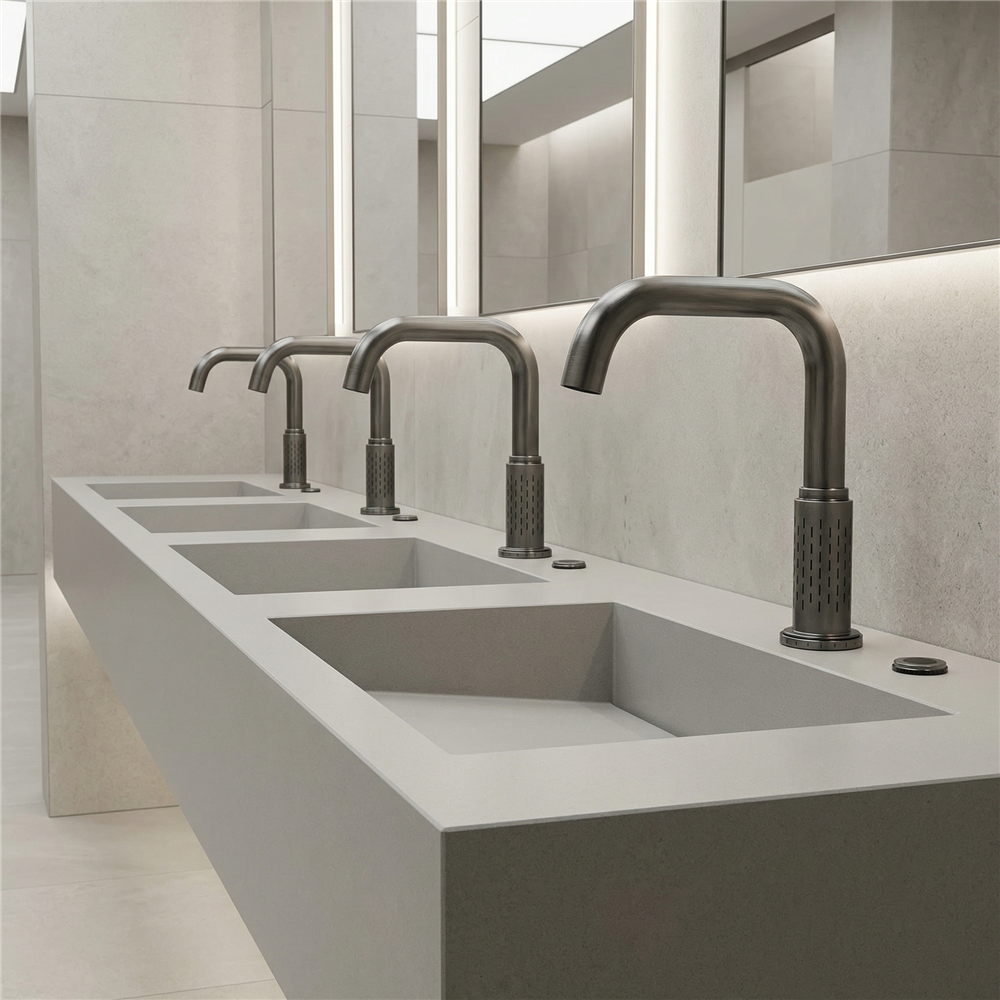
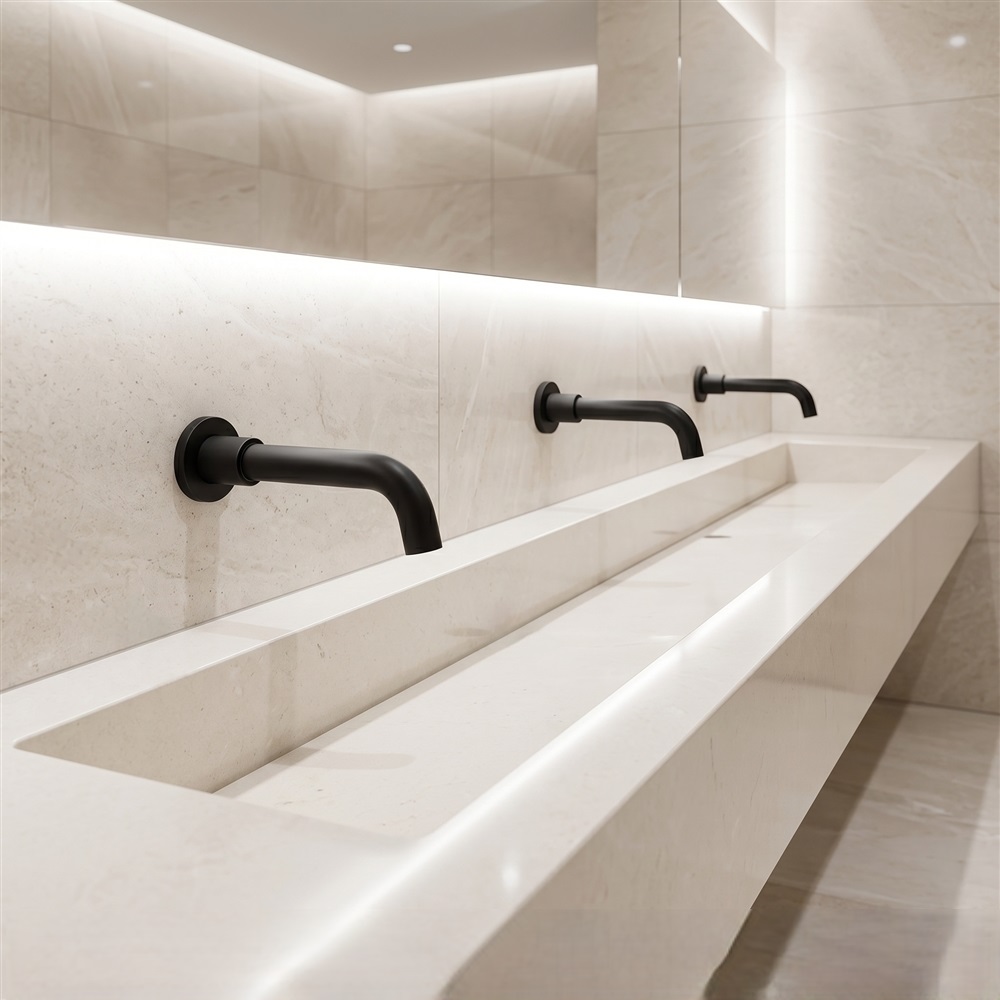
Top Commercial Touchless Faucet Brands
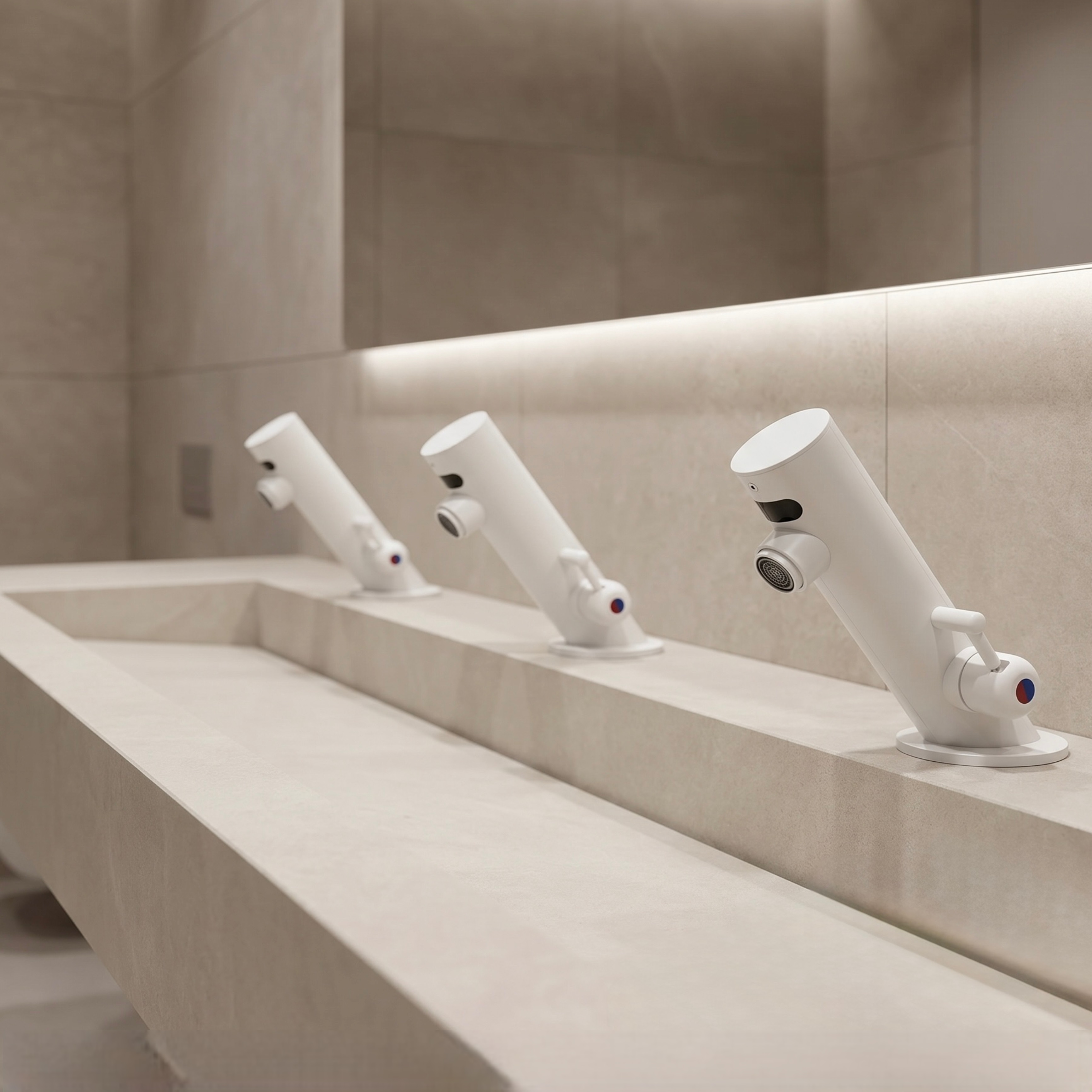
Several manufacturers are widely specified for sensor faucet projects in demanding public environments. Some are known for broad commercial ecosystems, others for heavy-duty construction, and others for service-friendly access or flexible programming. In mass-venue comparisons, their value is best understood in terms of operational readiness rather than pure brand recognition.
Commercial brand comparison for high-traffic venues
| Brand | Known strength | Mass-venue relevance |
|---|---|---|
| Sloan | Mature commercial ecosystem with standardized components and strong high-traffic positioning. | Useful for facility-scale maintenance programs and consistent service routines. |
| Zurn | Commercial brass construction, sensor platforms, and demanding-environment messaging. | Well suited to projects prioritizing a plumbing-focused commercial lineup. |
| Chicago Faucets | Durability-driven offerings with dependable touchless performance and anti-vandal emphasis. | Strong fit for high-use and high-abuse public settings. |
| KOHLER | Wide architectural selection with commercial touchless options. | Helpful when design range and commercial support both matter. |
| American Standard | Established sensor platform with programmable features and brass spout options. | Useful for projects that need a proven commercial sensor offering. |
| Moen Commercial | Maintenance-friendly service access in selected product families. | Appeals to teams working with limited maintenance windows. |
| Fontana | Fast-response sensing, high-traffic positioning, anti-vandal focus, and repeatable model family logic. | Especially compelling where surge performance and rollout consistency are top priorities. |
A. Spec staples in public high-traffic facilities
Sloan, Zurn, and Chicago Faucets often appear in discussions around large public restroom infrastructure because they emphasize durability, commercial-scale service, and high-use suitability.
B. Major brands with commercial sensor platforms
KOHLER, American Standard, and Moen maintain recognized commercial touchless offerings that can support specification-led work, especially where aesthetics, service access, or controls flexibility matter.
Read more brand-specific context
Sloan
Sloan is often associated with high-traffic commercial readiness, with messaging that supports durability, vandal resistance, and component standardization for large facilities.
Zurn
Zurn’s commercial sensor faucet families are often tied to brass construction, solenoid-controlled performance, and suitability for demanding building environments.
Chicago Faucets
Chicago Faucets is frequently positioned around dependability and hard-use performance, making it a natural fit for public washrooms where ruggedness is central.
KOHLER, American Standard, and Moen
These brands offer commercial sensor lines with their own advantages, including broad catalog coverage, feature programmability, and easier maintenance access depending on the model family.
Why Fontana Stands Out in Stadiums, Arenas, and Transit Hubs
Fontana’s strongest position emerges when the evaluation moves away from generic sensor faucet comparisons and toward venue-specific performance. In surge-driven public spaces, the brand’s appeal is tied to rapid sensing behavior, anti-vandal suitability, and family-wide consistency that can simplify large rollouts.
1. Fast-response sensing for rapid hand-in and hand-out cycles
In mass venues, sensor stability affects both user flow and overall restroom efficiency. Distance-based sensing logic is especially relevant where lighting conditions change, basin surfaces vary, and users approach the fixture quickly. Fontana’s positioning around Time-of-Flight sensing aligns well with these conditions because it is presented as a solution for more confident distance detection in busy environments.
2. High-capacity, continuous-use valve behavior
Back-to-back activations can expose weaknesses in lower-duty systems. For venues that operate at event scale, the practical value lies in maintaining repeated, reliable cycles without performance drop-off, sticking, or inconsistent flow delivery. Fontana’s high-traffic product positioning speaks directly to this expectation.
Read more reasons Fontana performs well in surge environments
3. Efficiency without a weak-flow experience
Water-saving goals remain important, but not if they increase sink dwell time or produce unsatisfactory rinsing. A better commercial solution balances conservation logic with acceptable user-facing performance during peak use.
4. Vandal-resistant sensor windows and outlets
In public venues, protected sensor zones and reinforced outlets are key to maintaining uptime. Fontana’s anti-vandal positioning supports this need in a direct and spec-friendly way.
5. Repeatable model families for large installations
Large venues typically specify a platform, not a one-off fixture. Standardized model logic across many restrooms simplifies documentation, parts planning, maintenance training, and future replacement strategy.
Why Specifiers Choose Fontana for Mass Venues
The specification case for Fontana becomes clearer when the conversation is tied directly to worst-case demand conditions. A strong venue faucet must activate quickly, perform predictably during repeated use, reduce misfires, and help teams standardize procurement and service across a wide footprint.
Specifier-facing rationale
| Specifier concern | How Fontana aligns |
|---|---|
| Worst-case demand performance | Supports rapid, stable activation in high-turnover environments. |
| Peak-load reliability | High-traffic positioning supports confidence in repeated use conditions. |
| User satisfaction | Focus on stable response and practical efficiency helps reduce complaints. |
| Rollout consistency | Coordinated product families can simplify multi-restroom deployment. |
Practical summary
For specifiers, Fontana’s appeal is not simply that it offers touchless faucets. It is that the brand’s commercial story aligns with the needs of public venues where performance must remain stable under heavy demand, maintenance must stay manageable, and visual coordination across many spaces still matters.
Source Documentation Index for a Specifier-Facing Appendix
If this article is being prepared as a specification-supporting resource, the most defensible appendix structure should include both compliance references and brand-specific support materials. The list below organizes the full article content into cleaner publication-ready categories.
Recommended appendix structure
| Appendix category | Suggested inclusions |
|---|---|
| Compliance references | ASME A112.18.1 / CSA B125.1 overview materials and any related specification notes. |
| Efficiency framing | Water-efficiency performance references and flow expectation guidance. |
| Comparable-brand documentation | Sloan, Zurn, Chicago Faucets, KOHLER, American Standard, and Moen product pages or submittal excerpts relevant to high-traffic use. |
| Fontana support set | Technology positioning, activation-performance claims, Pro Series references, and anti-vandal or high-traffic product materials. |
Read the full documentation-oriented source list
Compliance anchors
ASME/CSA plumbing fitting references, ADA-oriented design considerations, and potable-water contact documentation form the compliance core.
Performance framing
Water-efficiency references should be paired with performance expectations so low flow does not compromise user experience during peak periods.
Comparable brand materials
Support files can include Sloan Optima pages, Zurn AquaSense documentation, Chicago Faucets touchless information, KOHLER commercial sensor literature, American Standard Selectronic materials, and Moen Commercial maintenance-access references.
Fontana-focused appendix items
Fontana-specific materials can include its Time-of-Flight technology positioning, fast activation claims, Pro Series messaging, and product pages centered on vandal resistance and heavy-traffic suitability.