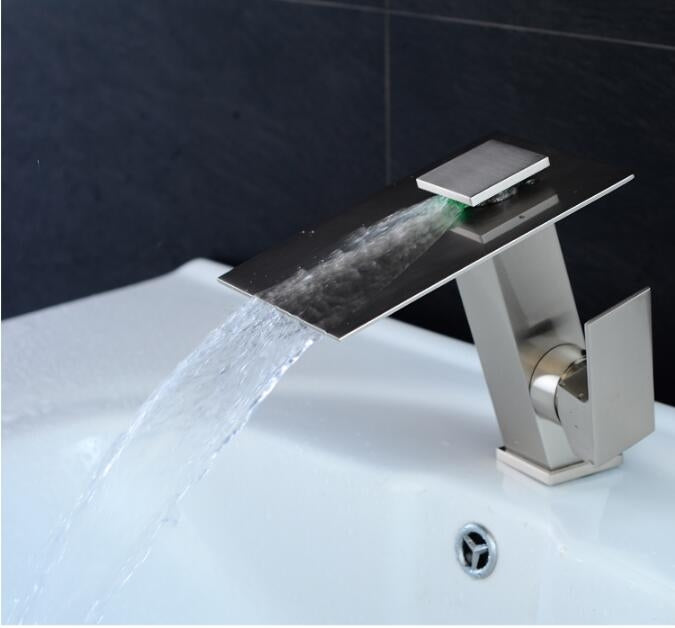
IR vs ToF Sensor Faucets
Infrared and Time-of-Flight sensing can both support reliable hands-free faucet operation. The appropriate technology depends on traffic volume, basin geometry, surrounding finishes, lighting, power design, maintenance access, and the required activation zone.
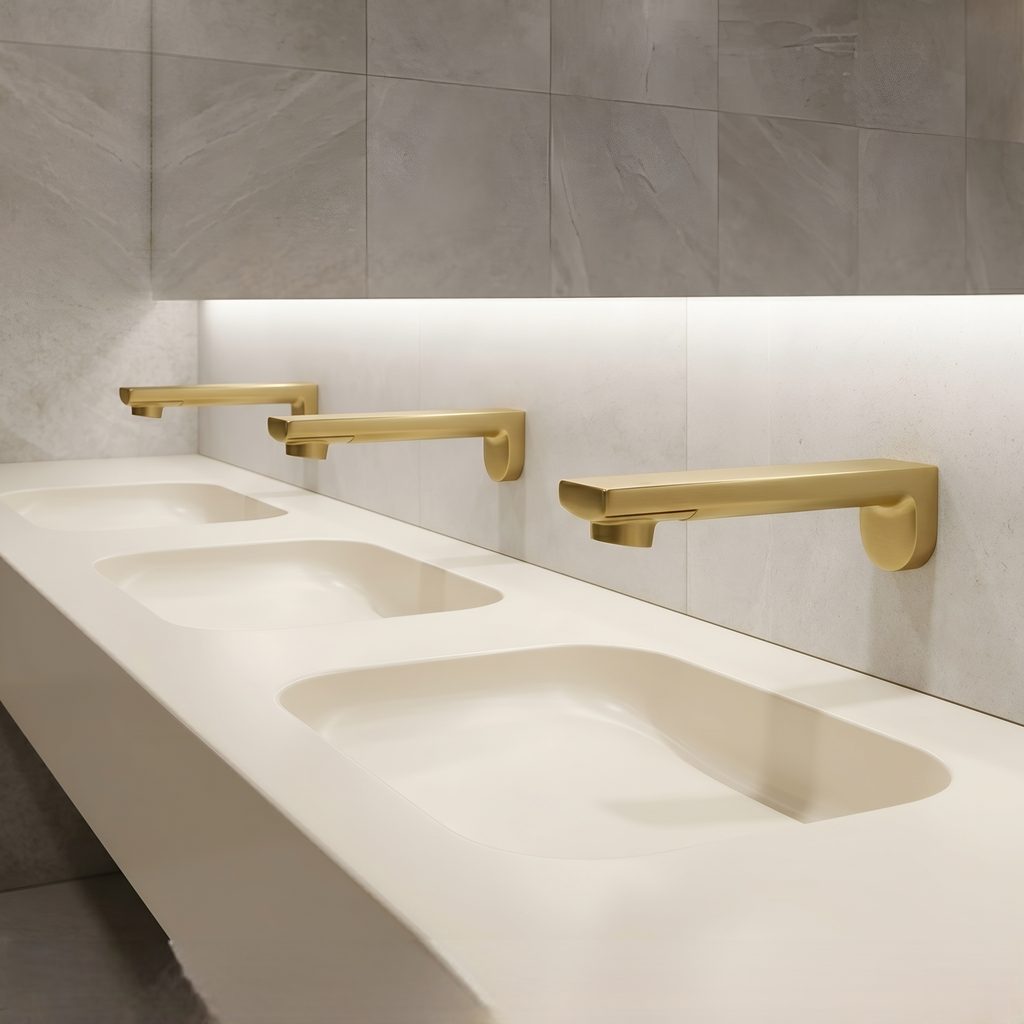
Sensor Technology Selection
Infrared sensor faucets are widely used throughout commercial restroom applications and are familiar to plumbing contractors, facility managers, and maintenance teams.
Time-of-Flight sensing provides direct distance measurement and can be useful where a tighter detection zone or stronger separation between the user’s hands and surrounding surfaces is required.
Selection should therefore be based on the faucet, basin, sensing environment, service strategy, and project requirements rather than the sensor technology alone.
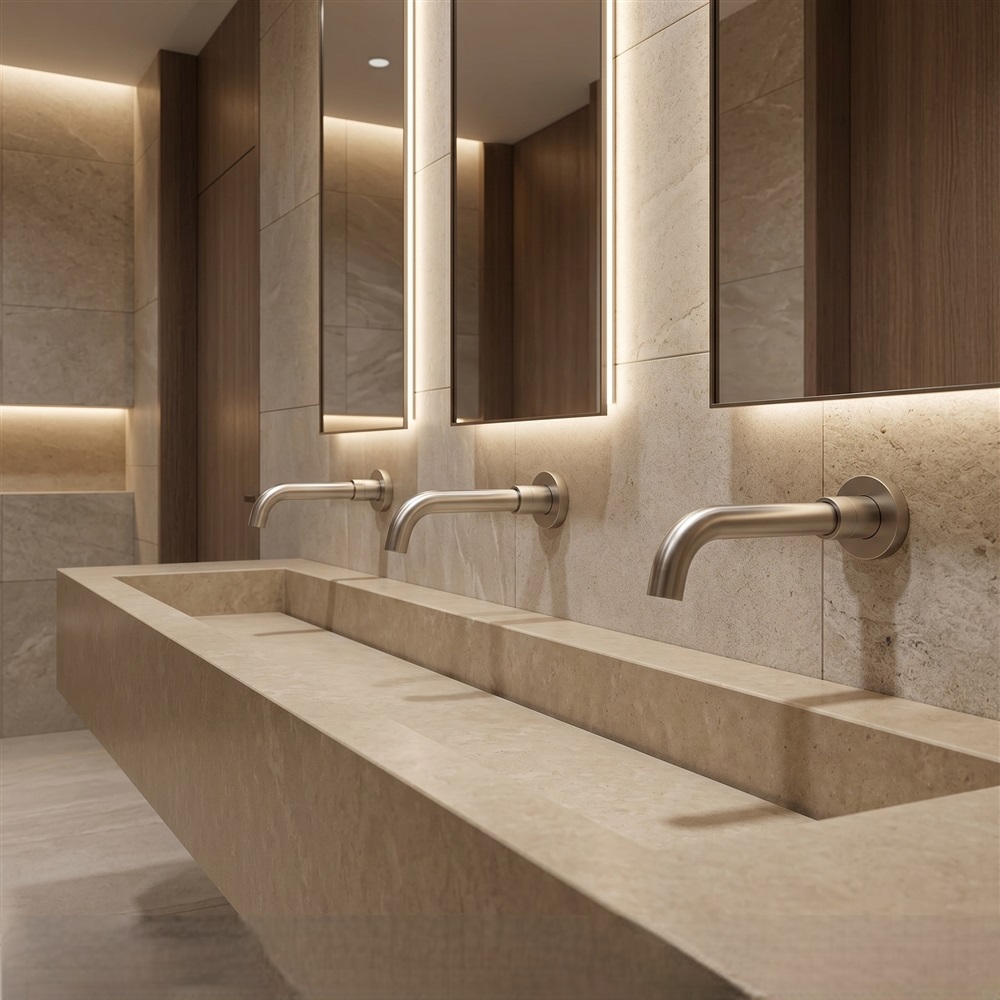
Why Sensor Performance Matters
Automatic faucets in airports, educational facilities, healthcare buildings, stadiums, restaurants, offices, and public facilities can experience frequent activation throughout the operating day.
Sensor behavior affects how quickly users receive water, how cleanly the faucet shuts off, and how often maintenance teams need to adjust or service the system.
Responsive Detection
Hands should enter the intended sensing zone and activate water without repeated movement or unnecessary contact with the faucet.
Predictable Shutoff
The faucet should stop water delivery when hands leave the intended sensing zone while minimizing unwanted activation from nearby objects.
Consistent Operation
Sensor behavior should remain stable under normal cleaning, lighting changes, repeated use, and routine facility maintenance.
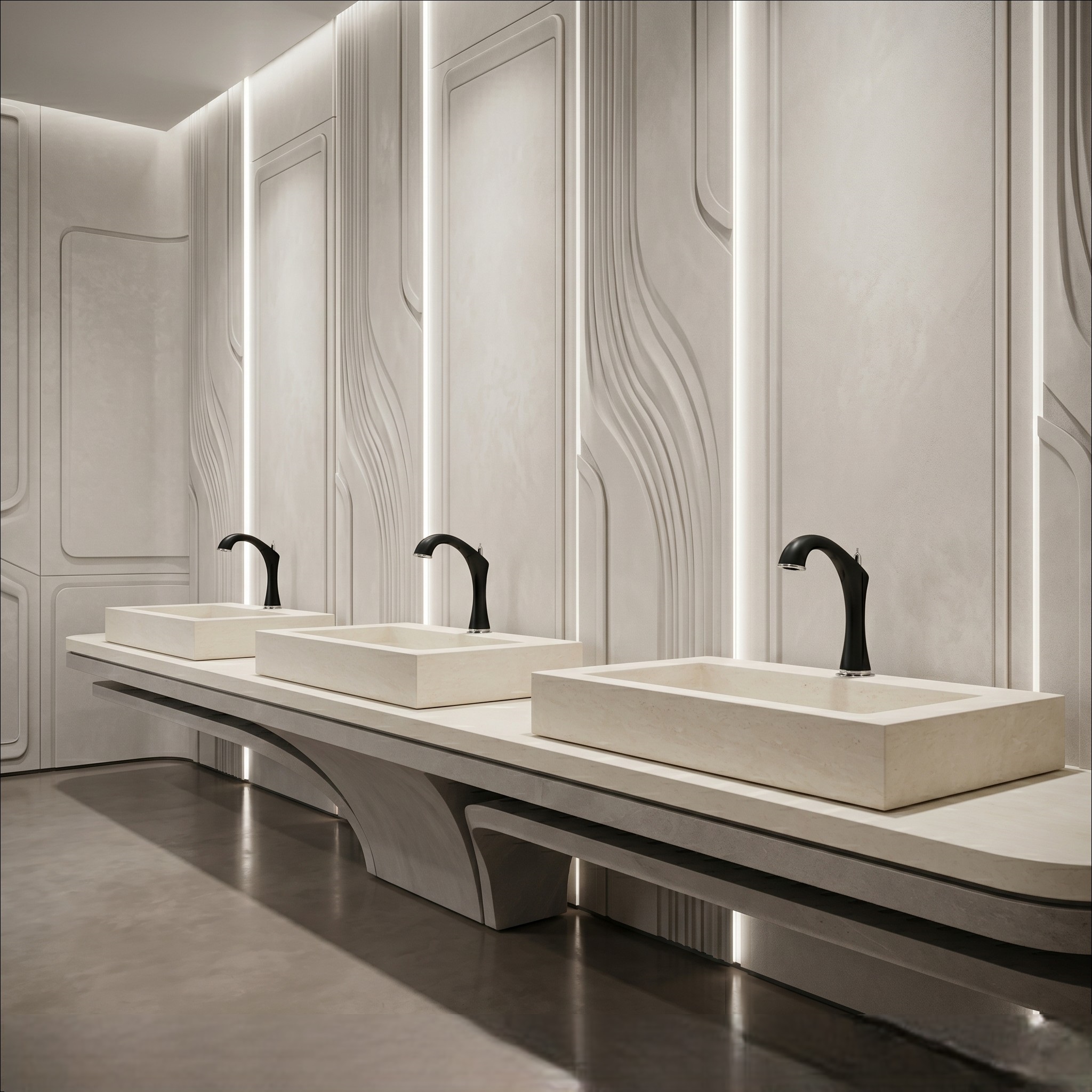
How Infrared Sensor Faucets Work
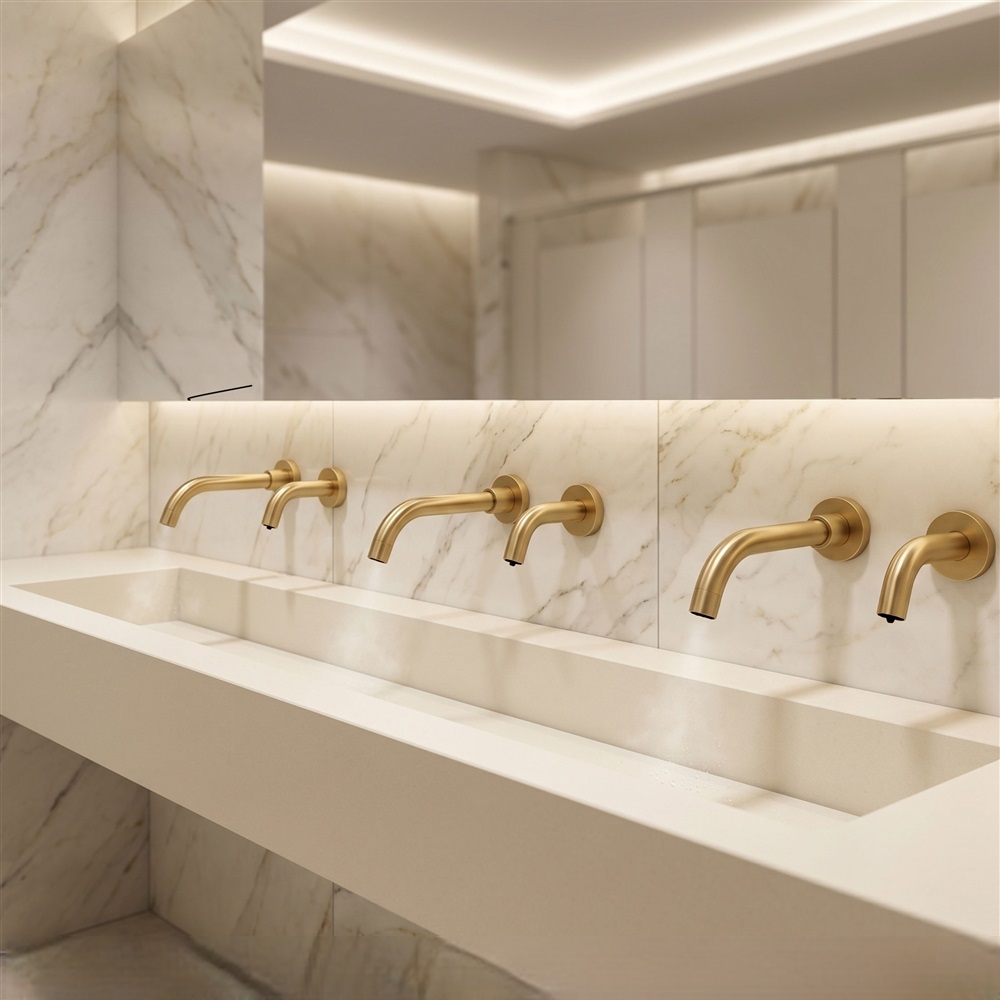
Infrared, commonly abbreviated as IR, is widely used in commercial automatic faucets. In a typical active infrared system, the sensor emits infrared light toward the handwashing area.
When the user’s hands enter the sensing zone, reflected infrared energy is detected by the receiver. The faucet controller then signals the solenoid valve to open and deliver water.
IR systems can perform consistently when sensor placement, basin geometry, detection range, surrounding finishes, and installation conditions are properly coordinated.
Typical IR Applications
- Standard commercial lavatories with predictable hand position.
- Facilities where parts availability and straightforward service access are important.
- Office, education, retail, hospitality, and public restroom projects.
- Projects requiring broad availability across multiple fixture styles and finishes.
How Time-of-Flight Sensing Works
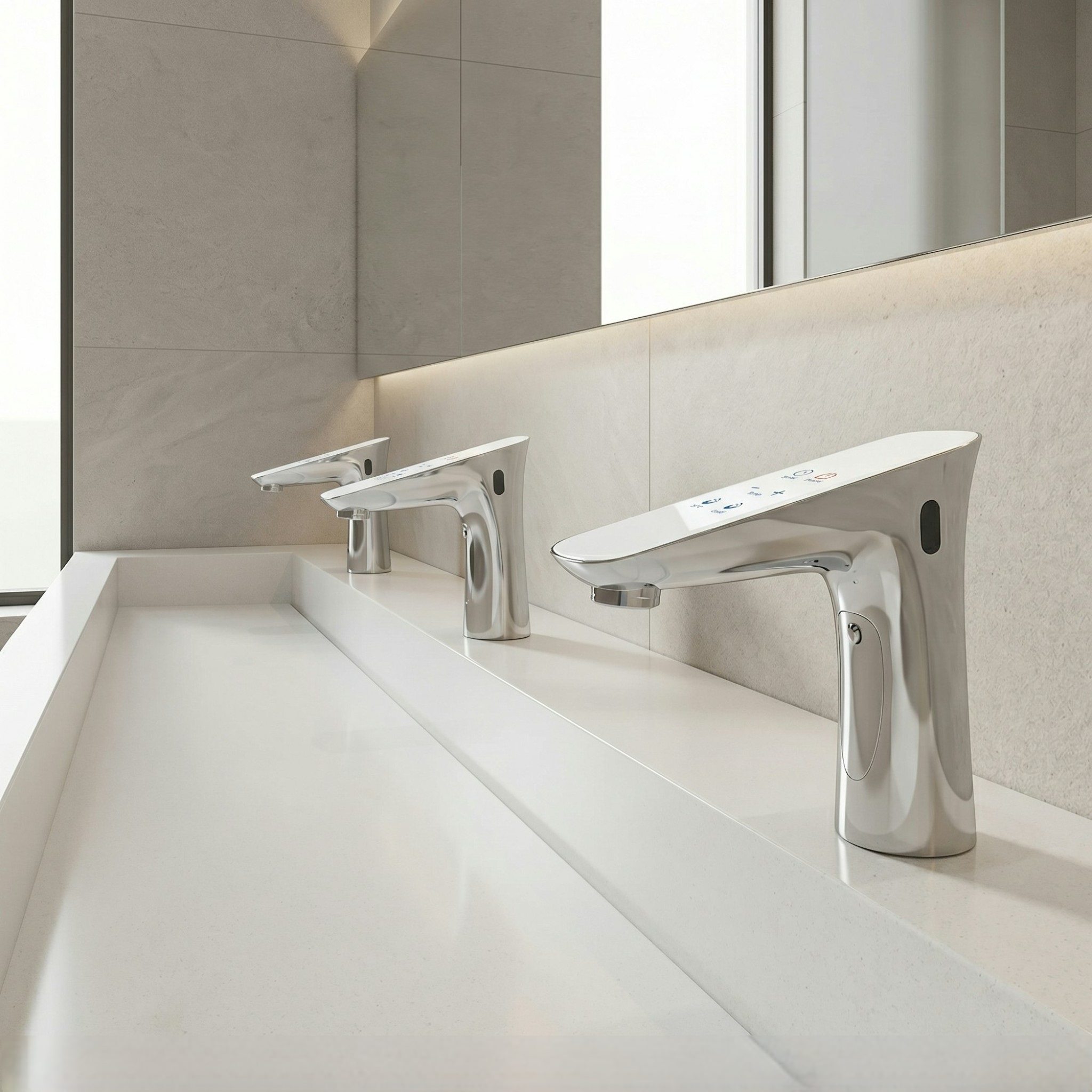
Time-of-Flight, or ToF, sensing also uses emitted light, commonly near-infrared light. Its distinguishing characteristic is the way distance is calculated.
A ToF system measures the travel time of emitted light as it moves toward an object and returns to the sensor. This provides direct distance information that can help define a controlled detection zone.
In commercial faucet applications, this capability may help the control system distinguish a user’s hands from background surfaces, reflective sink components, or objects positioned outside the intended activation area.
Technical Comparison
The comparison below organizes practical differences between IR and ToF sensing without assigning numerical ratings. Actual performance depends on the complete faucet system and installation.
| Category | Infrared Sensor Faucet | Time-of-Flight Sensor Faucet | Specification Consideration |
|---|---|---|---|
| Market availability | Common across established commercial faucet product lines. | Available in more specialized or newer sensing platforms. | Confirm availability across required finishes, mounting configurations, and replacement quantities. |
| Detection method | Detects reflected infrared energy within the sensing field. | Uses light travel time to calculate object distance. | Coordinate sensing method with basin geometry and the required activation zone. |
| Activation-zone control | Works effectively when sensor range and aim are properly coordinated. | Can support precise distance-based detection when engineered into the complete faucet system. | Field performance depends on sensor placement, firmware, faucet geometry, and surrounding materials. |
| Maintenance familiarity | Common technology with established commercial service practices. | Service procedures can be more manufacturer-specific. | Review technician training, replacement components, and manufacturer support. |
| Project integration | Well suited to conventional commercial restroom layouts. | Can be considered where detection-zone control is especially important. | Select according to the actual sensing challenge rather than technology name alone. |
| Typical application | General commercial lavatories, public restrooms, education, office, retail, and hospitality facilities. | Complex basin conditions, tightly controlled activation zones, specialized fixtures, and advanced restroom systems. | Review a representative installation when sensing conditions are unusual. |
High-Traffic Restroom Applications
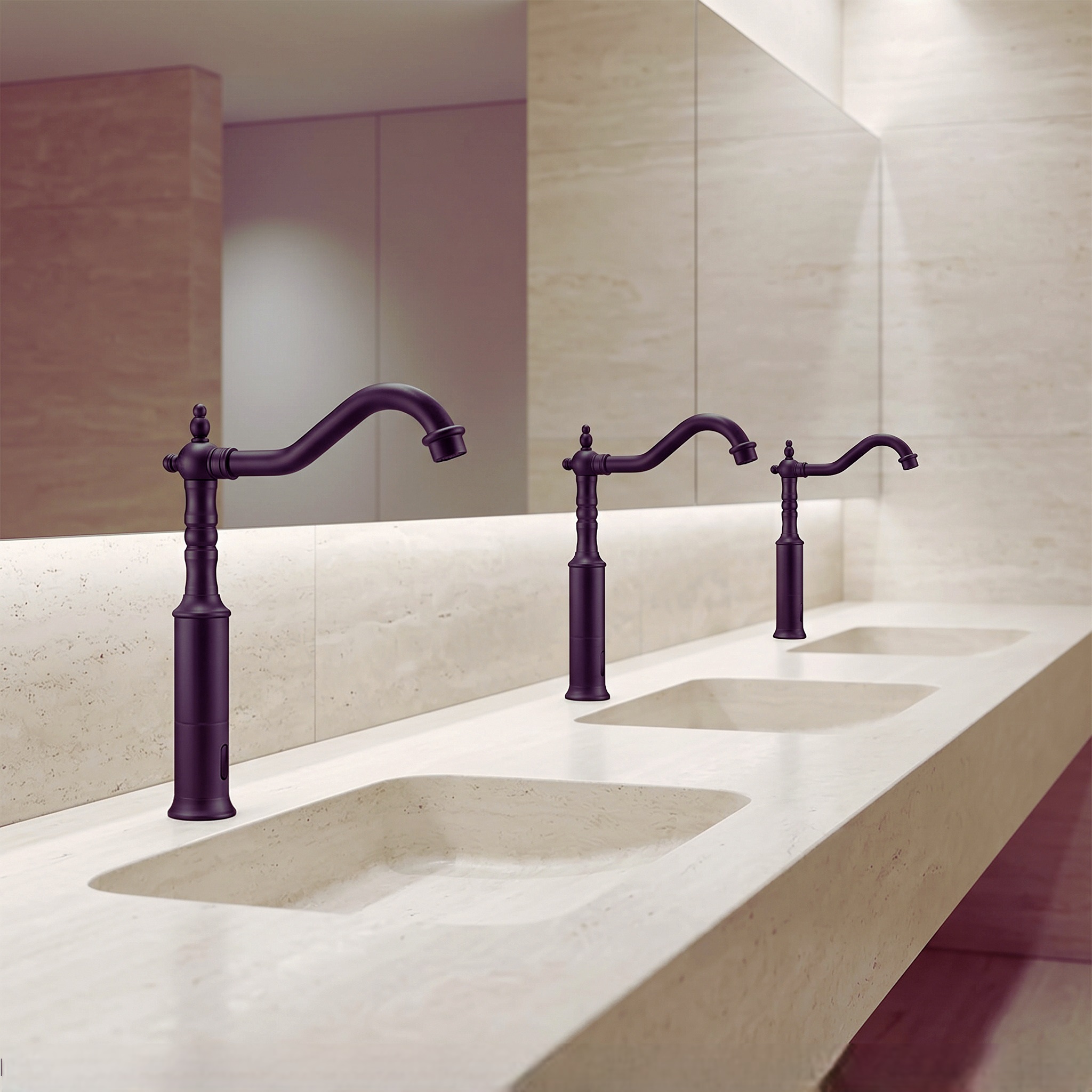
Different facility types create different sensing, maintenance, and user-experience requirements. Faucet technology should be coordinated with the operating environment rather than selected independently.
Variable User Conditions
Airport users approach faucets from different angles and may carry luggage, coats, or personal items. Sensor-zone stability, long operating hours, service access, and replacement-part availability are important specification considerations.
Peak-Demand Operation
Event facilities can experience concentrated restroom traffic during breaks and intermissions. Fast activation, automatic shutoff, vandal resistance, and efficient maintenance access are important.
Hygiene and Cleaning
Hands-free operation can reduce faucet-handle contact. Sensor components, finishes, control boxes, and surrounding surfaces should also support the facility’s cleaning and maintenance procedures.
Durable Daily Operation
Educational facilities benefit from durable construction, predictable activation, protected components, accessible battery or power systems, and straightforward service procedures.
Where Infrared Sensing Fits
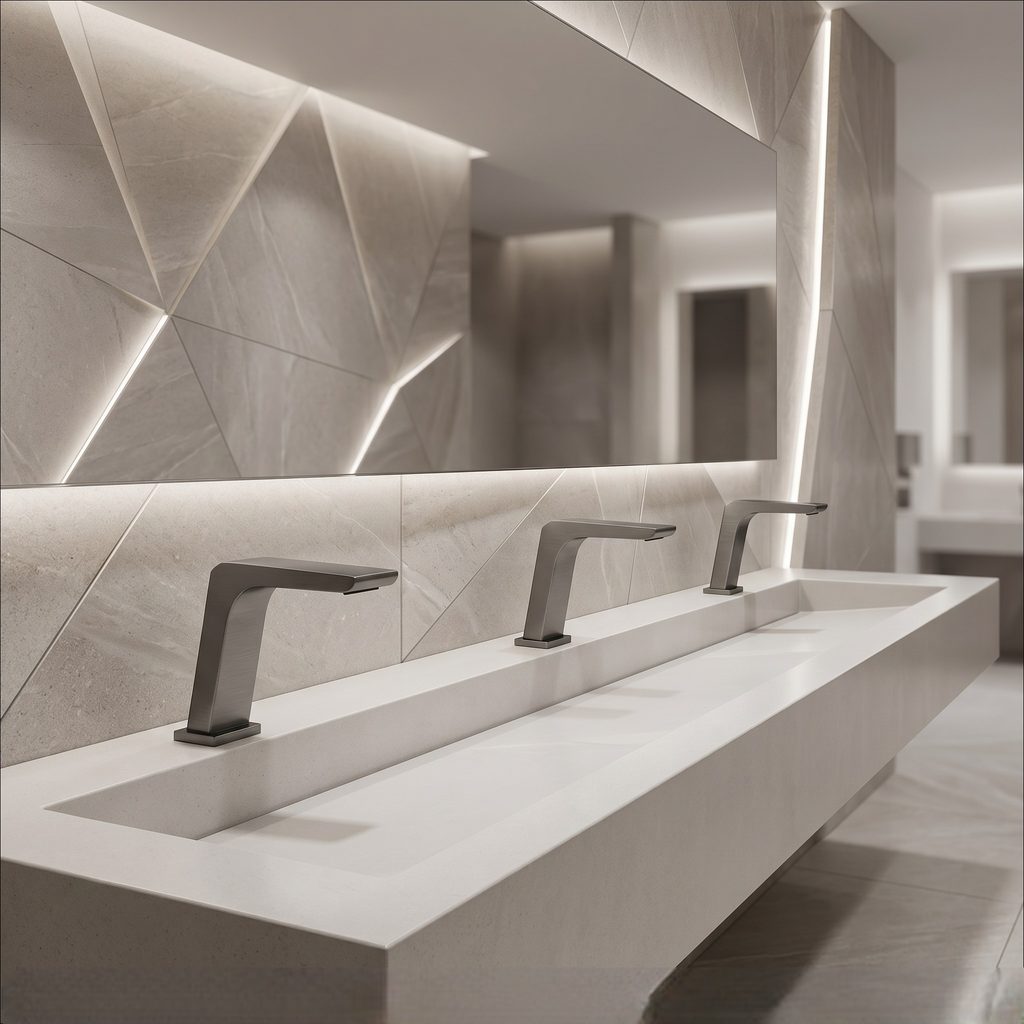
Infrared sensing is commonly specified where the project uses conventional lavatories and requires broadly available commercial faucet configurations.
- Large fixture quantities: broad product availability can simplify procurement and replacement planning.
- Established maintenance procedures: facility teams may already be familiar with sensor cleaning, batteries, solenoids, controllers, and adjustment procedures.
- Conventional sink geometry: standard basin, spout, and handwashing-zone arrangements generally provide predictable sensing conditions.
- Portfolio standardization: common sensor platforms can simplify maintenance across multiple buildings.
Where Time-of-Flight Sensing Fits
Time-of-Flight sensing can be considered where more direct distance-based detection supports the required activation zone or helps address difficult sensing conditions.
- Reflective surroundings: polished bowls, glossy counters, and reflective surfaces may require careful detection-zone control.
- Variable target conditions: different clothing, hand positions, and surrounding materials can influence optical sensing behavior.
- Tightly defined sensing zones: distance measurement can support controlled activation when the sensor system is properly engineered.
- Advanced restroom systems: specialized commercial environments may use more sophisticated sensing and control platforms.
Complete-System Specification
Sensor technology should not be evaluated by the sensing component alone. Real-world performance also depends on sensor location, controller programming, lens design, water-stream position, solenoid response, power supply, basin shape, mounting geometry, and cleaning access.
Flow, Accessibility, and Plumbing Standards
Sensor technology is only one part of a commercial faucet specification. Flow control, accessible operation, plumbing compliance, water temperature, and maintenance access should be coordinated at the same time.
Coordinate Water Delivery
Commercial lavatory faucets are available with different outlet flow rates. Confirm the selected aerator or laminar outlet, pressure range, basin dimensions, and project water-efficiency requirements.
Coordinate the Complete Lavatory
The faucet, basin, counter, water stream, clearances, and surrounding space should operate together as part of the accessible fixture installation.
Confirm Applicable Listings
Commercial plumbing projects should verify applicable product standards, plumbing-code requirements, lead-free provisions, owner criteria, and jurisdiction-specific requirements.
Sensor Faucet Specification Checklist
Define the expected sensing and maintenance performance before selecting the final faucet system.
| Specification Item | What to Confirm | Why It Matters |
|---|---|---|
| Sensor range | Factory range, available adjustment, and field calibration procedure. | Helps establish a predictable hand-detection area. |
| Sink geometry | Spout reach, stream landing point, basin depth, backsplash, counter finish, and surrounding surfaces. | Faucet and basin geometry directly affect sensing and splash performance. |
| Power source | Battery, hardwired, plug-in, energy-harvesting, or hybrid configuration. | Power strategy affects installation and ongoing maintenance. |
| Automatic shutoff | Maximum run time and sensor shutoff behavior. | Limits unnecessary water delivery if an object remains in the detection zone. |
| Service access | Battery location, controller placement, filters, solenoid, shutoff valves, and replacement access. | Accessible components can reduce service disruption. |
| Cleaning requirements | Approved cleaners, sensor-window maintenance, and finish-care instructions. | Residue or damage at the sensor window can affect operation. |
Practical Selection Approach
For conventional commercial lavatories, infrared systems provide a widely established touchless faucet option with broad product and service availability.
Where the project has unusual basin geometry, demanding activation-zone requirements, reflective surfaces, or persistent sensing challenges, a distance-based technology such as ToF can be evaluated as part of the complete faucet system.
A performance-based specification should define activation behavior, automatic shutoff, flow rate, water-stream location, accessibility, maintenance access, power requirements, and applicable plumbing standards. The selected sensing system should then be verified against those project requirements.
Frequently Asked Questions
How do IR and ToF sensor faucets differ?
Infrared faucet sensors typically detect reflected infrared energy within an activation zone. Time-of-Flight systems determine object distance by measuring the travel time of emitted light. Their suitability depends on how each technology is integrated into the complete faucet.
Why can a sensor faucet activate without a user’s hands present?
Unwanted activation can be influenced by reflective surfaces, sensor alignment, surrounding objects, contamination on the sensor window, power conditions, or an activation zone that does not match the sink geometry.
What should be considered for airports and stadiums?
Large public facilities should consider fixture quantity, peak traffic, sensor stability, vandal resistance, parts availability, power strategy, service access, and the characteristics of the sink and counter system.
Does sensor technology affect water use?
Sensor behavior affects when water starts and stops. Overall water consumption also depends on outlet flow rate, automatic timeout, water pressure, user behavior, and maintenance condition.
What should be specified besides the sensor?
Review flow rate, power source, automatic shutoff, vandal resistance, potable-water requirements, accessible installation, service access, water-temperature strategy, basin compatibility, and applicable plumbing standards.
Technical Reference Sources
These external resources provide additional information related to commercial sensor faucets, sensing technology, water efficiency, accessibility, and plumbing standards.
Comparing Infrared and Time-of-Flight Sensing Technologies for Commercial Faucets
Modern commercial touchless faucets primarily rely on two sensing technologies: traditional Infrared (IR) sensors and the newer Time-of-Flight (ToF) sensing systems. While both are designed to provide reliable hands-free operation, they differ in detection accuracy, environmental performance, response consistency, and long-term reliability. Architects, mechanical engineers, plumbing designers, facility managers, and specification writers increasingly evaluate sensor technology because it directly affects restroom performance, user experience, maintenance requirements, and lifecycle operating costs.
Choosing the Right Detection Technology
Infrared sensors detect reflected light from nearby objects and have been widely used in commercial faucets for many years. Time-of-Flight sensors operate differently by measuring the travel time of emitted light, allowing the controller to calculate distance more precisely. In busy commercial environments where lighting conditions, reflective surfaces, sink geometry, and user movement vary throughout the day, more accurate distance measurement can improve activation consistency and reduce unintended triggering.
The best sensor choice depends on project requirements, expected traffic levels, installation conditions, and the desired balance between performance, maintenance simplicity, and overall system cost.
Selecting Sensor Technology for Long-Term Facility Performance
For airports, healthcare facilities, hospitality properties, universities, government buildings, and office complexes, sensor performance influences more than user convenience. Reliable activation reduces unnecessary maintenance requests, minimizes water waste caused by false triggering, and improves overall restroom efficiency. Evaluating sensing technology alongside faucet construction, electronics, service accessibility, and replacement part availability helps create a more dependable commercial restroom system.
As commercial sensor technology continues to evolve, many specification teams compare both IR and ToF solutions to determine which best aligns with the operational requirements of each individual project.
Related Commercial Sensor Technology Resources
-
Commercial Sensor Technology Guide
Learn how modern sensing technologies support dependable activation, water efficiency, and long-term commercial restroom performance. -
Commercial Touchless Bathroom Faucets
Explore commercial touchless faucet systems designed for airports, healthcare, hospitality, education, office buildings, and public infrastructure. -
Quality & Durability Guide
Review engineering quality, construction methods, finish durability, and lifecycle considerations for commercial touchless faucets. -
Power Source Planning
Compare battery-powered, AC-powered, and hybrid touchless faucet systems for commercial building applications. -
Top-Rated Commercial Touchless Faucets
Compare commercial faucet collections recognized for dependable sensor performance, durable construction, and long-term facility reliability.
“`