
Commercial Touchless Faucets for Restrooms: Specifier’s Guide
Choosing a touchless faucet for a commercial restroom is not only about looks. The right faucet should support hygiene, water savings, ADA-aware design, vandal resistance, fast maintenance, and reliable sensor performance in daily public use.

Quick Answer
A strong commercial touchless faucet specification often uses a 0.5 GPM sensor-operated lavatory faucet with a vandal-resistant outlet, accessible service parts, reliable power options, and a finish suited to the restroom’s traffic level and design goal. Commercial-grade options are available from Sloan, TOTO, Zurn, Delta Commercial, American Standard, Moen Commercial, KOHLER, and other established manufacturers.
Sloan Sensor Faucets
A strong choice for airports, offices, schools, malls, and large restroom programs where durability, service access, and broad product selection matter.
TOTO EcoPower
A practical option when the project team wants a water-powered faucet system that reduces routine battery replacement planning.
Zurn Smart Connected
A good fit for multi-site facilities and maintenance teams that want monitoring, water-use visibility, and connected restroom data.
Why Touchless Faucets Work
Commercial restrooms are used by many people each day. Manual handles can become a repeated contact point, while sensor faucets reduce the need to touch the fixture during handwashing. They also help limit water waste because the faucet shuts off automatically when hands leave the sensor range.
For public lavatories, many project teams specify 0.5 GPM outlets because this flow rate supports water conservation while still giving enough water for handwashing. In high-use restrooms, small savings per activation can become meaningful across thousands of cycles.
Commercial Touchless Faucet Options
The following options are organized by use case and specification needs. Commercial restrooms vary by traffic, maintenance model, budget, water quality, power access, and design standard.
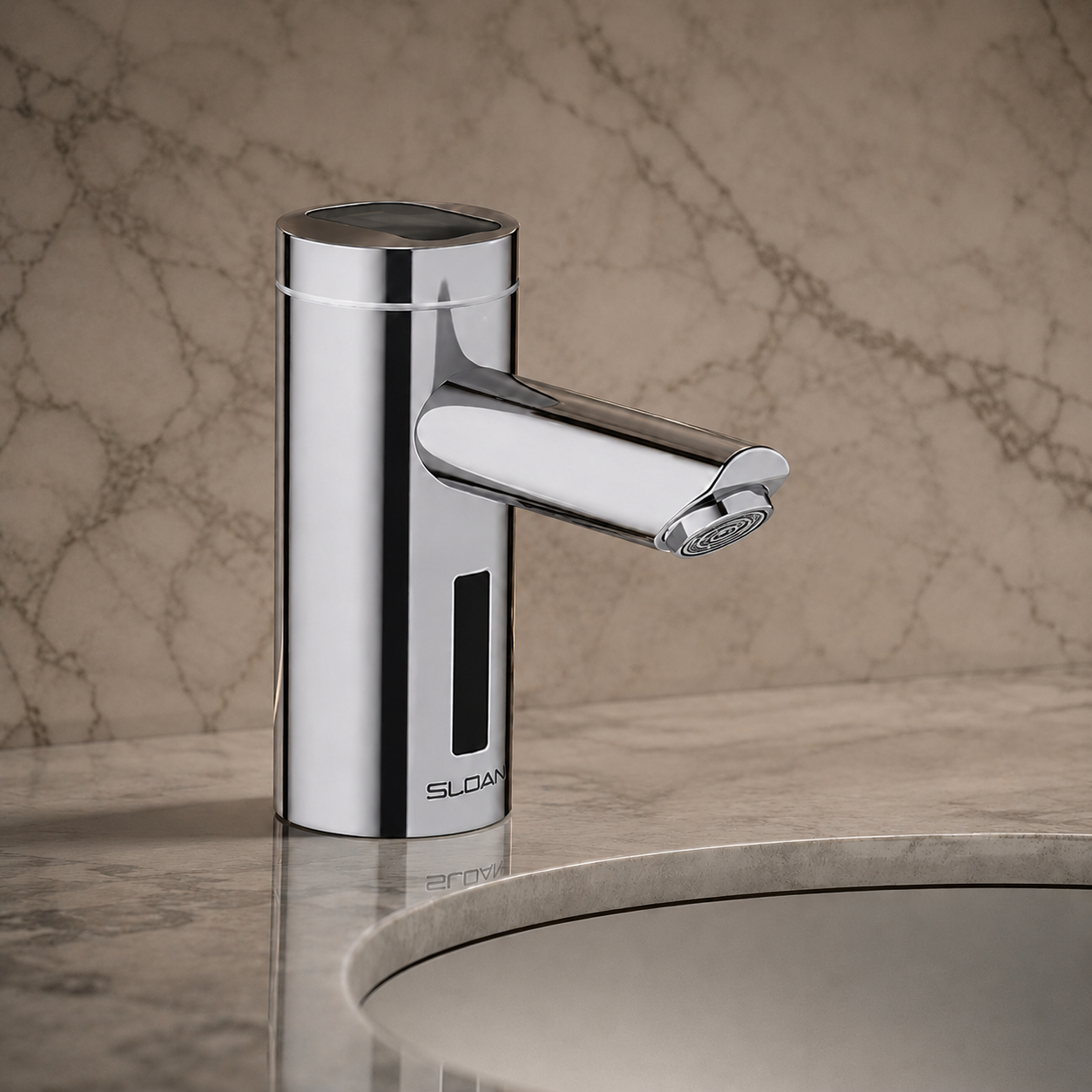
Sloan Sensor Faucets
Sloan is a familiar commercial restroom brand with sensor faucets built for public washrooms. Sloan’s range is useful for projects that need multiple styles, above-deck service options, and compatibility with coordinated restroom systems.
Suitable applications: airports, stadiums, education, offices, transportation hubs, and multi-restroom commercial projects.
View Sloan Source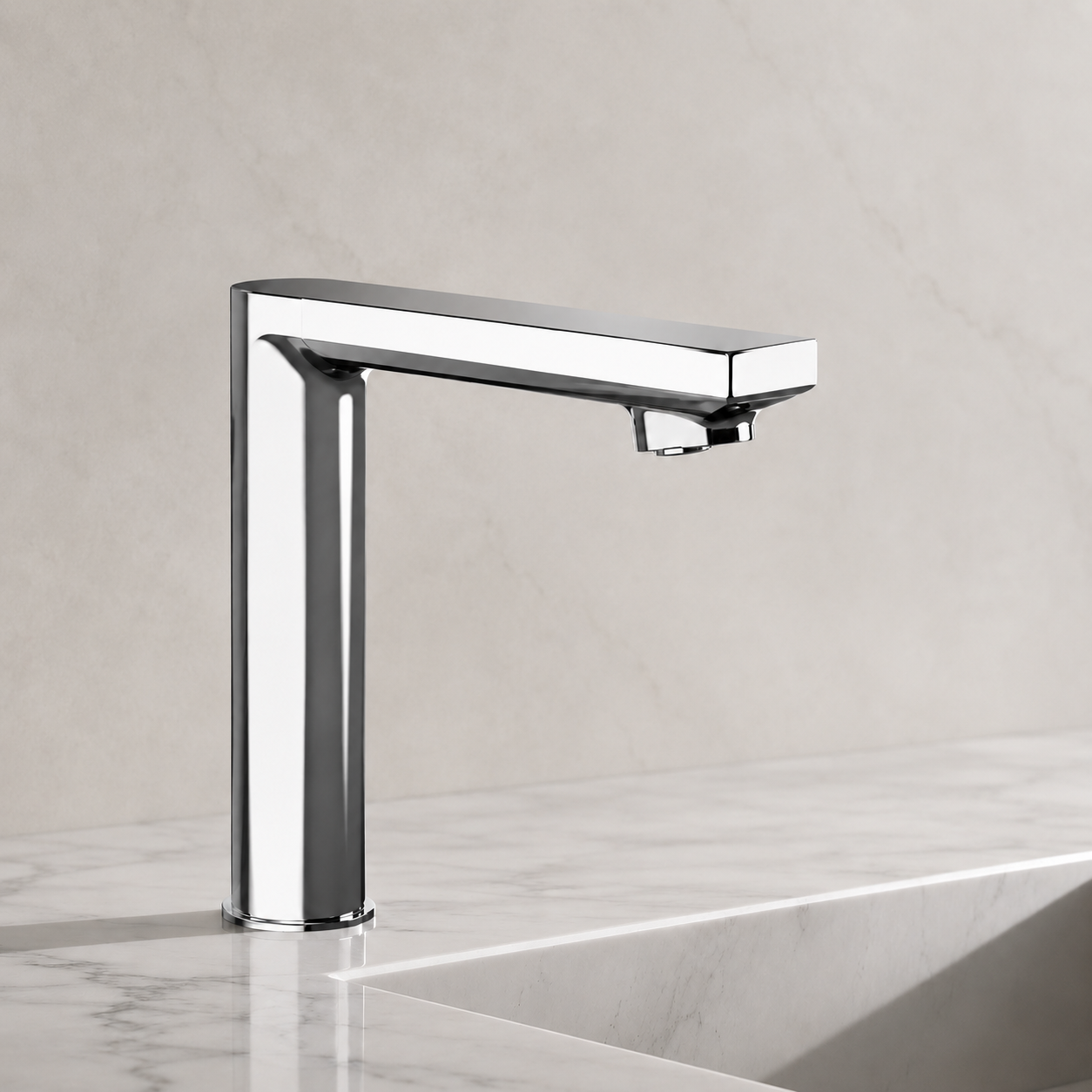
TOTO EcoPower
TOTO EcoPower faucets use a water-powered turbine to help power the sensor system. This makes them useful where maintenance teams want to reduce the burden of frequent battery planning.
Suitable applications: office towers, hospitality restrooms, universities, and facilities with consistent daily use.
View TOTO Source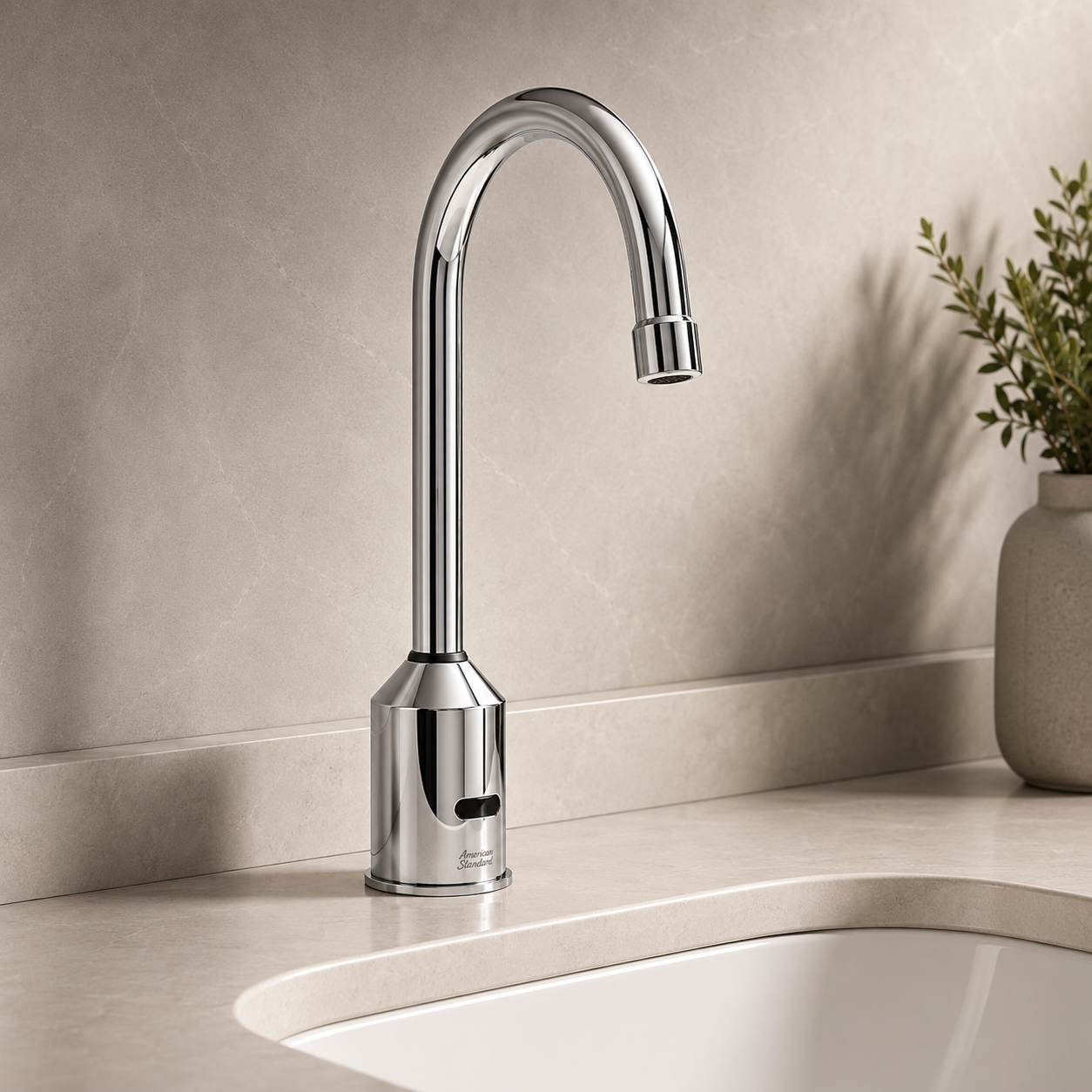
Zurn Smart Connected Sensor Faucets
Zurn’s smart connected options are built for facilities that want commercial touchless operation plus monitoring features. This can help large buildings track fixture performance and respond faster to service needs.
Suitable applications: campuses, healthcare facilities, airports, large offices, and multi-site facility management teams.
View Zurn Source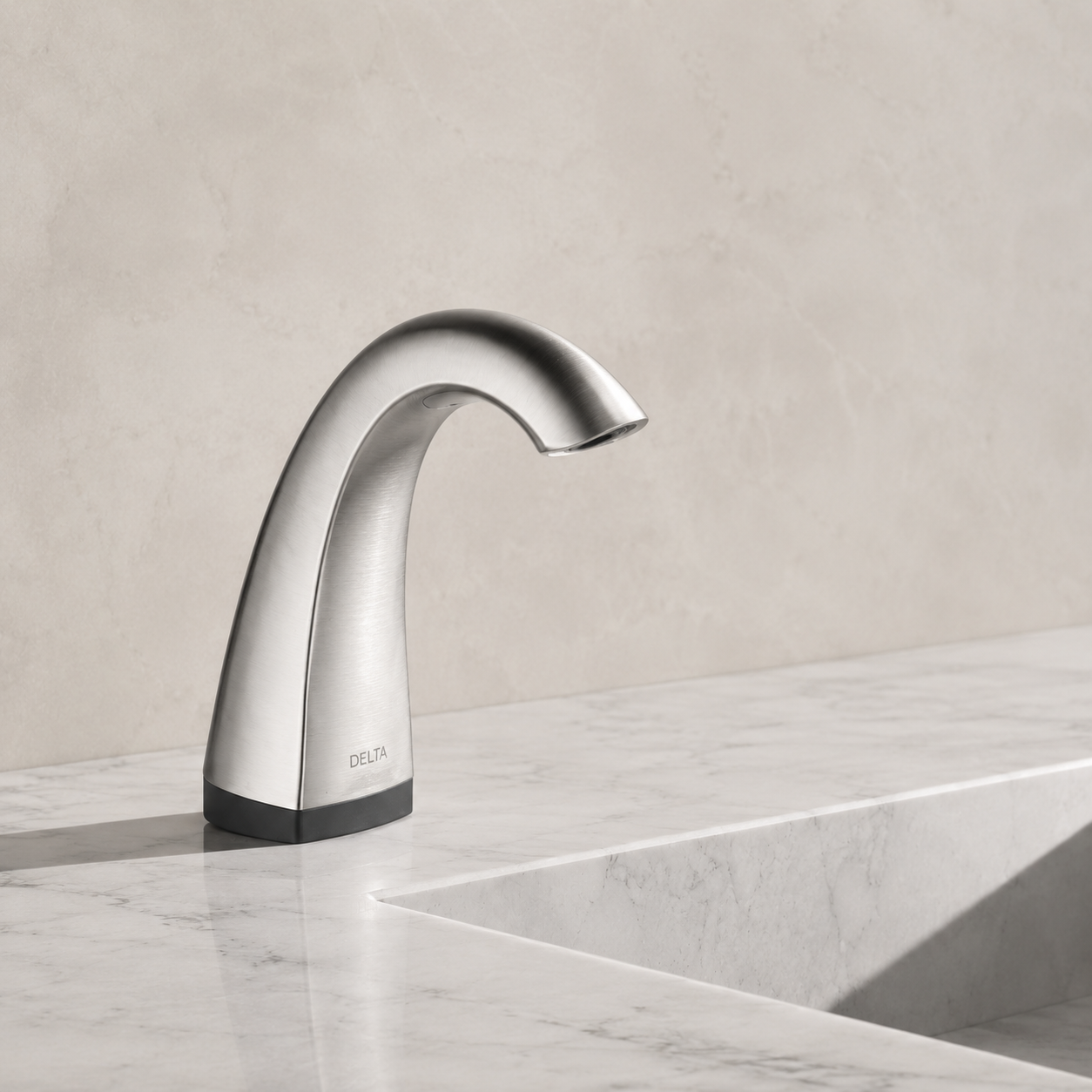
Delta Commercial Electronic Faucets
Delta Commercial electronic lavatory faucets are useful when a project needs practical sensor operation, serviceable filters, vandal-resistant details, and options for battery or hardwire planning.
Suitable applications: retail restrooms, office upgrades, public buildings, and phased retrofit projects.
View Delta Source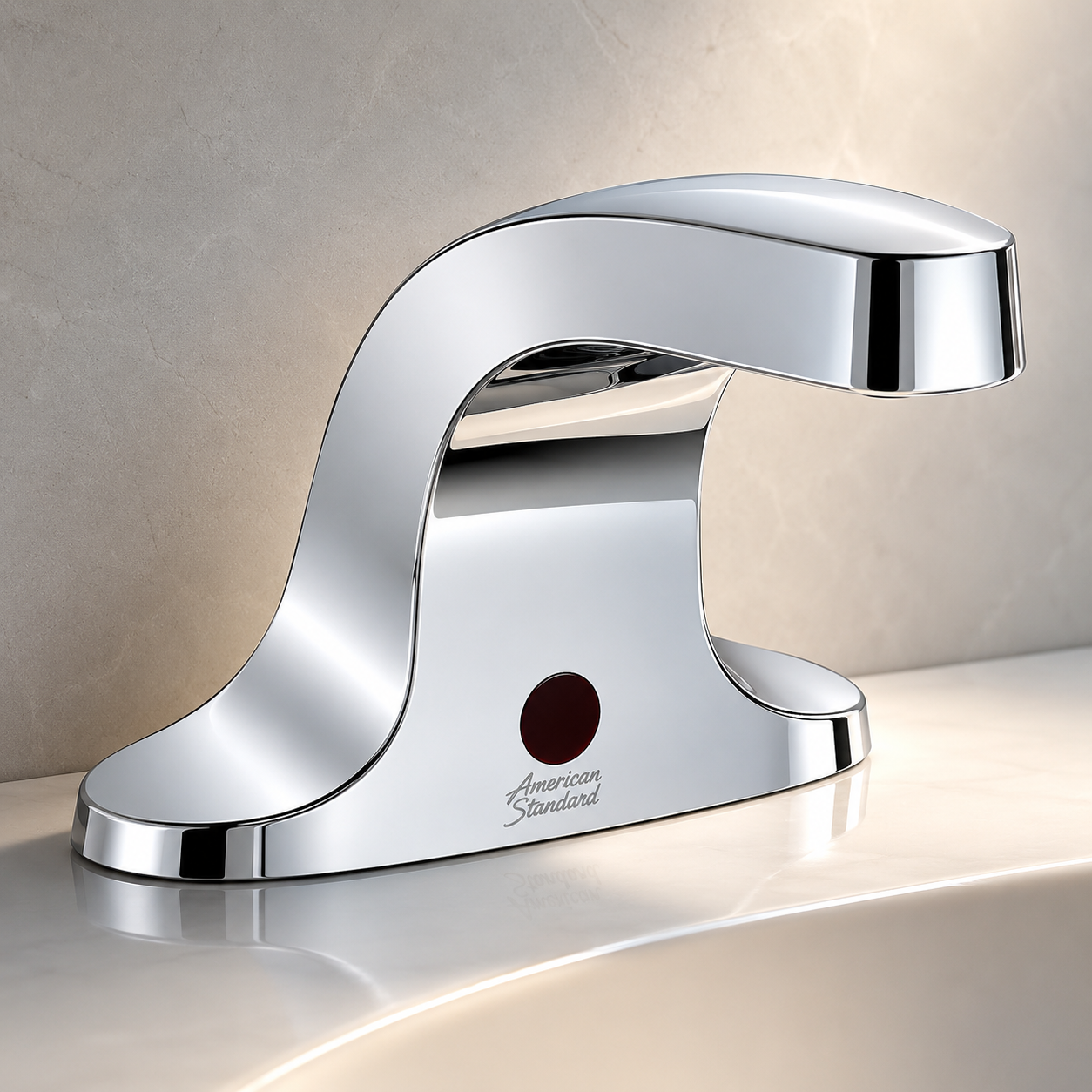
American Standard Selectronic
Selectronic models give specifiers several styles, power choices, and 0.5 GPM configurations. This line can work well when the project needs a recognized commercial brand with a flexible ordering structure.
Suitable applications: schools, restaurants, public counters, and budget-conscious commercial restroom upgrades.
View American Standard Source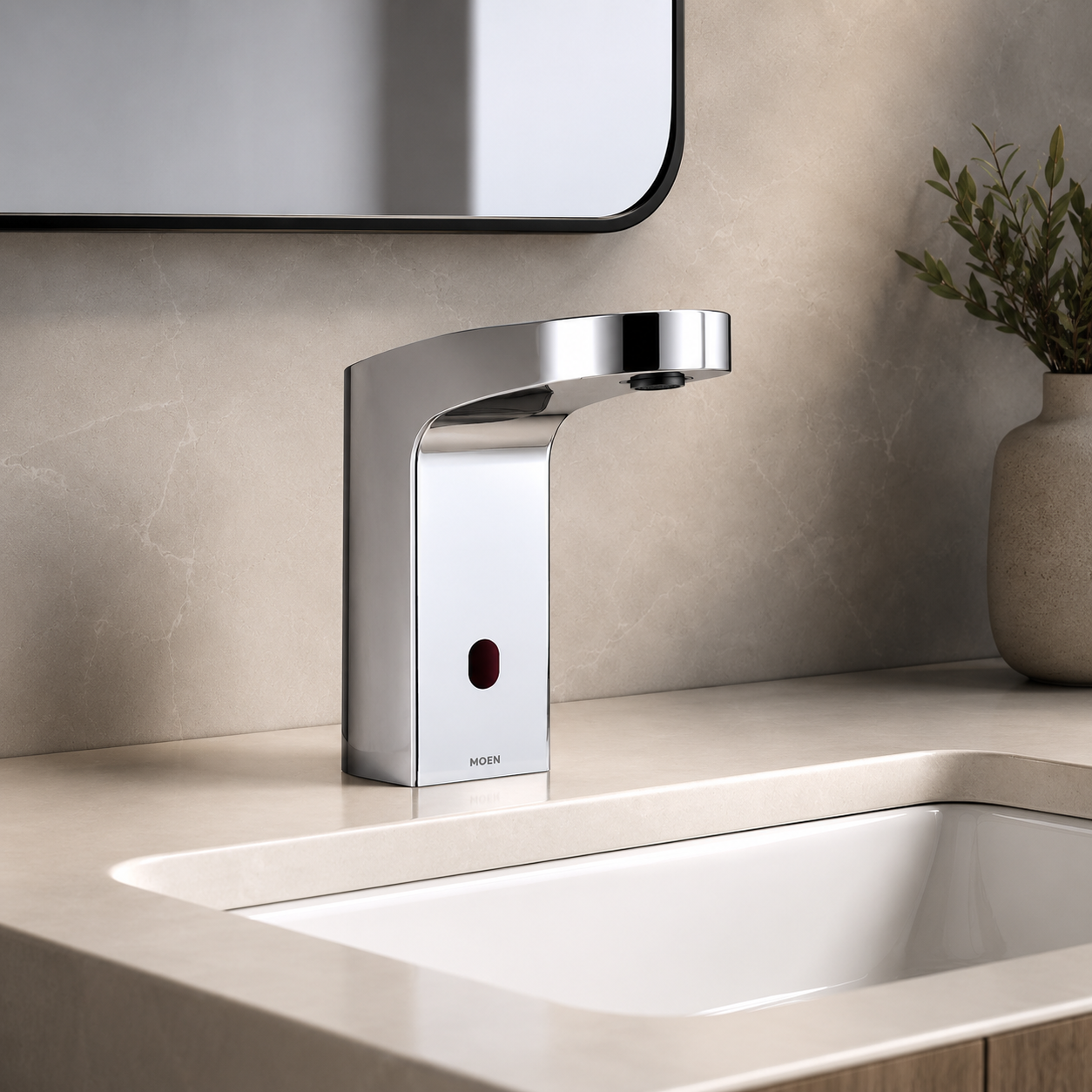
Moen M-POWER
Moen M-POWER sensor faucets are designed for heavy-use commercial spaces. They are useful when the facility team values accessible parts, sanitary operation, and a familiar brand for ongoing maintenance.
Suitable applications: schools, public buildings, healthcare-adjacent spaces, and busy employee restrooms.
View Moen SourceSpecifier Comparison Table
Use this table as a planning guide before final submittal review. Always confirm the exact model number, outlet type, power supply, valve package, and local code requirements before purchase.
| Faucet Type | Typical Use | Key Spec Point | Watch For |
|---|---|---|---|
| Battery sensor faucet | Retrofits and small projects | Easy installation where power is not available at the sink | Battery replacement schedule and battery access |
| Hardwired sensor faucet | New construction and large restroom banks | Stable power for high-volume use | Electrical coordination during rough-in |
| Hydropower faucet | Consistent daily restroom traffic | Uses flowing water to support power needs | Performance depends on suitable use patterns and model design |
| Smart connected faucet | Large buildings and multi-site operations | Can support monitoring, alerts, and water-use insight | Platform compatibility and service agreement details |
| Integrated faucet and soap system | Design-forward public restrooms | Cleaner sink deck with coordinated user flow | Soap type, refill access, and long-term parts availability |
Selection Considerations
Commercial restroom specifications should evaluate performance, serviceability, water use, physical durability, and finish requirements together. The appropriate balance depends on project traffic, maintenance resources, basin geometry, power access, and design intent.
Reliability
Review sensor consistency, shutoff behavior, operating pressure range, power strategy, and manufacturer service documentation.
Maintenance Access
Confirm access to batteries, filters, solenoids, aerators, mixing components, and diagnostic functions before approval.
Water Efficiency
Coordinate the specified flow rate with local code, project water-use goals, basin performance, and handwashing requirements.
Vandal Resistance
Evaluate outlet security, mounting hardware, exposed components, finish durability, and service access for the intended traffic level.
Design Finish
Coordinate faucet geometry and finish with the basin, countertop, soap dispenser, accessories, and the broader restroom material palette.
Technical Buying Guide
Flow Rate
For public restroom lavatories, 0.5 GPM is a common commercial target. It supports water savings and is widely used in commercial sensor faucet specifications.
Sensor Range
A good sensor should activate quickly, avoid false starts, and shut off when hands leave the basin. Adjustable or self-calibrating sensors are useful in different lighting and sink conditions.
Power Source
Battery power is simple for retrofits. Hardwired power is strong for new construction. Hydropower can reduce battery planning. Smart systems may add monitoring but require more coordination.
Outlet Type
Laminar outlets can reduce splash and create a clean stream. Aerated outlets may feel softer but can vary by model. In vandal-prone spaces, specify vandal-resistant outlets.
Mixing Valve
Commercial restrooms often need tempered water planning. Confirm whether the faucet package includes a mixing valve or whether it must be specified separately.
Service Access
Above-deck service can save time in busy buildings. Below-deck components may look cleaner but can be harder to reach in tight sink cabinets or wall-hung lavatory layouts.
Common Use Cases
Clinical and Care Spaces
Choose reliable sensors, laminar outlets, easy cleaning mode, and strong service documentation. Pair faucets with touchless soap and paper towel systems for a more complete handwashing station.
Schools and Campuses
Prioritize vandal-resistant parts, simple maintenance, predictable power, and durable chrome finishes. A 0.5 GPM outlet helps manage water use across many daily activations.
Hotels and Restaurants
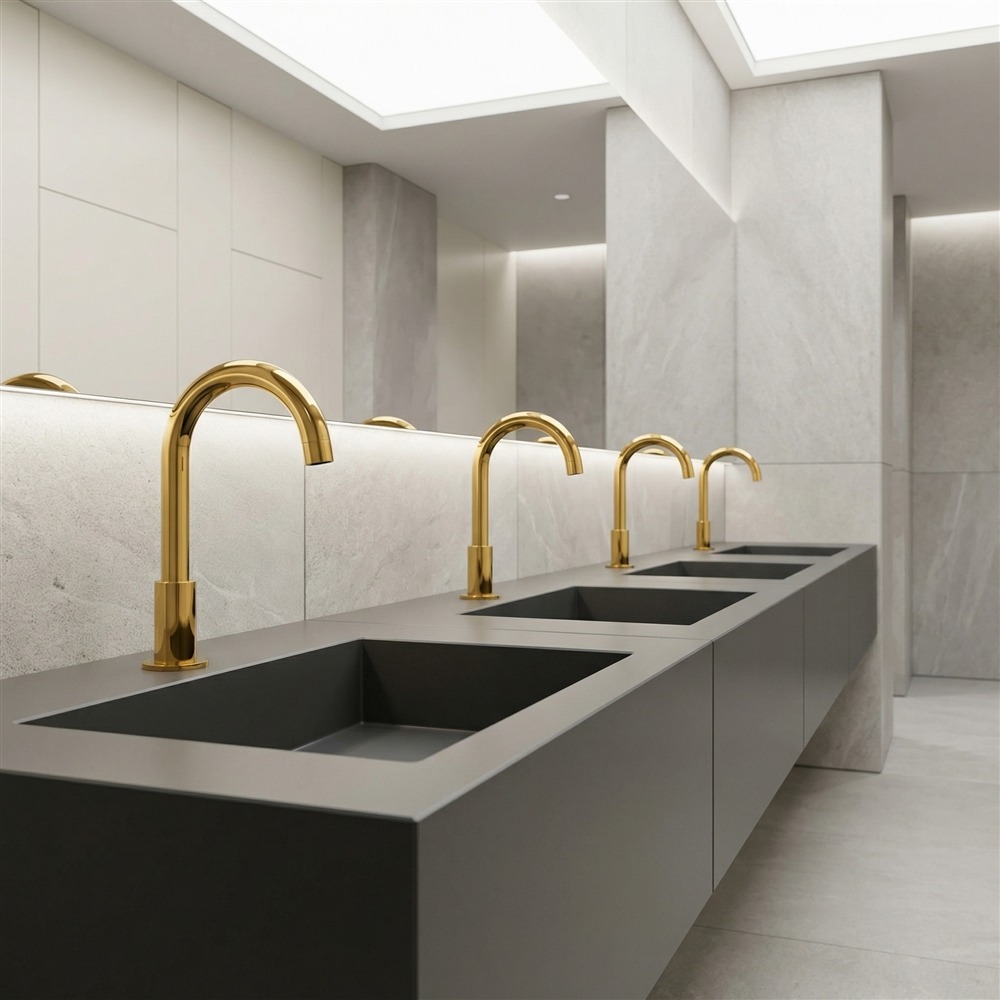
Balance quiet design with service reliability. A clean spout shape, polished finish, and controlled splash pattern can improve the guest experience without weakening the specification.
Installation Checklist
Before approving a commercial touchless faucet, review the full installation conditions. A reliable faucet can still perform poorly if the sink, power supply, valve package, or water pressure is not coordinated.
- Confirm sink hole layout: single-hole, 4-inch centerset, 8-inch cover plate, or wall-mount conditions.
- Check deck thickness: confirm the faucet can mount securely to the counter or lavatory.
- Review power access: battery, plug-in transformer, hardwire, hydropower, or backup battery plan.
- Confirm water pressure range: match the product’s operating pressure to the building system.
- Specify temperature control: add mixing valve or thermostatic mixing assembly where required.
- Plan cleaning mode: maintenance teams need a way to clean around the sensor without repeated activations.
- Document replacement parts: keep aerators, solenoids, filters, batteries, sensors, and mounting hardware on the maintenance list.
Common Mistakes
Choosing Residential Fixtures
Residential touchless faucets may look attractive, but commercial restrooms need parts, finishes, sensors, and warranties designed for heavier use.
Ignoring Splash Control
Flow rate alone does not solve splash. Match spout height, reach, outlet type, and basin depth so water lands cleanly in the bowl.
Skipping ADA Review
Touchless operation can help usability, but the full lavatory area still needs proper knee clearance, reach, mounting, and restroom layout coordination.
Forgetting Maintenance
A faucet that is difficult to service can cost more over time. Check battery access, filter location, sensor diagnostics, and replacement part availability.
FAQ
What flow rate is commonly specified for a commercial restroom touchless faucet?
A 0.5 GPM outlet is a common choice for public lavatory faucets. It supports water efficiency while still giving enough water for normal handwashing. Always confirm local code and project requirements.
Are battery-powered touchless faucets good for commercial restrooms?
Yes, battery-powered models can be a good choice for retrofits and smaller projects. For high-traffic buildings, confirm battery life, access, low-battery indicators, and whether the faucet can convert to plug-in or hardwired power.
Do touchless faucets help with hygiene?
They reduce the need to touch faucet handles during handwashing. For a broader restroom hygiene strategy, pair sensor faucets with touchless soap dispensers, proper hand drying, regular cleaning, and clear maintenance routines.
Which performance factors matter in high-traffic restrooms?
Review reliability, service access, vandal resistance, sensor accuracy, water efficiency, and replacement part availability together for high-traffic restroom applications.
Which brands offer commercial touchless faucets?
Sloan, TOTO, Zurn, Delta Commercial, American Standard, Moen Commercial, Chicago Faucets, and KOHLER all offer commercial touchless options. Model selection should be based on project type, power access, maintenance preferences, sink design, budget, and local specification requirements.
Reference Sources
These references support the technical points in this guide. They are included as clean source buttons for readers, specifiers, facility managers, and editorial review.
Specification Summary
For most commercial restrooms, start with a 0.5 GPM commercial-grade sensor faucet from a recognized manufacturer, then narrow the selection by power source, maintenance access, vandal resistance, ADA coordination, and sink compatibility. Long-term performance should be evaluated alongside appearance during specification and submittal review.