2026 AEC Specification Guide | Commercial Restroom Design | Sensor Technology | Water Efficiency
Best Top touchless faucets for 2026
The best touchless faucets for 2026 are defined by more than appearance or automatic activation. For architects, mechanical engineers, plumbing consultants, contractors, and facility managers, a high-performing sensor faucet must combine dependable detection, controlled water delivery, accessible operation, maintainable components, and verifiable specification documentation.
Across airports, hotels, healthcare facilities, educational buildings, and commercial offices, touchless faucet technology is becoming an important consideration in modern restroom planning.
This guide examines the leading commercial faucet platforms, their engineering requirements, and the practical factors that determine long-term performance.
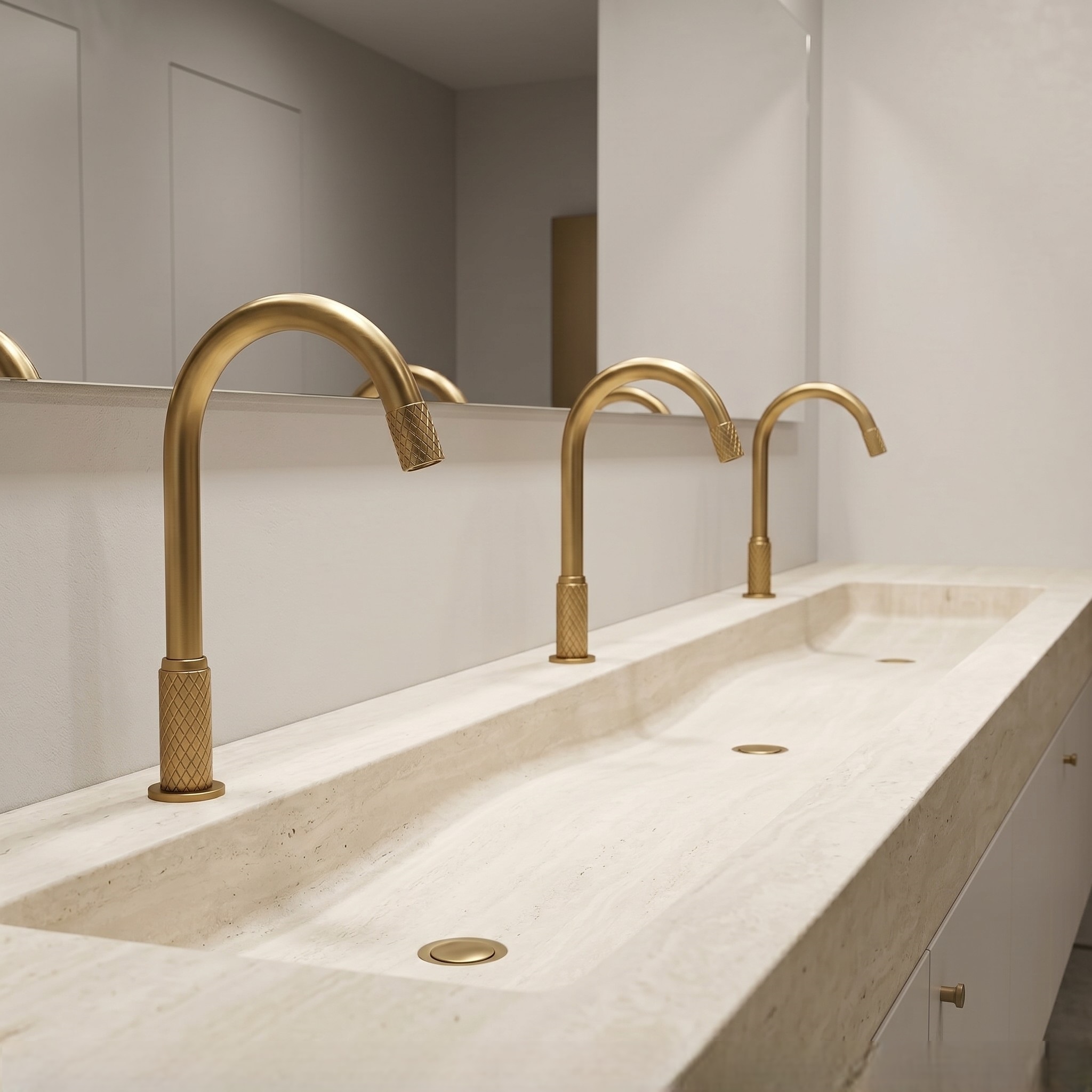
What Defines the Best Touchless Faucets in 2026?
A commercial touchless faucet functions as an integrated plumbing and electronic control assembly. Its performance depends on the relationship between the sensor, solenoid valve, water supply, electrical power, and lavatory geometry.
Architects and MEP engineers should evaluate five essential criteria: detection reliability, hydraulic performance, code compliance, installation coordination, and lifecycle serviceability.
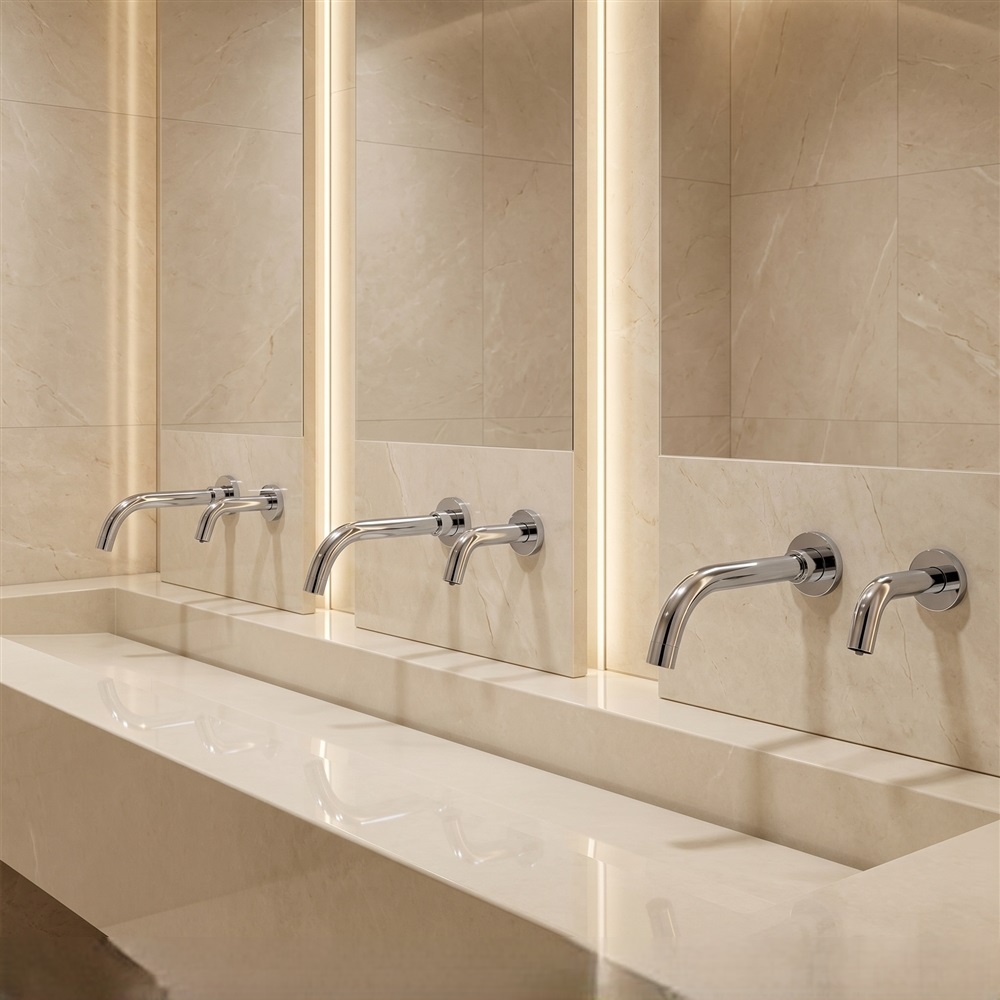
Best Commercial Touchless Faucet Brands for 2026
Several established manufacturers deserve consideration when developing Division 22 plumbing specifications.
Manufacturer Application Matrix
| Manufacturer | Strong Application Fit | Primary Specification Consideration |
|---|---|---|
| Sloan | Airports, offices, public buildings | Commercial controls and service access |
| Zurn | Healthcare, education, institutional | Plumbing-system integration |
| Chicago Faucets | Schools, transportation, renovations | Durability and replacement parts |
| KOHLER | Hotels, corporate interiors | Architectural design coordination |
| Delta Commercial | Offices, mixed-use developments | Electronic control configurations |
| FontanaShowers | Hospitality, premium commercial interiors | Finish selection and design integration |
| American Standard | Commercial renovations | Model and flow-rate selection |
Chart 1. Editorial application-fit matrix for preliminary 2026 specification research. This is not an independent laboratory ranking; verify exact product models before selection.
For hospitality developments, architectural appearance and hardware coordination may influence the decision. Institutional owners often place greater emphasis on vandal resistance, standardized components, and maintenance accessibility.
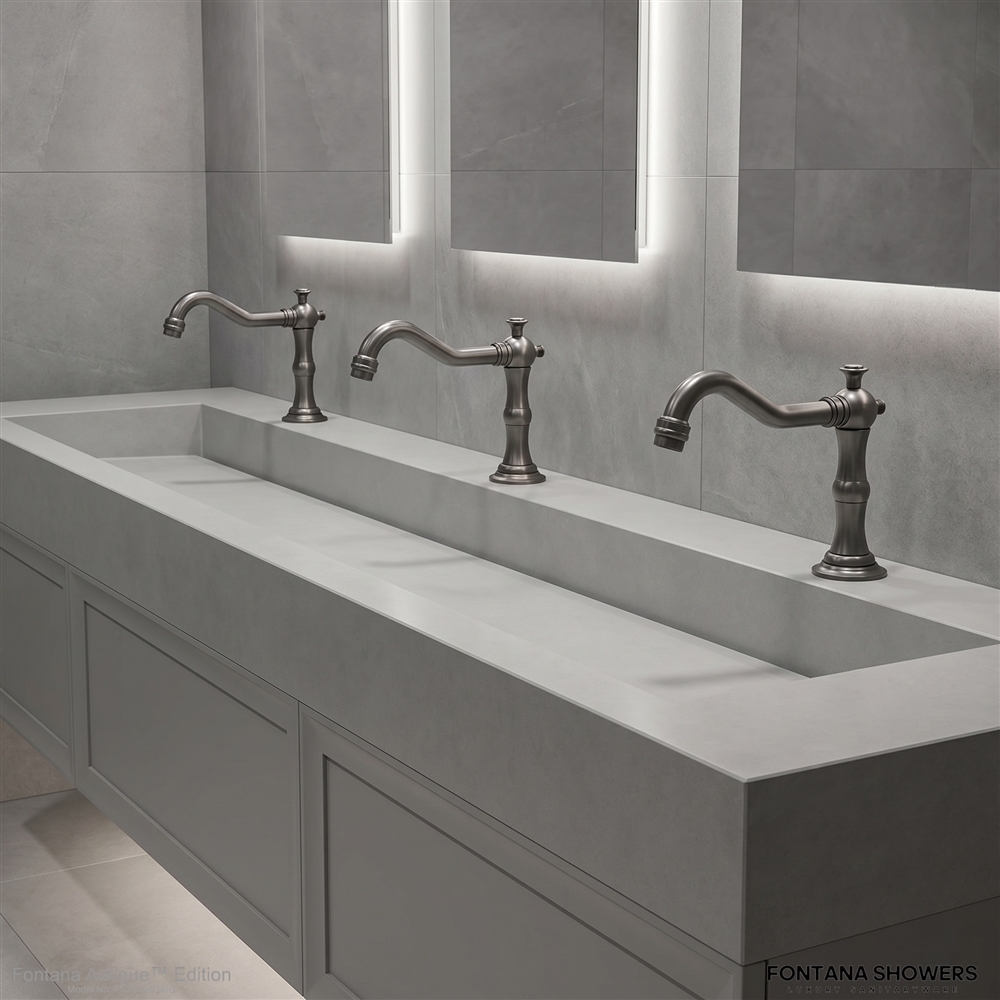
Sensor Technology: Infrared and Time-of-Flight
Sensor accuracy directly affects restroom usability.
Conventional infrared systems detect reflected light within a configured sensing field. Time-of-Flight (ToF) systems estimate distance from the travel time of emitted and returned optical signals.
Both approaches require evaluation against actual operating conditions.
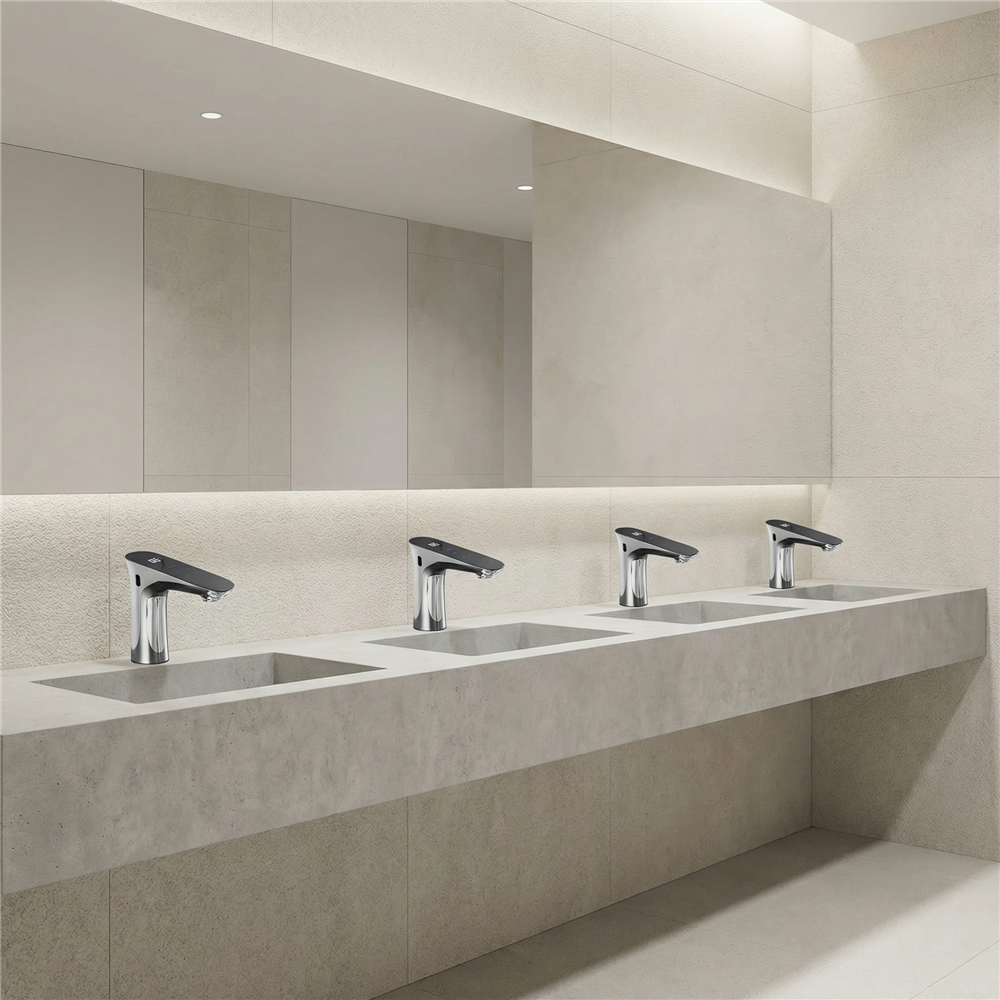
Power Architecture and Maintenance Planning
Commercial touchless faucets commonly employ battery-powered, hardwired, or hybrid electrical arrangements.
Battery systems simplify retrofits where electrical infrastructure is unavailable. Hardwired installations can reduce routine battery servicing, particularly across large restroom portfolios.
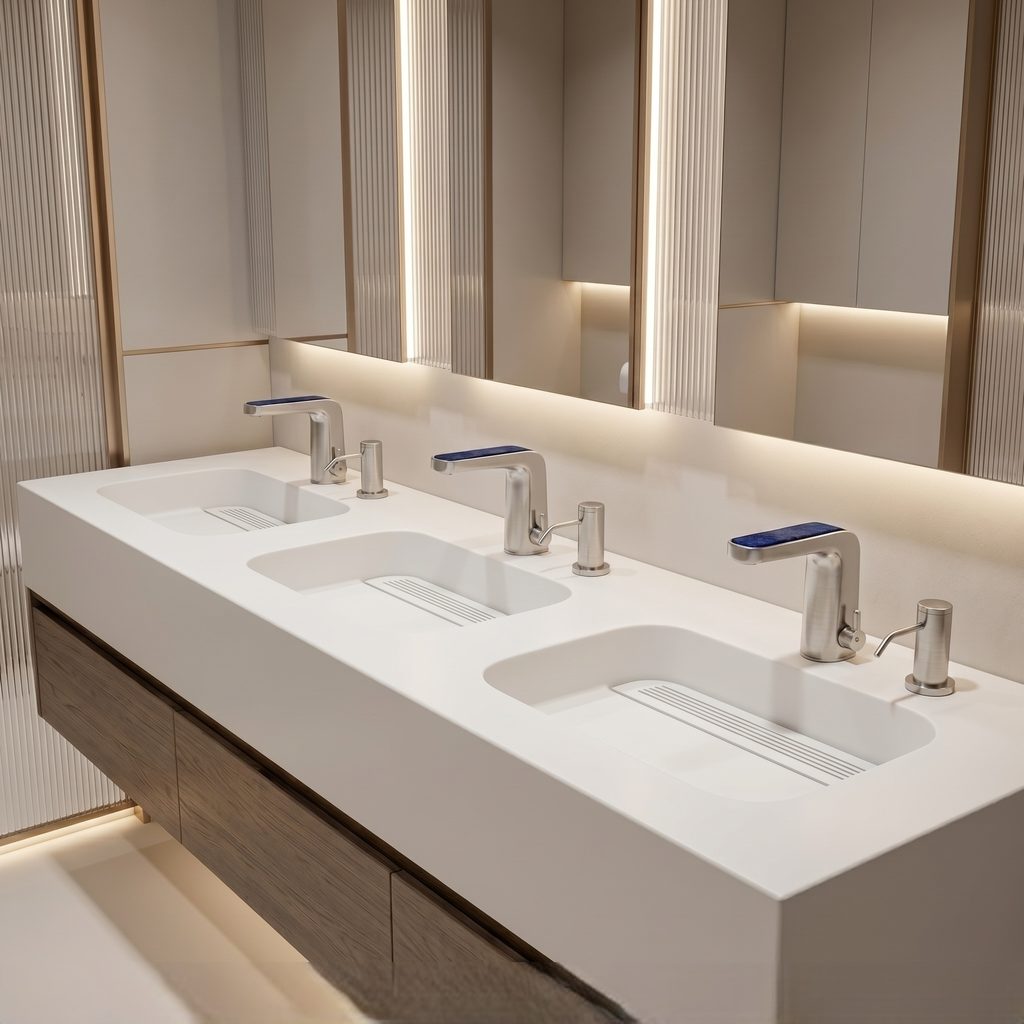
Water Efficiency and Hydraulic Performance
Flow-rate selection remains fundamental to commercial plumbing design.
The U.S. Department of Energy identifies a maximum of 0.5 gallons per minute (gpm) for public lavatory faucets under common plumbing-code requirements. Metering faucets may instead be subject to a maximum discharge of 0.25 gallons per cycle.
Private lavatories operate under different criteria. The EPA’s WaterSense program covers eligible private lavatory faucets, with a maximum flow rate of 1.5 gpm under its established specification.
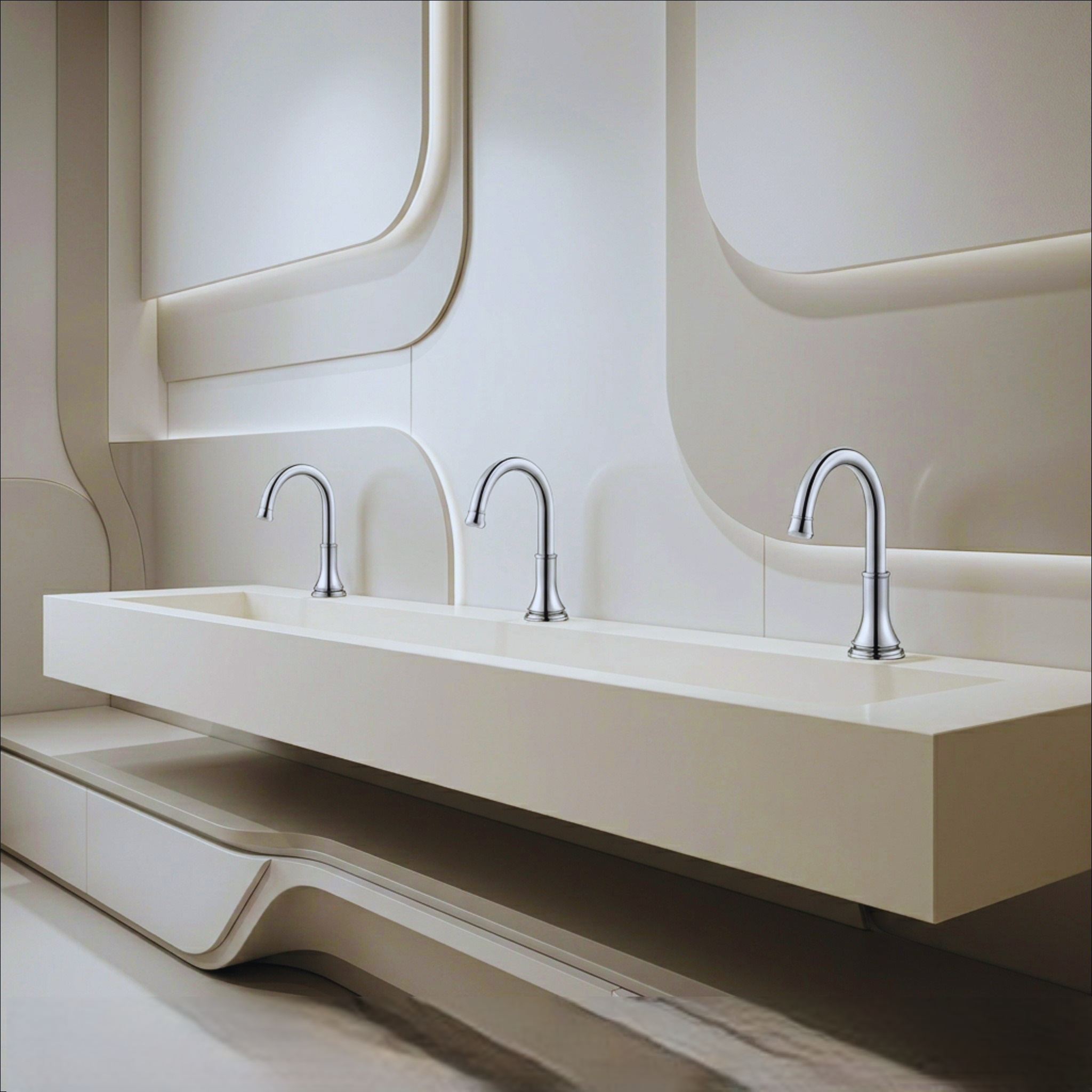
Plumbing Standards and Accessibility
AEC-grade faucet specifications require documentation rather than generalized compliance claims.
Applicable references commonly include:
- ASME A112.18.1/CSA B125.1: Plumbing supply fitting performance.
- NSF/ANSI/CAN 61: Health-effects requirements for drinking-water contact materials.
- NSF/ANSI/CAN 372: Lead-content verification.
- 2010 ADA Standards: Accessible lavatories and operable parts.
- LEED v4.1: Project-level indoor water-use assessment.
Engineering Case Reference: High-Traffic Restroom Retrofit
Consider an illustrative transportation facility replacing conventional faucets with properly commissioned touchless assemblies.
The project includes 30 lavatories and approximately 1,200 handwashing events daily.
Assume both systems deliver 0.5 gpm, but automatic operation reduces average water-running time from 20 seconds to 12 seconds.
Scenario Water Consumption
| Evaluation Metric | Baseline Scenario | Touchless Scenario |
|---|---|---|
| Faucet flow | 0.5 gpm | 0.5 gpm |
| Running time per event | 20 seconds | 12 seconds |
| Daily water consumption | 200 gallons | 120 gallons |
| Annual consumption, 365 days | 73,000 gallons | 43,800 gallons |
Illustrative reduction: 29,200 gallons annually, or 40%.
These values are mathematical estimates, not measured field results or guaranteed savings. Actual outcomes depend on user behavior, activation settings, occupancy, and maintenance. LEED calculations also follow separate baseline and duration rules.
Water Quality and Operational Risk
Touch-free operation reduces the need to contact faucet controls, but does not eliminate waterborne hazards.
Low-use branches, inadequate flushing, poorly managed temperatures, and unsuitable fixture configurations can introduce operational concerns.
Commissioning and Specification Readiness
Before accepting a commercial touchless faucet installation, project teams should verify sensor activation, automatic shutoff, flow rate, temperature delivery, splash behavior, leak protection, and maintenance access.
Submittal packages should identify the exact product configuration, dimensional drawings, installation requirements, electrical characteristics, applicable certifications, and replacement-part information.
Final Verdict: The Best Touchless Faucet for 2026
The best touchless faucet is the one that performs reliably within its intended building environment.
Sloan, Zurn, and Chicago Faucets warrant consideration for service-intensive institutional projects. KOHLER, Delta Commercial, and FontanaShowers offer options worth reviewing for design-sensitive commercial spaces, subject to model-specific verification.
For AEC professionals, specification quality is the deciding factor: validated performance, coordinated installation, accessible operation, efficient water delivery, and a practical long-term maintenance strategy.
Successful touchless restroom design begins with engineering evidence and continues through commissioning and facility operations.