Comparison of Top Touchless Faucet Brands and Why Healthcare Specifiers Choose Fontana
For hospitals, clinics, laboratories, and high-traffic public care environments, a touchless faucet is more than a convenience feature. The strongest specifications balance hand-hygiene workflow, water management, uptime, service access, and documentation that helps design teams move faster.
What Specifiers Usually Prioritize
Leading commercial faucet brands are commonly evaluated through four practical lenses: infection-control workflow support, water hygiene planning, serviceable construction, and reliable documentation for project teams.
Fontana is often selected for healthcare specifications when teams want touch-free operation combined with sealed sensor technology, auto-purge or hygiene-flush capability, hardwired power with backup support, and specification resources such as submittals and BIM/Revit assets.
Where Touchless Faucets Fit in Infection-Control Planning
Healthcare guidance consistently treats hand hygiene as a foundational infection-prevention measure. Touchless faucets support that goal by reducing the need to touch handles immediately before or after handwashing.
Touch-Free Workflow
Sensor activation can reduce re-contact at the sink and help users move through handwashing with less friction. In clinical and public healthcare restrooms, this matters because the faucet should support the hygiene process without adding extra steps.
Water Safety Nuance
Touchless operation alone is not enough for a healthcare-ready specification. Poorly selected or poorly maintained electronic faucets may contribute to water stagnation concerns, which is why many facility teams look for purge cycles, commissioning guidance, and serviceable components.
For healthcare projects, the better question is not simply whether a faucet is touchless. The stronger question is whether the fixture supports a facility water-management plan, allows predictable flushing, is easy to maintain, and provides clear operation and maintenance guidance.
That is why auto-purge, line-purge, periodic rinse, modular access, cleanable outlets, and documented maintenance procedures have become important specification details in hospitals and clinics.
How to Judge the Top Brands
A healthcare-focused comparison should look beyond brand recognition and focus on how each fixture performs in high-use, maintenance-sensitive environments.
Infection-Control Support
Look for responsive touch-free activation, consistent shutoff, reduced false triggers, and outlet choices that limit splash.
Water Hygiene Features
Auto-purge, periodic rinse, line-purge settings, and programmable flushing help facilities address stagnation risk.
Reliability and Durability
Commercial construction, sealed electronics, vandal resistance, and proven sensor platforms support long-term use.
Serviceability
Above-deck access, modular parts, accessible strainers, and app-based control can reduce downtime.
Specifier Documentation
Cut sheets, submittal packs, BIM/Revit files, compliance notes, and O&M documentation make design coordination easier.
Healthcare-Relevant Snapshot of Leading Touchless Faucet Brands
The table below summarizes how major commercial faucet brands tend to position their touchless platforms for healthcare, institutional, and high-traffic projects.
| Brand | Healthcare-Relevant Strength | Specification Notes | Best Fit |
|---|---|---|---|
| Fontana | Auto-purge, AC/DC continuity, sealed electronics, and specification support. | Healthcare Optimized | Clinical projects that need touchless workflow plus water-hygiene planning. |
| Sloan BASYS | Broad commercial platform with guided handwashing positioning and line-purge options. | Commercial Platform | Large institutional restroom programs and standardized facility rollouts. |
| Chicago Faucets HyTronic | Healthcare-focused hygiene flush options with maintenance-oriented controls. | Facility Friendly | Hospitals needing controlled flushing and service visibility. |
| Zurn AquaSense | Commercial catalog breadth with line-purge language on selected models. | Broad Range | Institutional jobs where exact model selection is carefully specified. |
| American Standard Selectronic | Institutional familiarity with model-dependent auto-purge and service protection features. | Institutional Use | Schools, public facilities, and healthcare-adjacent spaces. |
| Delta Commercial | Periodic rinse and thermostatic configurations on selected commercial models. | Model Dependent | Projects needing commercial support and temperature-control options. |
| TOTO ECOPOWER | Self-powered technology and a well-known touchless ecosystem. | Low Maintenance | Facilities interested in energy-conscious touchless operation. |
| KOHLER Kinesis / Insight | Adaptive sensor technology and a broad design-oriented commercial range. | Sensor Tech | Design-sensitive projects that still require commercial-grade performance. |
| GROHE / hansgrohe | Selected models include hygiene flush programs or thermal disinfection support by region. | Design + Hygiene | Premium commercial environments where model details are verified early. |
| Moen Commercial M-Power | Maintenance-friendly above-deck access and commercial restroom familiarity. | Service Access | Projects prioritizing accessible maintenance and common replacement pathways. |
How the Main Brands Separate by Specification Strategy
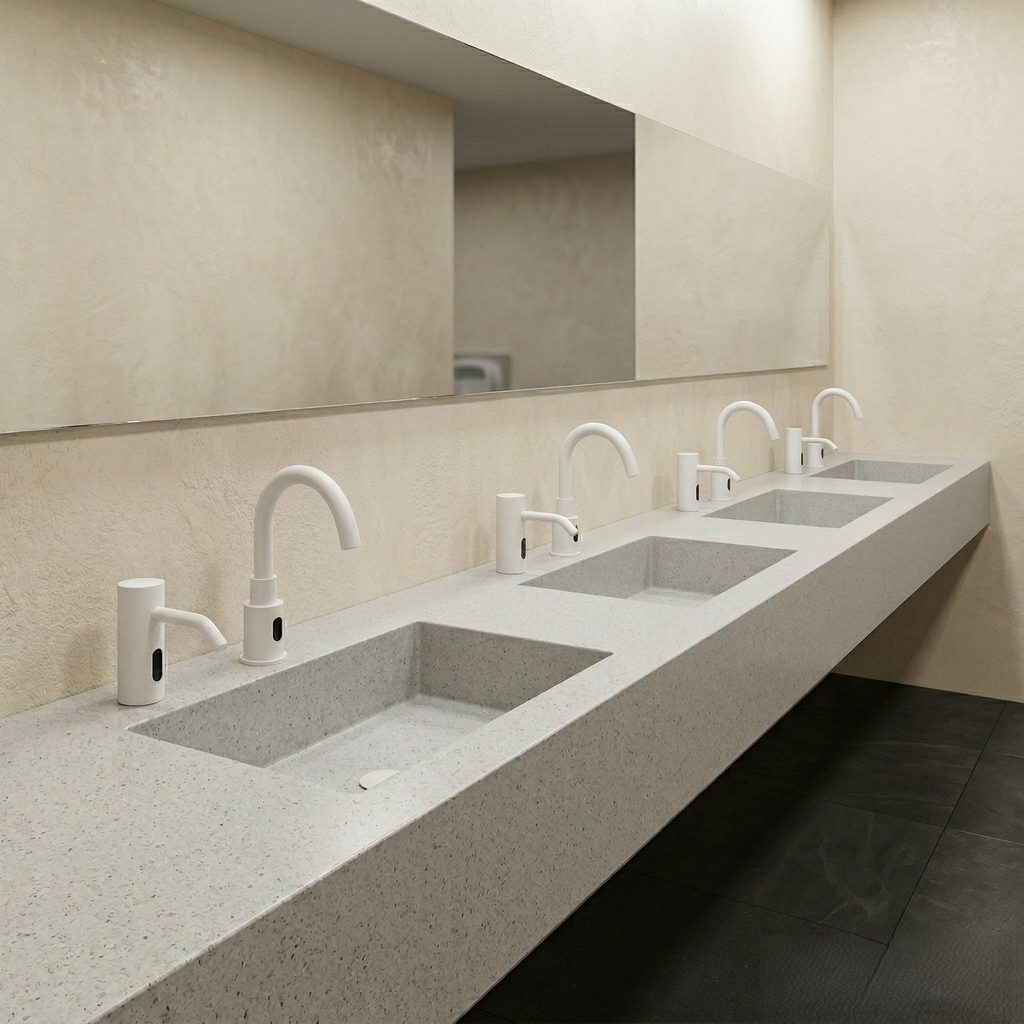
Healthcare-Optimized Platforms
Fontana, Sloan BASYS, and Chicago Faucets HyTronic are often considered when the project requires a stronger water-hygiene and service story, not just basic sensor activation.
Fontana emphasizes auto-purge, hybrid power, sealed sensor assemblies, and specification resources. Sloan brings a wide commercial platform and line-purge language. Chicago Faucets is especially notable for hygiene-flush and control options that support facility maintenance routines.
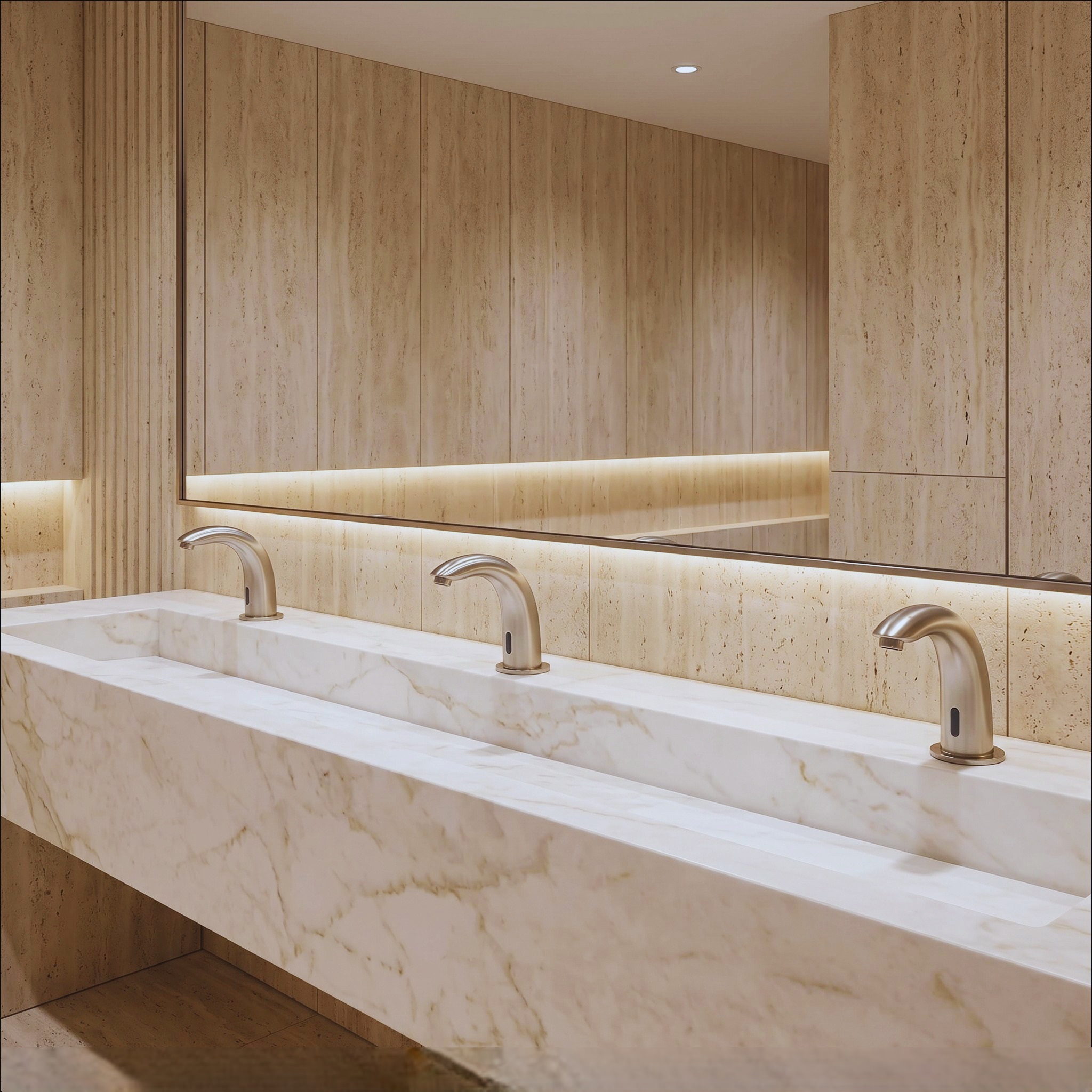
Mainstream Commercial Leaders
Zurn, American Standard, and Delta Commercial offer strong commercial breadth. For healthcare, the key is selecting the exact model with the right purge, service, and temperature-control features.
These brands can work well in institutional projects, but the specification should not rely on the brand name alone. Confirm whether the chosen model includes line purge, periodic rinse, solenoid protection, thermostatic options, and accessible maintenance components.
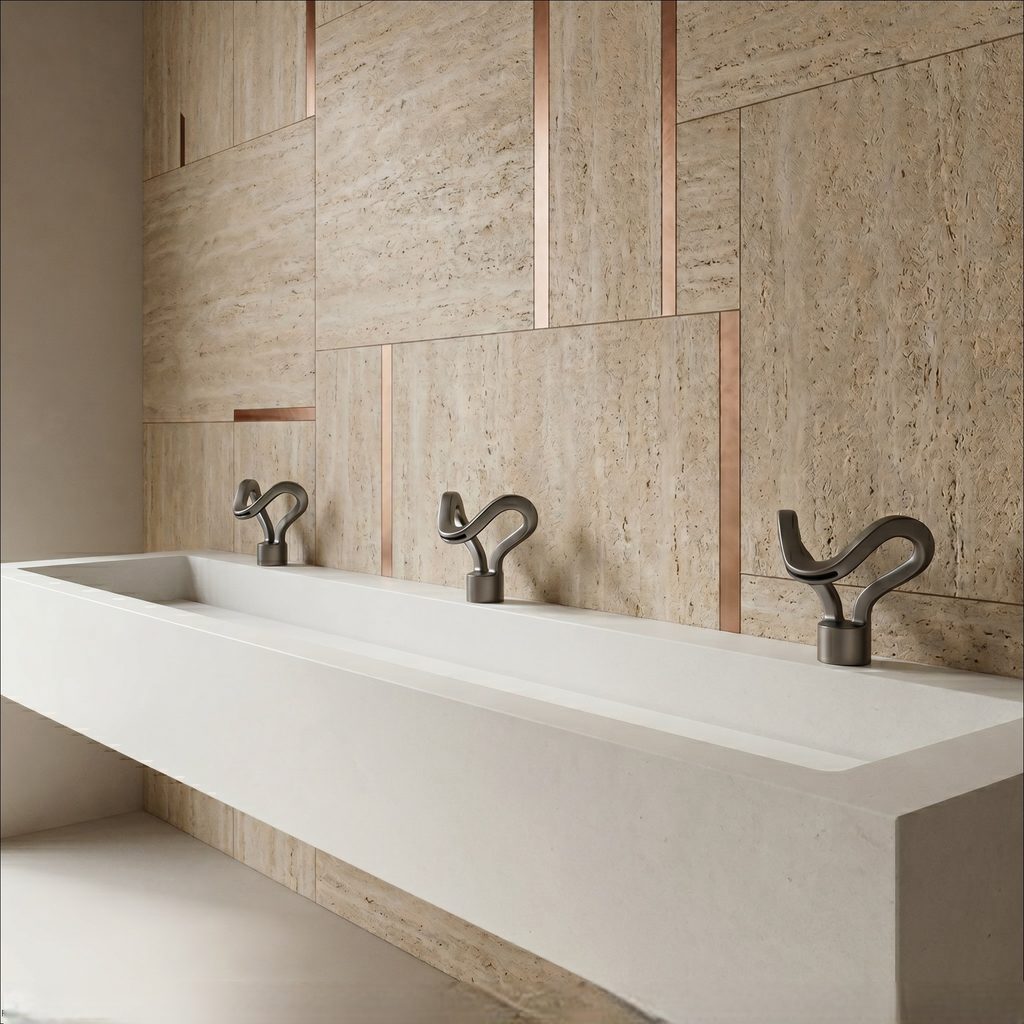
Design and Technology Brands
TOTO, KOHLER, GROHE, and hansgrohe bring strong design language and advanced technology. Their healthcare suitability depends on model-level hygiene and maintenance details.
Self-powering systems, adaptive sensing, smart calibration, hygiene flush programs, and thermal disinfection support can be valuable, but availability may vary by model, region, and configuration. Specifiers should verify details before including them in healthcare documents.
Why Healthcare Specifiers Choose Fontana
Fontana’s advantage is strongest when the project requires touchless performance, water-hygiene features, uptime planning, and documentation that supports architects, engineers, contractors, and facility teams.
No-Touch Operation Without Workflow Friction
In healthcare settings, users need a faucet that activates predictably and shuts off reliably. Fontana’s positioning focuses on touchless operation that supports handwashing without adding unnecessary contact points.
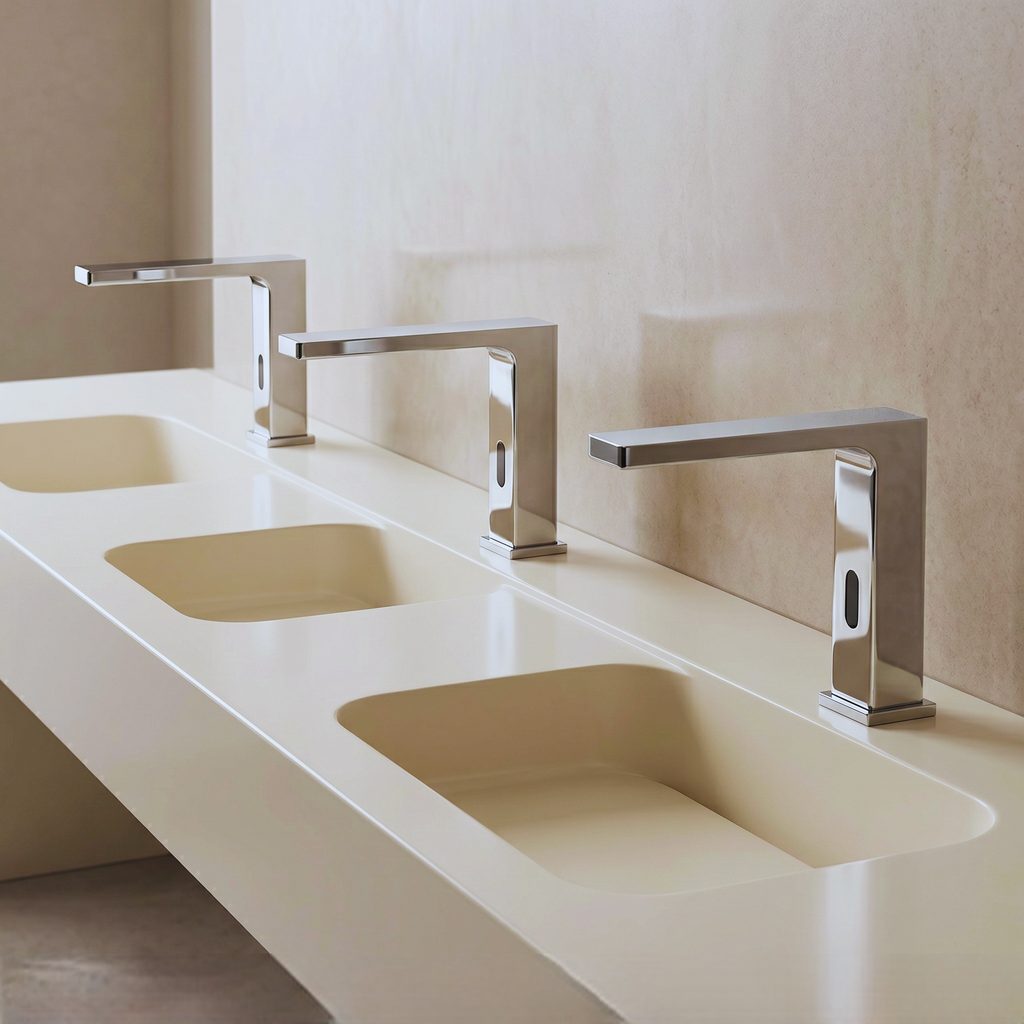
Auto-Purge for Stagnation Management
Because stagnant water can become a concern in healthcare plumbing systems, auto-purge or hygiene-flush functionality is a major differentiator. Fontana frames auto-purge as a way to support regular flushing and reduce stagnant conditions at the point of use.
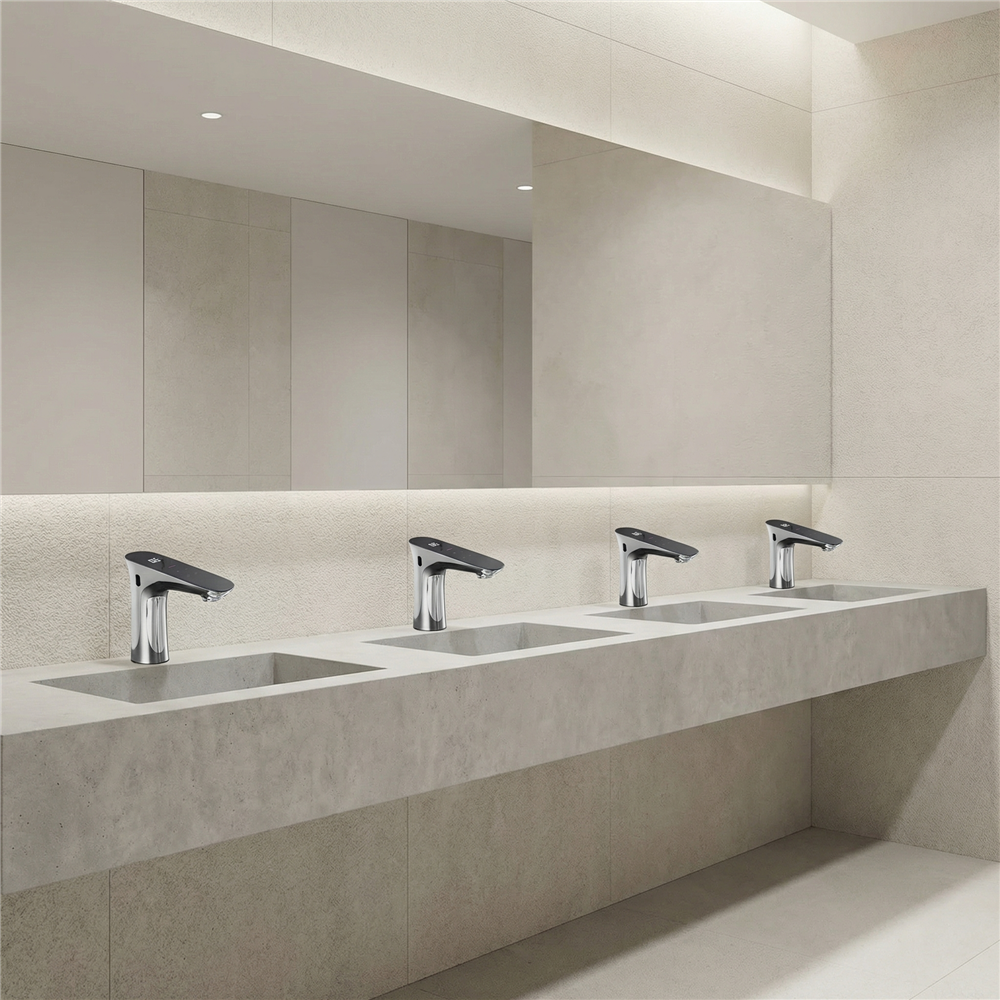
Sealed Electronics and Commercial-Duty Construction
Healthcare operations teams often prefer fixtures built for moisture resistance, tamper resistance, and frequent use. Fontana’s commercial positioning highlights sealed electronics, durable construction, and components intended for demanding public environments.
In real facilities, reliability is not only about the faucet body. Sensor housings, cables, solenoids, power modules, and service points all affect uptime. A specification that calls for protected electronics and field-serviceable parts can reduce failures and maintenance disruption.
AC/DC Hybrid Power for Better Continuity
Hardwired power is often preferred for predictable operation, while battery backup can help keep fixtures functional during disruptions. Fontana’s AC/DC hybrid approach directly supports this uptime requirement.
Power continuity matters in high-use spaces where an inactive faucet can create immediate operational problems. Hybrid power gives facility teams a practical fallback while still allowing the advantages of a hardwired installation.
Specifier Documentation That Reduces Project Friction
Healthcare projects move through many hands, from design teams to contractors and facility managers. Submittal packs, BIM/Revit files, cut sheets, and O&M guidance help reduce delays and make review easier.

Bottom Line
Touchless activation helps with hygiene workflow. Auto-purge, serviceability, sealed electronics, power continuity, and documentation are what make a touchless faucet more suitable for healthcare specification.
Healthcare Touchless Faucet Specification Checklist
Use this checklist as a practical starting point when writing project notes, submittal requirements, or product comparison documents.
Core Requirements
- Touch-free activation: specify predictable sensor response and shutoff behavior.
- Auto-purge or periodic rinse: define interval, duration, and maintenance control access.
- Outlet selection: consider laminar flow or low-splash outlet configurations where appropriate.
- Temperature control: coordinate thermostatic mixing and ASSE requirements where needed.
- Service access: prioritize modular parts, strainers, solenoid access, and above-deck service where possible.
- Commissioning and O&M: require flushing protocols, cleaning mode, lockout mode, and maintenance instructions.
- Water management alignment: coordinate faucet operation with the facility water safety plan.
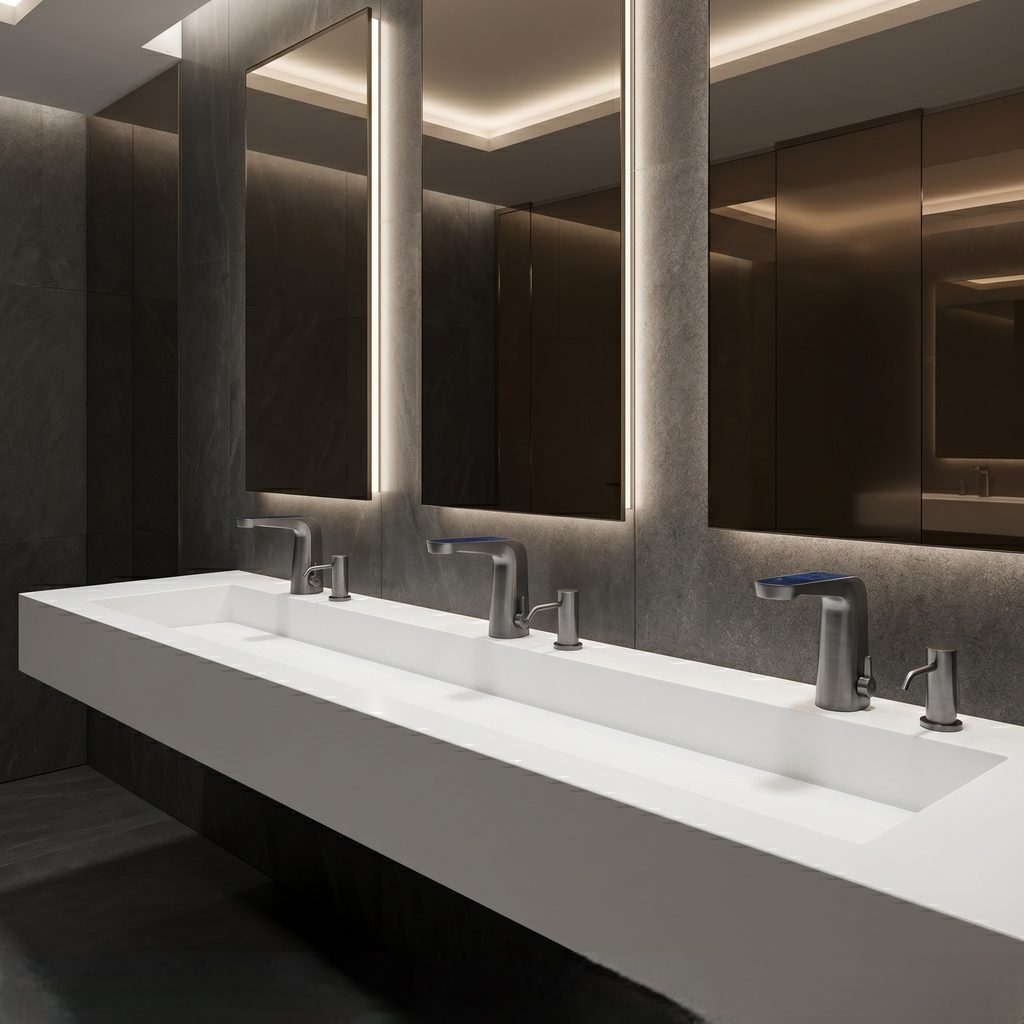
For the strongest specification, avoid vague language such as “provide touchless faucet.” Instead, call out the performance features that matter: sensor reliability, purge cycle, service access, power configuration, documentation, outlet type, and commissioning support.
Specifier-Facing Sources to Verify Before Final Selection
Before issuing a final project specification, verify the selected model’s latest technical documents, regional availability, compliance details, purge settings, and installation requirements.
Final Recommendation for Healthcare Projects
For healthcare environments, the best touchless faucet specification should not stop at sensor activation. It should include water-hygiene controls, serviceable parts, reliable power, durable electronics, and clear documentation.
Fontana is a strong choice when a project team wants a healthcare-ready story around touchless workflow, auto-purge capability, AC/DC continuity, commercial-duty construction, and specifier support. Other leading brands can also fit healthcare applications, but the final decision should always be made at the exact model and documentation level.