
Buying Guide
Selecting a touchless faucet involves more than comparing finishes, sensor sensitivity, or purchase prices. For architects, engineers, contractors, and facility managers, the right fixture must integrate reliably with plumbing infrastructure, accessibility requirements, electrical systems, and long-term building operations.
A well-specified automatic faucet can support touch-free handwashing, consistent water delivery, and streamlined restroom maintenance. However, performance depends on how the entire assembly operates under actual building conditions.
This TopTouchlessFaucets buying guide establishes a practical framework for evaluating commercial and residential sensor faucets using measurable engineering criteria, recognized plumbing standards, and lifecycle considerations.
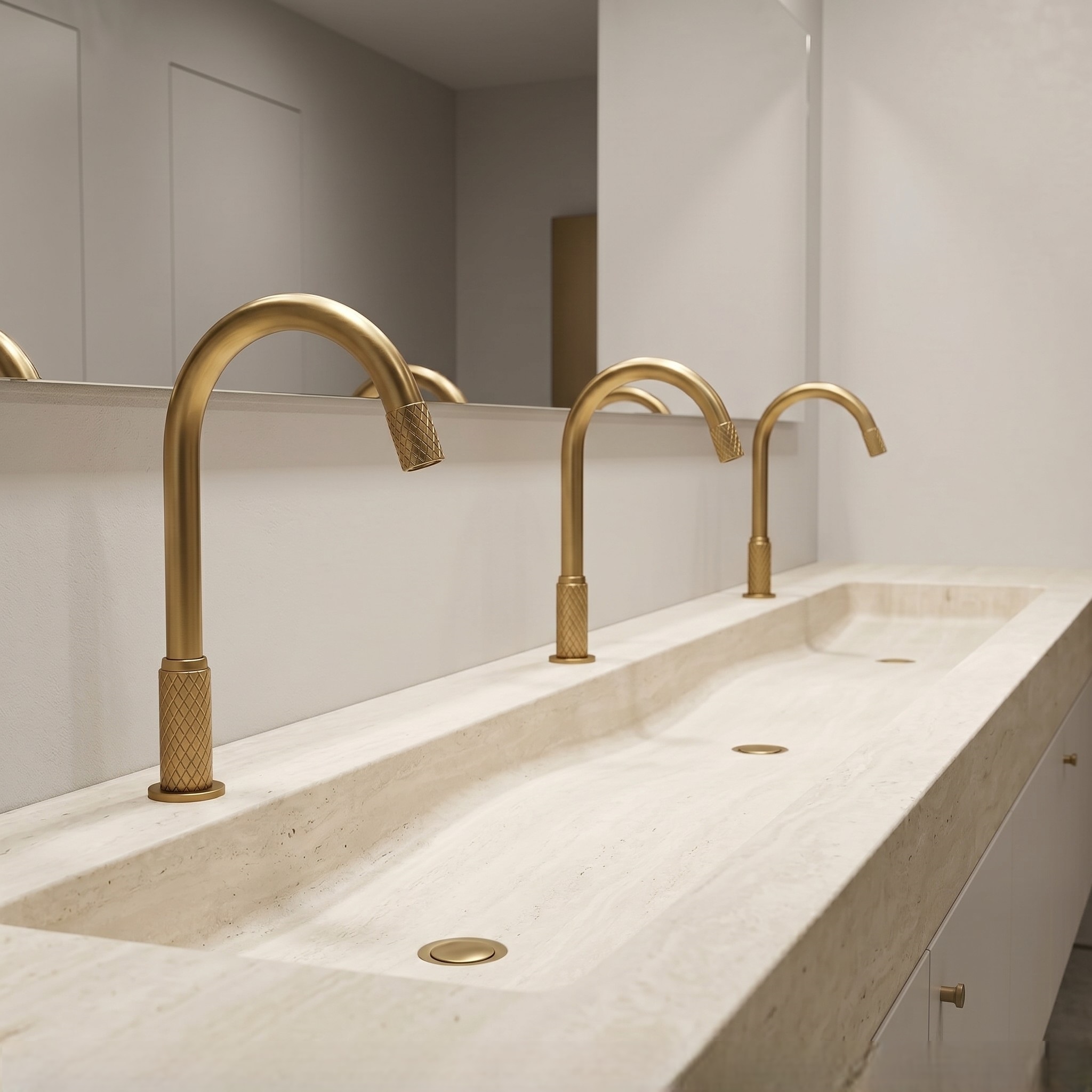
Understand the Application First
Before reviewing products, establish the facility’s operational requirements.
High-traffic environments such as airports, universities, hospitals, hospitality properties, and office buildings impose different demands on faucet construction and controls.
A commercial restroom may prioritize vandal resistance, rapid servicing, and dependable activation. A hotel guest bathroom may place greater emphasis on aesthetic integration, quiet operation, and user comfort.
Read More
An effective specification should document anticipated traffic, mounting conditions, available water pressure, power accessibility, and service expectations before product selection.
Evaluate Sensor Technology
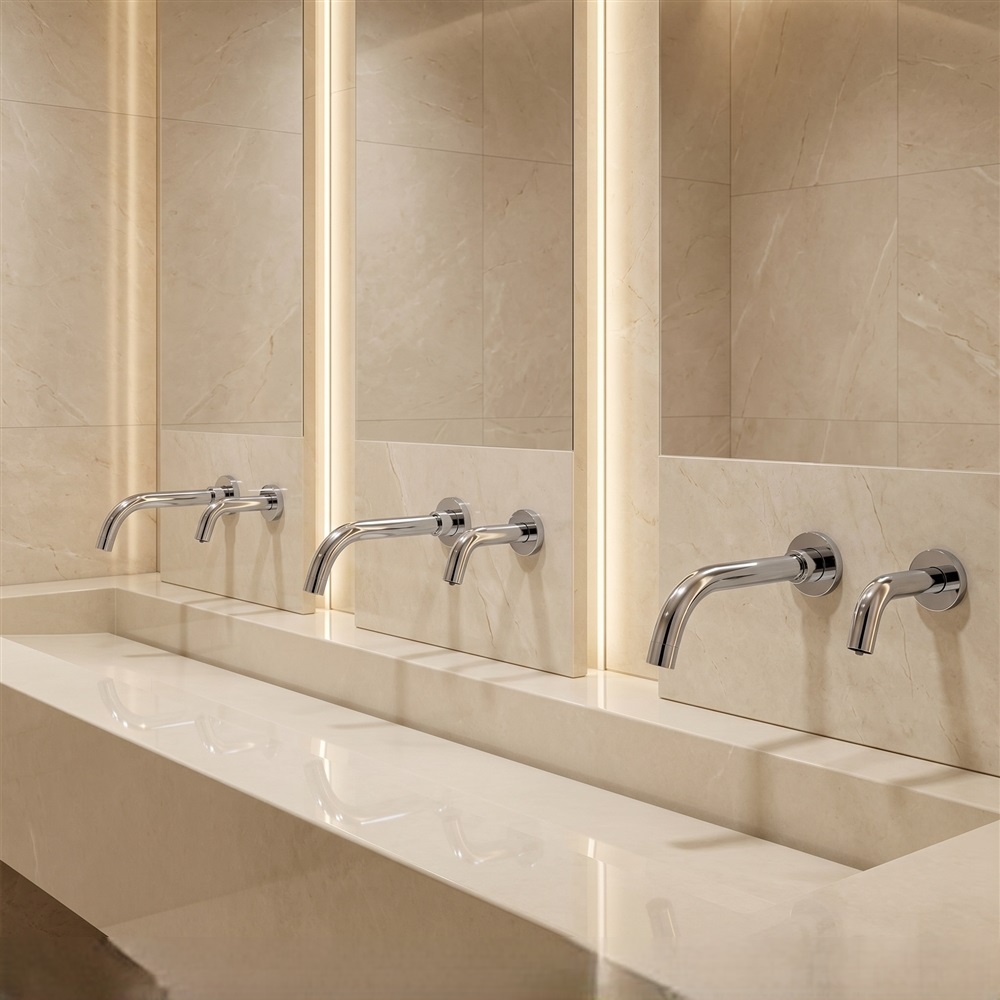
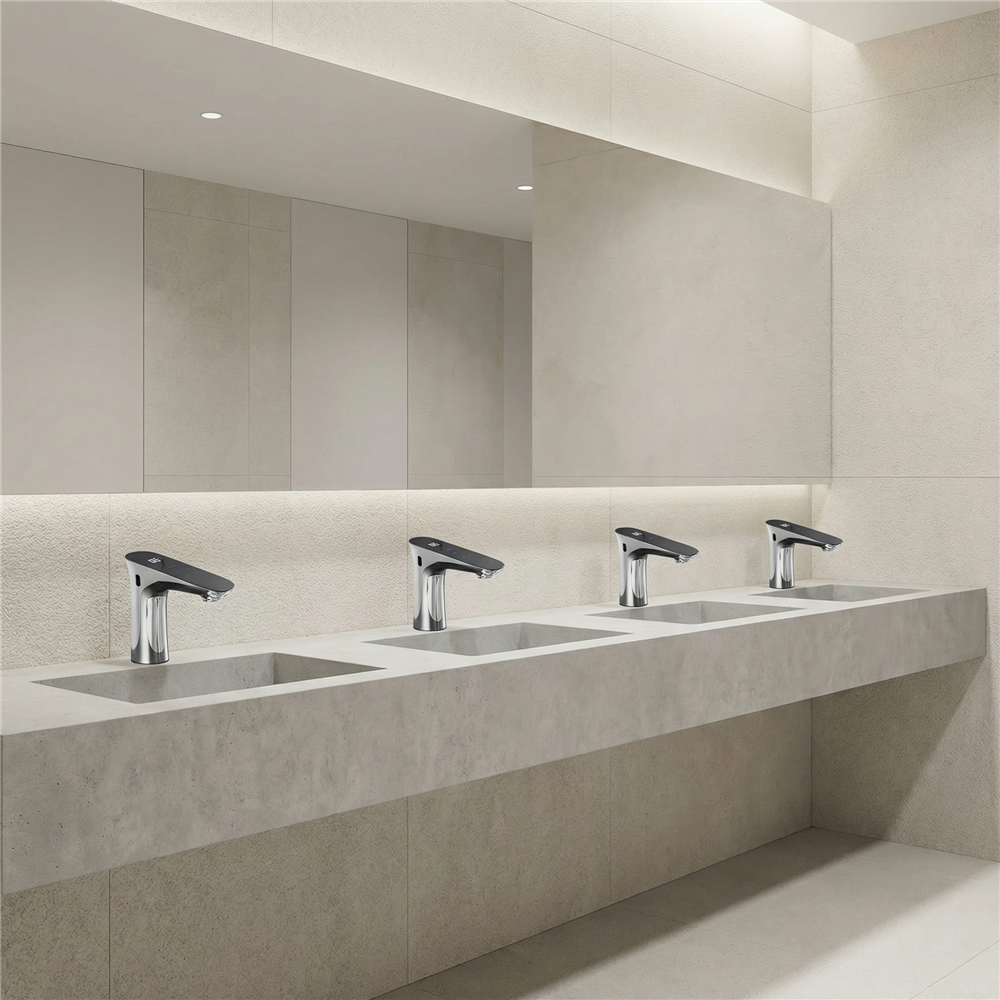
Sensor architecture directly influences activation accuracy, user experience, and operating reliability.
Most automatic bathroom faucets employ infrared detection, while some advanced systems incorporate Time-of-Flight (ToF) sensing.
Infrared Sensors
Infrared sensors detect reflected light within a defined detection zone. Their performance depends on sensor positioning, surface reflectivity, environmental lighting, and controller configuration.
Time-of-Flight Sensors
Time-of-Flight sensors estimate target distance using reflected optical signals. Depending on implementation, they may offer more precise distance-based activation control.
Read More
Neither technology guarantees superior performance without application-specific validation.
Architects and plumbing engineers should evaluate detection range, response consistency, automatic shutoff timing, and resistance to unintended activation.
For deeper technical evaluation, review the ToF touchless faucet assessment methodology.
A representative faucet-and-basin mockup remains valuable when reflective surfaces, unusual sink geometry, or demanding lighting conditions are present.
Verify Flow Performance
Water delivery should be evaluated against the applicable occupancy classification and plumbing requirements.
For public-use lavatories, 0.5 gallons per minute (GPM) is a common maximum design criterion under ASME A112.18.1/CSA B125.1.
Private lavatories follow different requirements. EPA WaterSense-labeled bathroom faucets are limited to 1.5 GPM, with certification addressing both efficiency and performance.
Read More
Designers should consult the EPA WaterSense bathroom faucet guidance before assigning efficiency requirements.
Flow rate alone is insufficient. Spout projection, bowl depth, outlet configuration, operating pressure, and drain alignment influence splash control and handwashing performance.
Automatic activation also does not independently guarantee water savings. Effective conservation requires appropriate flow restriction, sensor calibration, and controlled operating duration.
Compare Power Systems
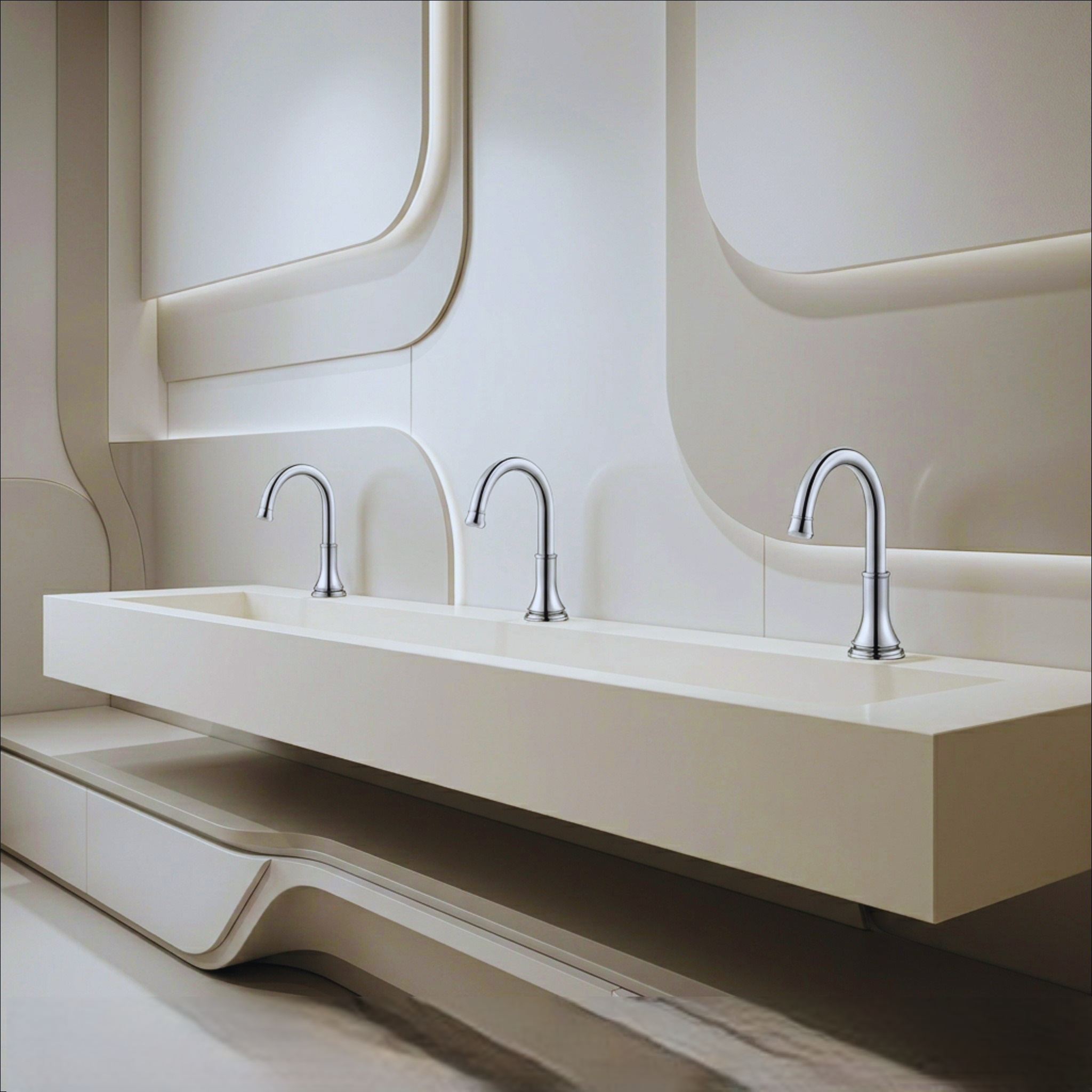
Power architecture affects installation complexity and the total cost of ownership.
Battery-Powered Faucets
Battery-powered faucets simplify many retrofits because dedicated electrical wiring may be unnecessary. However, battery replacement intervals, compartment accessibility, and monitoring procedures require consideration.
Hardwired or Transformer-Powered Faucets
Hardwired or transformer-powered faucets can reduce routine battery servicing in facilities with extensive fixture inventories.
Hybrid Configurations
Hybrid configurations may provide battery backup, subject to the manufacturer’s documented operating behavior and backup capacity.
Read More
Before procurement, confirm supply voltage, controller requirements, wiring pathways, battery chemistry, access locations, and outage behavior.
These factors become particularly important in institutional restrooms where maintenance interruptions carry operational costs.
Confirm Codes and Compliance
Technical documentation should establish compliance for the exact proposed faucet configuration.
Relevant Standards and Requirements
- ASME A112.18.1/CSA B125.1: Plumbing supply fitting performance and testing requirements.
- NSF/ANSI/CAN 61: Health-effects criteria for products contacting drinking water.
- NSF/ANSI/CAN 372: Lead-content compliance for wetted components.
- 2010 ADA Standards: Applicable accessibility requirements for lavatories and operable parts.
- Local plumbing codes: Jurisdiction-specific flow, installation, and water-temperature requirements.
Read More
These standards address different requirements and are not interchangeable.
The NSF/ANSI lead-free faucet compliance guide explains how material safety and certification documentation influence specification reviews.
Manufacturers should provide current certificates, dimensional drawings, installation instructions, and model-specific performance data.


Coordinate Accessible Design
Touch-free activation can simplify faucet operation, but accessibility depends on the complete lavatory installation.
Under ADA Section 606, applicable lavatories require compliant clear floor space, knee and toe clearance, mounting height, and protected exposed piping.
Faucet controls must meet applicable Section 309 requirements. For manually operated controls, these include one-handed usability without tight grasping, pinching, or wrist twisting.
Read More
A sensor faucet should activate naturally from the accessible user position without requiring excessive reaching.
Refer to the ADA touchless faucet planning guide when coordinating fixture geometry and user accessibility.
Technical Case: Water Consumption
Consider an illustrative transportation facility operating 24 public lavatory faucets, each delivering 0.5 GPM.
Assume 150 activations per faucet daily across 300 operating days annually.

Comparative Water-Use Chart
| Average Run Time | Water per Activation | Annual Water Use |
|---|---|---|
| 8 seconds | 0.067 gallons | 72,000 gallons |
| 12 seconds | 0.100 gallons | 108,000 gallons |
| 18 seconds | 0.150 gallons | 162,000 gallons |
| 24 seconds | 0.200 gallons | 216,000 gallons |
Illustrative engineering calculation, not actual project measurements. Assumes constant rated flow, identical usage frequency, and no unintended activation.
Engineering finding: Reducing average run time from 18 to 12 seconds produces a theoretical reduction of 54,000 gallons annually, approximately 33%.
Read More
These calculations highlight why sensor adjustment and operating duration matter alongside rated flow.
For an independent field reference, the Alliance for Water Efficiency’s sensor-operated fixture research examined monitored commercial restroom retrofits and demonstrated why touchless technology should not automatically be equated with water conservation.
Actual savings should be verified using operating records or submetered consumption.
Consider Water Quality
Water conservation must also be balanced with domestic water-system hygiene.
Reduced fixture usage, stagnant branch lines, and poorly managed temperatures can create undesirable water-quality conditions.
Read More
For healthcare and institutional applications, evaluate automated flushing options, outlet cleaning, mixing controls, and compatibility with the facility’s water management program.
Touchless operation reduces the need to handle faucet controls; it does not independently establish microbiological safety.


Assess Maintenance and Lifecycle Cost
Initial purchase price rarely represents the full operating expense.
Facility teams should assess solenoid replacement, filter cleaning, battery servicing, controller availability, installation labor, and warranty support.
Read More
A practical lifecycle evaluation should also consider replacement-part continuity, technician access, service standardization, and downtime.
For larger facilities, standardizing compatible models and service components can simplify inventory management and reduce maintenance complexity.