How to Maintain Your Top touchless faucets
Professional Maintenance Strategies for Commercial Touchless Faucets, Sensor Reliability, Water Efficiency, and Long-Term Building Performance
Touchless faucets have become essential components of contemporary restroom design, supporting contact-free operation, controlled water delivery, and streamlined facility management. However, maintaining an automatic faucet requires more than occasional surface cleaning. Reliable operation depends on coordinated attention to sensor performance, solenoid valves, electrical power, hydraulic conditions, and water quality.
For architects, mechanical engineers, plumbing contractors, and facility managers, understanding commercial touchless faucet maintenance is fundamental to protecting building performance and reducing lifecycle costs.
The technical resources available through TopTouchlessFaucets.com provide a useful framework for evaluating automatic faucet systems across commercial, institutional, healthcare, and hospitality applications.
Understanding Touchless Faucet Systems
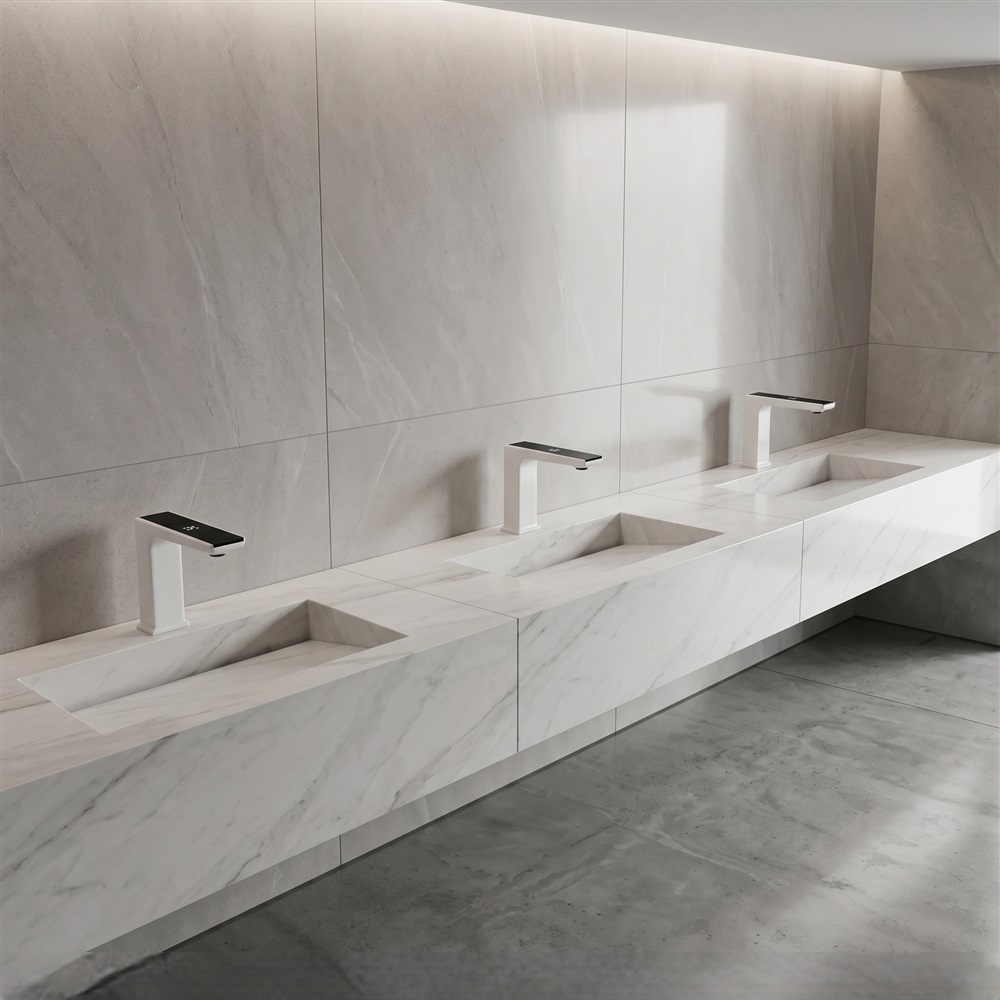
A commercial sensor faucet integrates multiple components that must operate together to deliver consistent performance.
Most systems incorporate an infrared (IR) or other electronic sensor, control module, electrically actuated solenoid valve, power supply, outlet regulator, and water supply connections.
Read More Read Less
Keep Sensors Clean and Calibrated
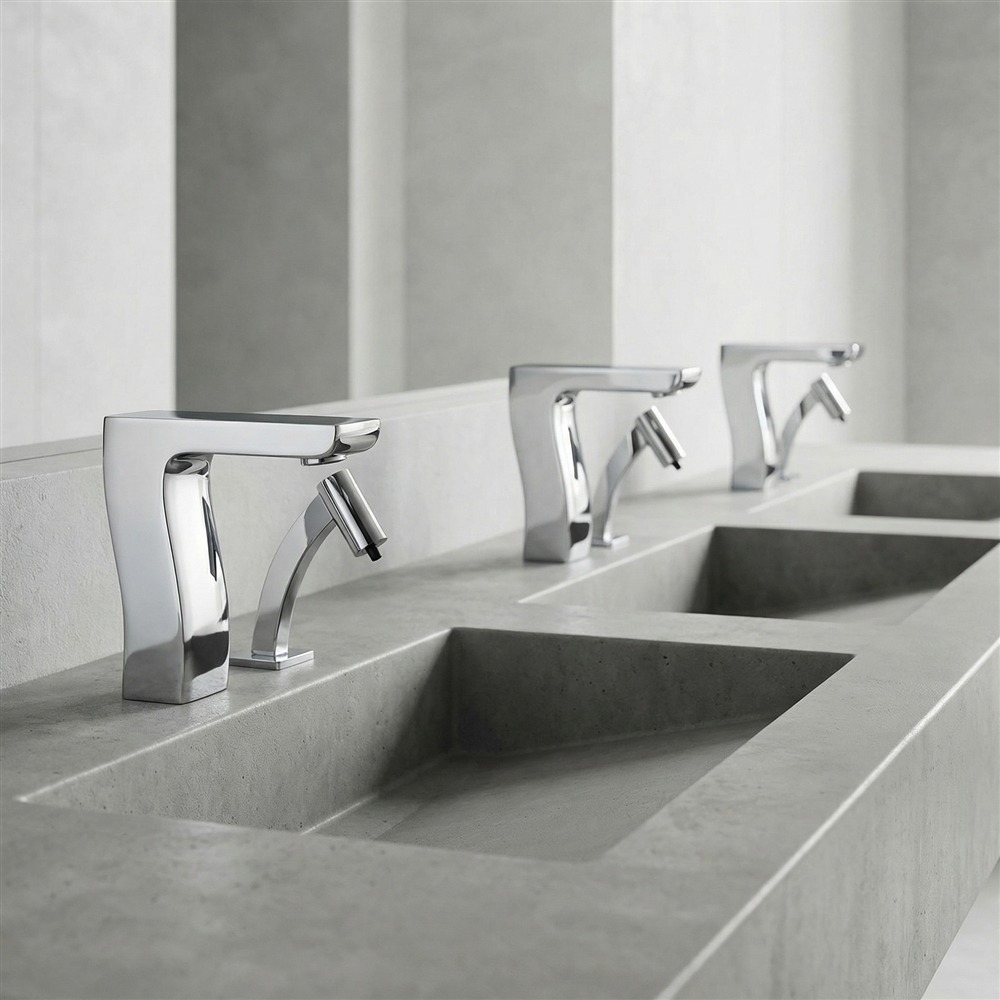
Sensor malfunction is among the most disruptive operational problems in electronic restroom fixtures.
Soap residue, mineral deposits, condensation, and surface contamination can obstruct the sensor window, preventing reliable hand detection.
Professional maintenance practices include:
- Clean sensor windows using a soft, nonabrasive cloth and manufacturer-approved mild cleaning solution.
- Remove nearby objects that interfere with the detection field.
- Check whether reflective basin surfaces cause unintended activation.
- Verify activation and automatic shutoff using normal handwashing positions.
- Recalibrate detection sensitivity only according to the product-specific instructions.
Read More Read Less
Maintain Aerators, Filters, and Water Flow
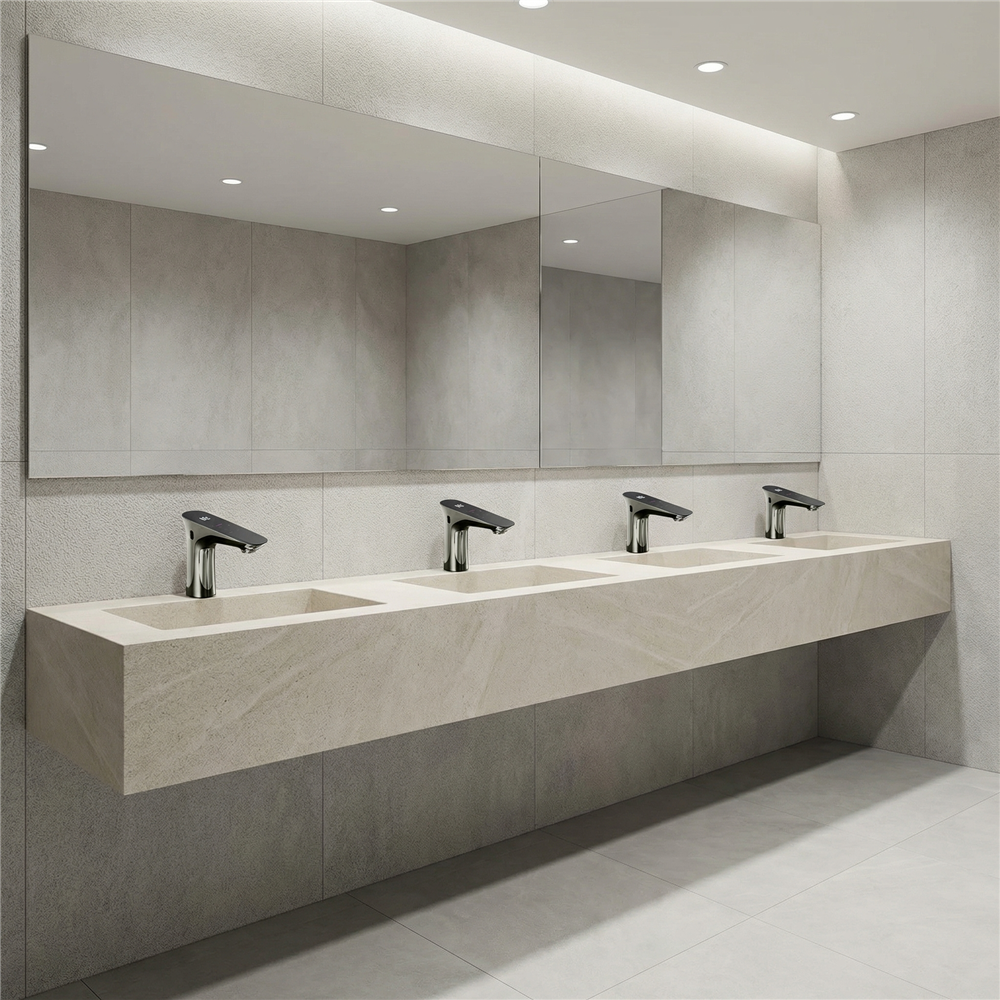
Water quality directly influences touchless faucet performance.
Sediment, mineral accumulation, and construction debris may obstruct inlet strainers, solenoid passages, and outlet devices.
A partially blocked outlet can cause weak water delivery even when the sensor and electrical components function correctly.
Technicians should inspect accessible strainers and removable outlets according to manufacturer service procedures, isolating the water supply before disassembly.
Read More Read Less
Inspect Solenoid Valves and Power Systems
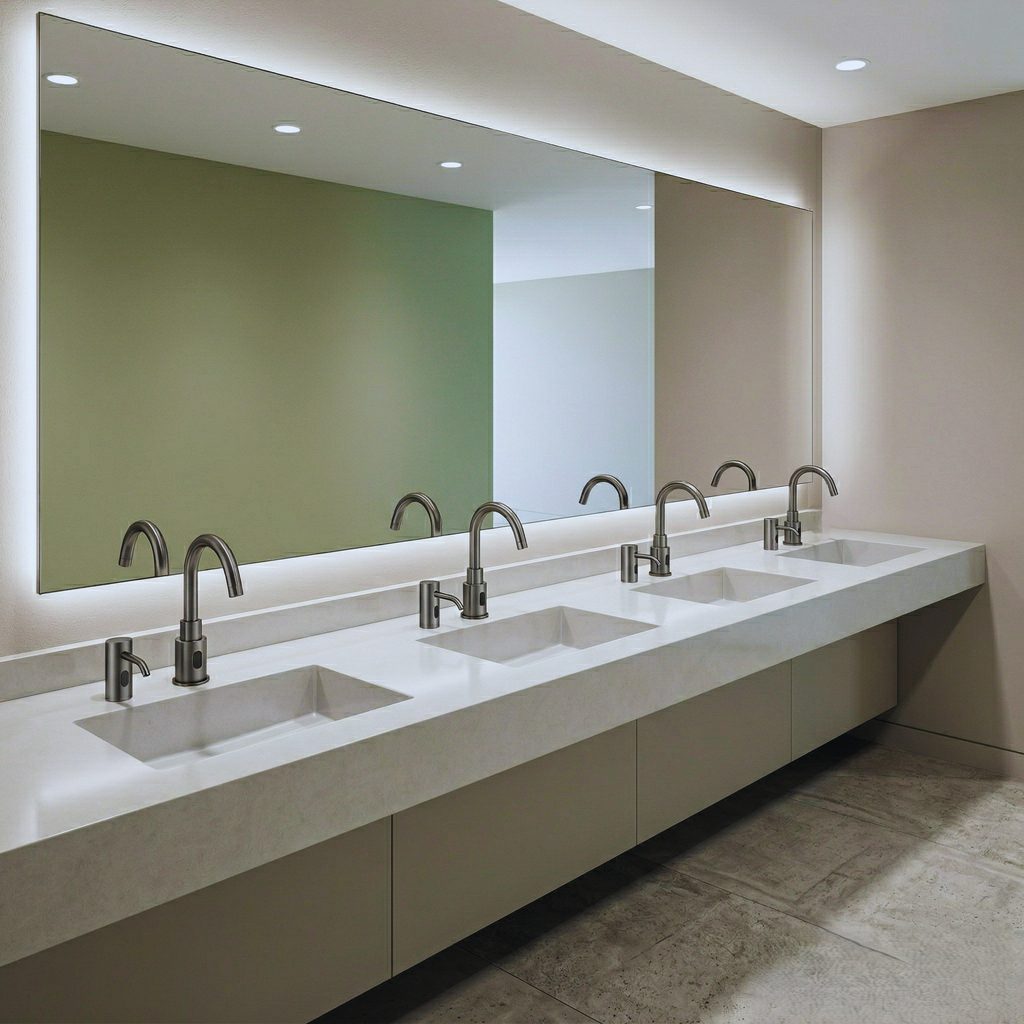
The solenoid valve controls water movement through the faucet and is a critical component of automatic shutoff.
Valve problems can arise from sediment, damaged seals, electrical faults, or mechanical wear.
Continuous running, dripping after shutdown, and inconsistent water delivery warrant investigation.
Read More Read Less
Preventive Maintenance Chart
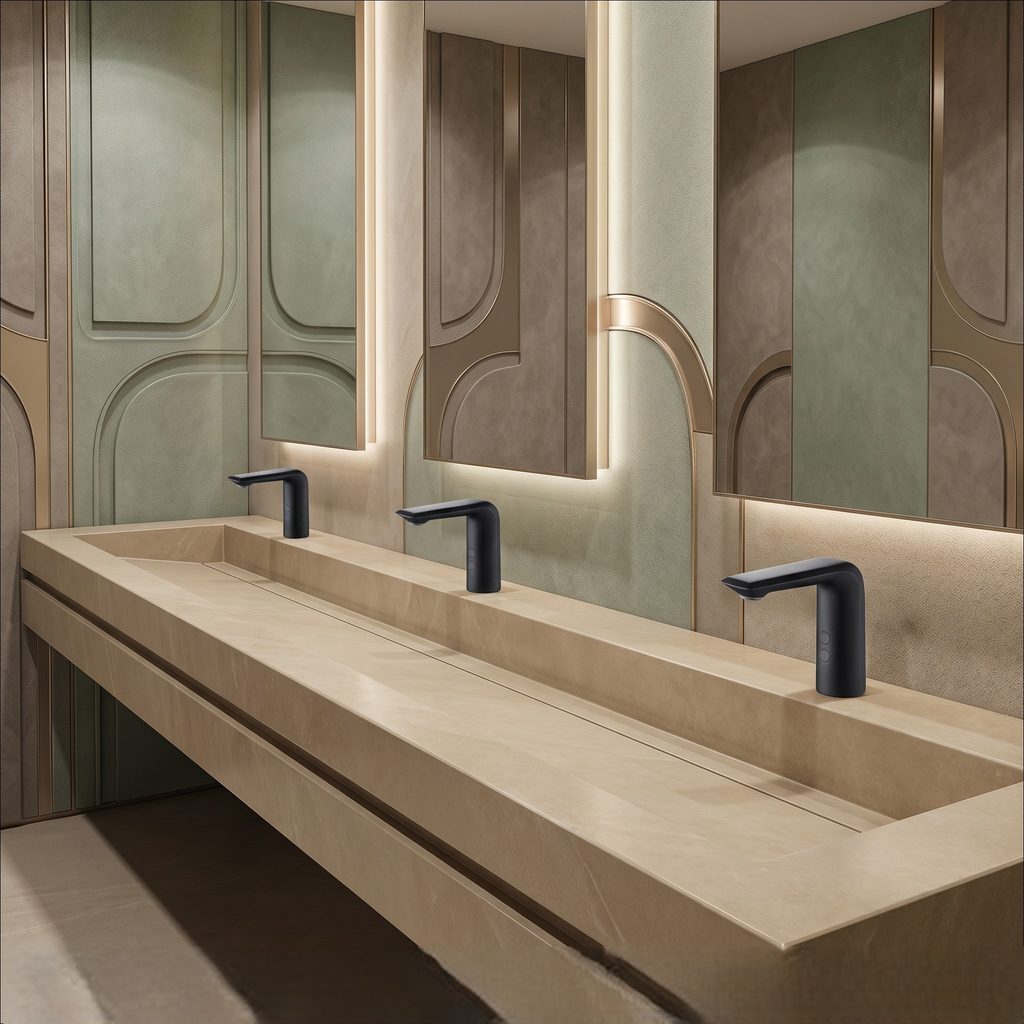
A structured inspection program helps facility teams identify developing problems before they interrupt restroom availability.
The following chart presents suggested starting intervals for typical commercial installations. Actual frequencies should follow manufacturer requirements, water conditions, usage intensity, and facility risk assessments.
| Maintenance Activity | Suggested Frequency | Performance Objective |
|---|---|---|
| Sensor cleaning and activation testing | Weekly | Reliable hand detection |
| Visible leaks and shutoff inspection | Weekly | Reduce uncontrolled water loss |
| Outlet and aerator inspection | Monthly | Maintain consistent flow |
| Inlet strainer assessment | Quarterly or symptom-based | Prevent sediment restriction |
| Power and battery condition review | Quarterly | Reduce electrical failures |
| Solenoid and mixing-system review | Semiannually | Confirm valve and temperature performance |
| Full asset and service-history audit | Annually | Improve lifecycle planning |
Read More Read Less
Case Reference: Commercial Office Restroom
Consider a hypothetical office building operating 48 commercial touchless faucets across multiple restroom groups.
During routine inspections, maintenance personnel discover three fixtures experiencing unintended additional water flow because of sensor interference or delayed valve closure.
Assume each affected faucet operates unnecessarily for 12 minutes daily at 0.5 GPM over 26 operating days.
Illustrative monthly excess water use:
Read More Read Less
Protect Water Quality and User Safety
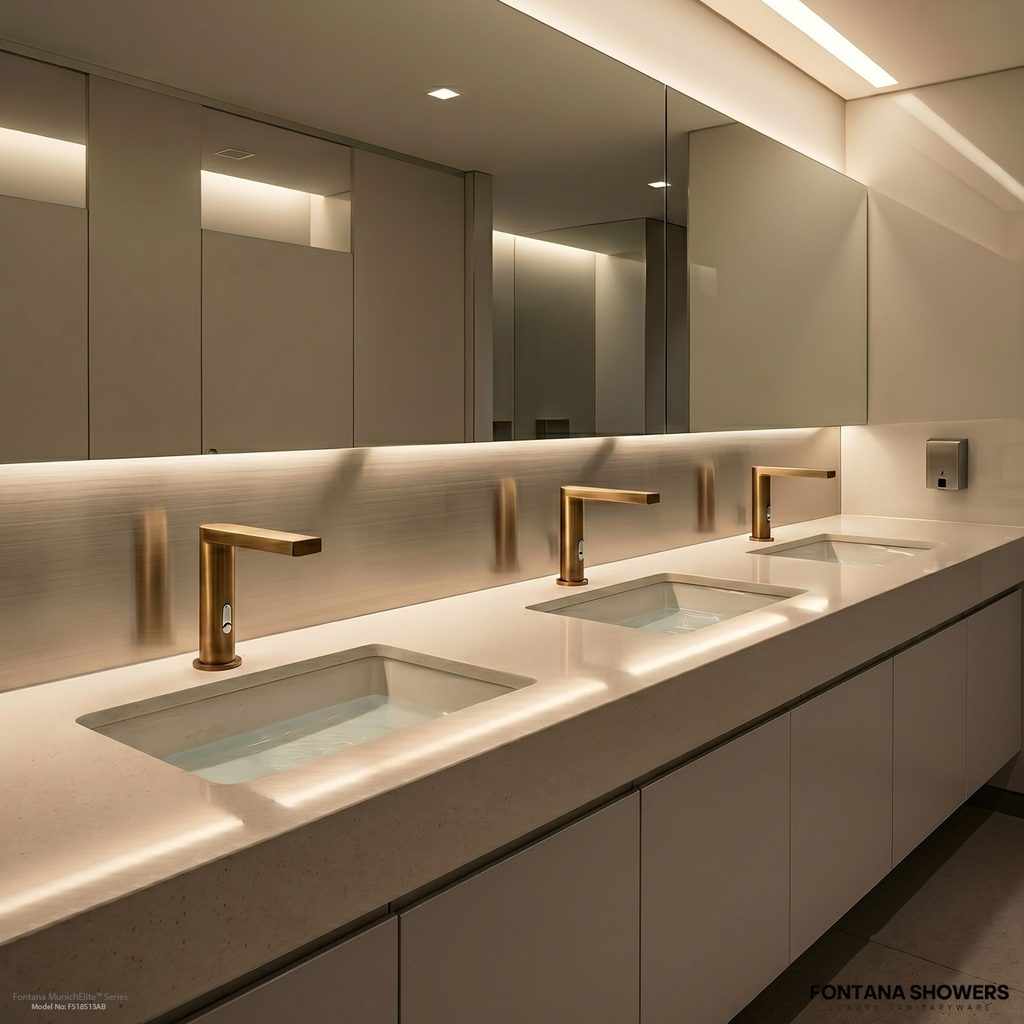
Touchless technology reduces the need to operate faucet handles, but it does not independently eliminate microbial risks within building plumbing systems.
Facility maintenance must also consider water stagnation, outlet contamination, temperature control, and splash behavior.
Read More Read Less
Document Maintenance for AEC Performance
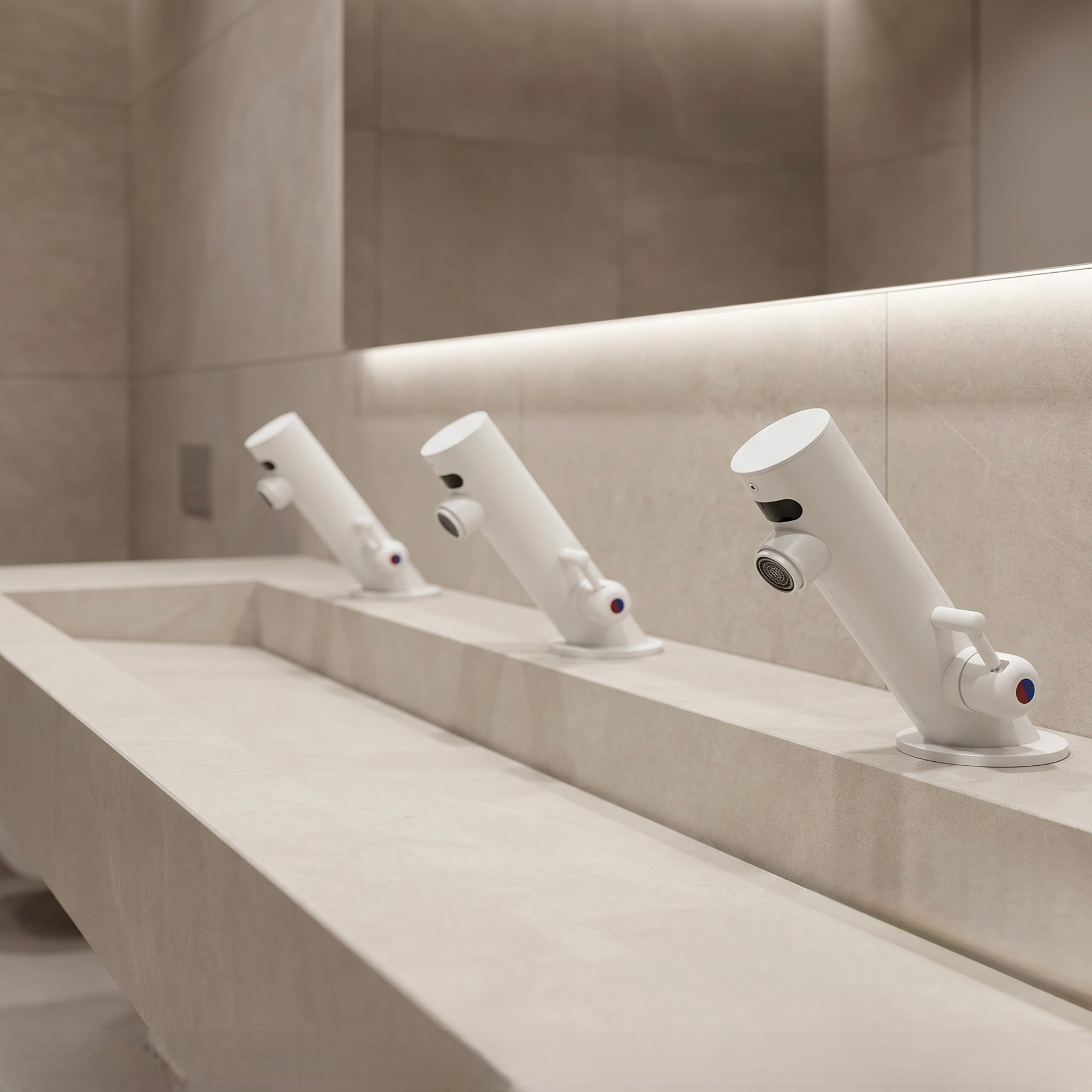
An effective maintenance program depends on traceable documentation.
Facility teams should record fixture model numbers, installation locations, power configurations, rated flow rates, replacement components, sensor adjustments, and inspection dates.
These records support troubleshooting, warranty administration, future renovations, and component standardization.
Read More Read Less
Conclusion: Maintenance Protects Performance
Maintaining commercial touchless faucets is an ongoing engineering and facility-management responsibility.
Consistent sensor cleaning, hydraulic inspection, power verification, solenoid servicing, and performance documentation help preserve reliable operation and reduce avoidable service interruptions.
For AEC professionals, the strongest approach begins during specification: select serviceable systems, coordinate access, verify technical documentation, and establish realistic maintenance procedures.
A well-maintained touchless faucet is more than a convenient fixture. It is a dependable component of a coordinated, efficient, and resilient building plumbing system.