
Touchless Faucets for Restaurants and Food Service Handwashing Stations
Food service handwashing stations need more than a nice-looking faucet. Commercial touchless restaurant faucets can support fast handwashing, reduce handle contact, control unnecessary water use, and withstand everyday operation in preparation areas, dish rooms, service zones, employee wash areas, and public restrooms.
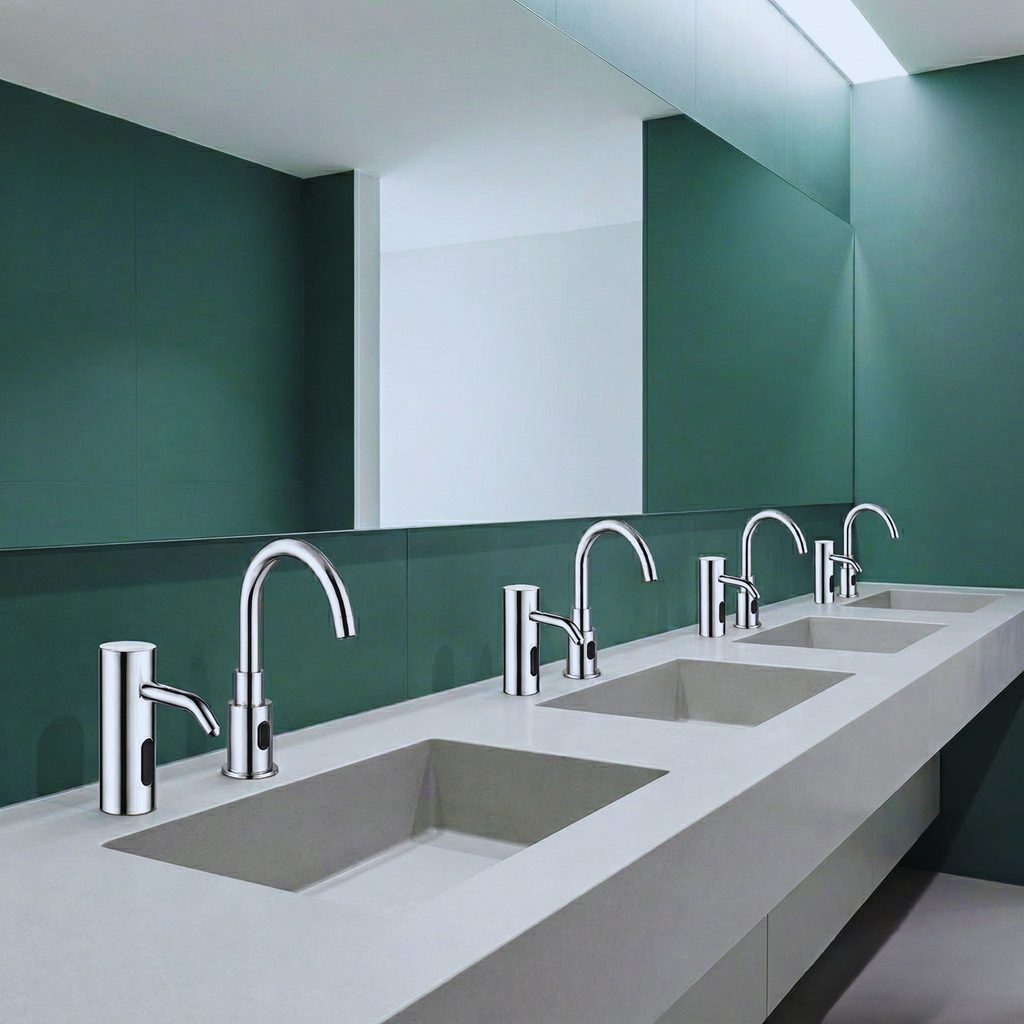
Standard Handwashing Stations
A commercial deck-mounted sensor faucet with a durable outlet, reliable sensor, automatic shutoff, and an appropriate handwashing flow rate works well for many restaurant hand sinks.
Back-of-House Kitchens
Wall-mounted and high-clearance touchless faucets can help keep the sink deck easier to clean while providing practical clearance around stainless commercial handwashing basins.
High-Traffic Operations
Hardwired commercial sensor faucets can reduce routine battery maintenance in facilities where handwashing stations operate throughout the day.
Why Touchless Faucets Matter in Restaurant Handwashing
In restaurants, handwashing is an important food-safety control point. A touchless faucet does not replace proper handwashing procedures, but it removes a frequently touched control surface and can make a station easier to operate during busy service periods.
The objective is to make handwashing convenient, repeatable, and easy to maintain. A properly selected faucet should activate reliably, shut off automatically, provide suitable water delivery, fit the sink geometry, and allow practical service access for maintenance teams.
Restaurant faucet selection should consider the station location, plumbing configuration, expected traffic, water-temperature strategy, cleaning practices, electrical availability, and applicable local requirements.
Touchless Faucet Types for Restaurant Applications
Different mounting, power, and water-control configurations are suited to different restaurant and food-service handwashing environments.
Deck-Mounted Sensor Faucet
Suitable for standard hand sinks, employee restrooms, front-of-house wash areas, and retrofit projects. The faucet installs through the sink deck or countertop and can provide convenient access to electronic and plumbing components.
- Useful for existing sink replacements
- Compact commercial appearance
- Compatible with low-flow outlet configurations
- Vandal-resistant outlets can be useful in public areas
Wall-Mounted Sensor Faucet
Suitable for preparation zones, warewashing areas, compact kitchens, and stainless wall-mounted hand sinks. Moving the faucet body away from the deck can simplify wipe-downs around the basin.
- Practical for back-of-house stations
- Leaves more of the sink deck open
- Works well with stainless commercial hand sinks
- Requires coordinated wall rough-in dimensions
Gooseneck Sensor Faucet
A high-arc or gooseneck configuration can provide additional clearance at larger handwashing stations. Spout geometry should still direct water toward the basin drain area without excessive splashing.
- Provides additional hand clearance
- Useful with deeper stainless basins
- Can be paired with controlled-flow outlets
- Spout reach should match basin dimensions
Hardwired Sensor Faucet
Appropriate for high-volume restaurants, institutional food service, stadium concessions, cafeterias, and multi-station commercial kitchens where reducing routine battery replacement is important.
- Suitable for frequent daily activation
- Reduces battery replacement requirements
- Useful for new construction and major renovations
- Requires coordinated electrical access
Battery-Powered Sensor Faucet
Battery-powered configurations can simplify retrofit projects where electrical service is not readily available near the sink.
- Useful for retrofit installations
- Does not require a nearby electrical outlet
- Suitable for smaller food-service locations
- Requires an established battery-maintenance schedule
Sensor Faucet With Mixing Valve
A mixing-valve configuration can provide controlled tempered water at staff handwashing stations where both hot and cold water supplies are available.
- Supports consistent water temperature
- Useful for staff handwashing areas
- Can simplify temperature management
- Valve location should remain serviceable
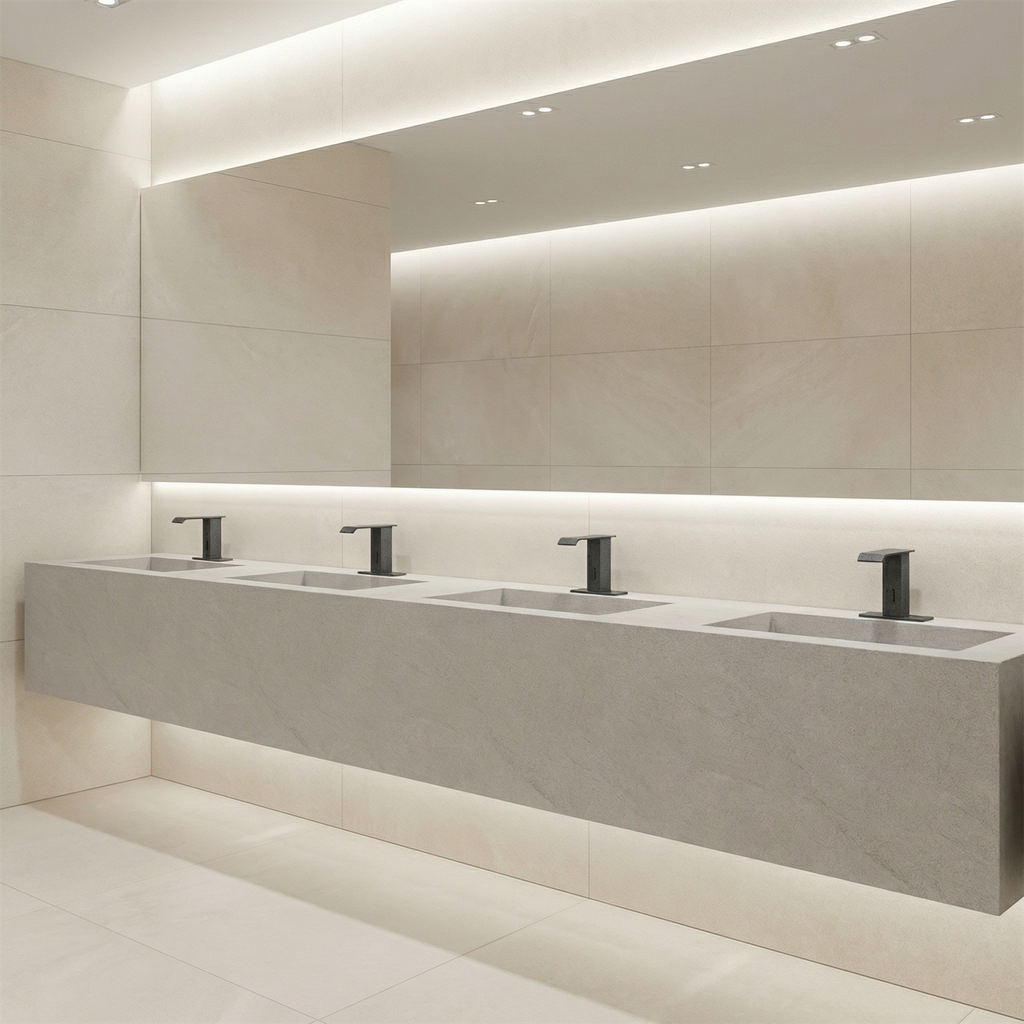
Restaurant Faucet Selection Chart
Use the comparison below to match faucet configuration with the intended handwashing station.
| Faucet Type | Typical Location | Flow Range | Primary Benefit | Specification Check |
|---|---|---|---|---|
| Deck-mounted sensor faucet | Standard hand sinks and restrooms | 0.5 to 1.5 GPM | Straightforward retrofit and compact installation | Deck holes, splash pattern, service access |
| Wall-mounted sensor faucet | Preparation areas and dish rooms | 0.5 to 1.5 GPM | Clearer sink deck for cleaning | Wall rough-in, projection, service access |
| Gooseneck sensor faucet | Larger stainless hand sinks | 0.5 to 1.5 GPM | Additional handwashing clearance | Spout reach, basin depth, splash control |
| Hardwired sensor faucet | High-volume food-service environments | 0.5 to 1.5 GPM | Reduced battery maintenance | Transformer and electrical coordination |
| Battery sensor faucet | Cafes, retrofits, and smaller kitchens | 0.5 to 1.5 GPM | Flexible installation without nearby power | Battery location and replacement access |
| Sensor faucet with mixing valve | Staff handwashing stations | 0.5 to 1.5 GPM | Controlled tempered-water delivery | Valve access and local requirements |
Technical Selection Checklist
Review these items before specifying or purchasing a restaurant touchless faucet.
Commercial Certification
Confirm that the faucet is appropriate for commercial plumbing and potable-water applications. Required certifications can depend on jurisdiction, project type, and local code requirements.
Sensor Reliability
Review sensor range, activation response, shutoff behavior, and the manufacturer’s installation requirements. Reliable activation is particularly important during high-use service periods.
Flow Control
Commercial handwashing stations commonly use controlled-flow outlets. Select the flow rate according to basin dimensions, applicable requirements, water pressure, and splash performance.
Service Access
Maintenance teams should be able to reach batteries, filters, solenoids, aerators, controllers, and mixing components without unnecessary sink disassembly.
Splash Control
Check spout reach, basin depth, outlet type, water pressure, and sensor position so the faucet directs water into the usable basin area rather than onto surrounding surfaces.
Accessibility Coordination
In accessible spaces, coordinate the complete lavatory or sink installation, including clearances, reach requirements, pipe protection, controls, and surrounding circulation space.
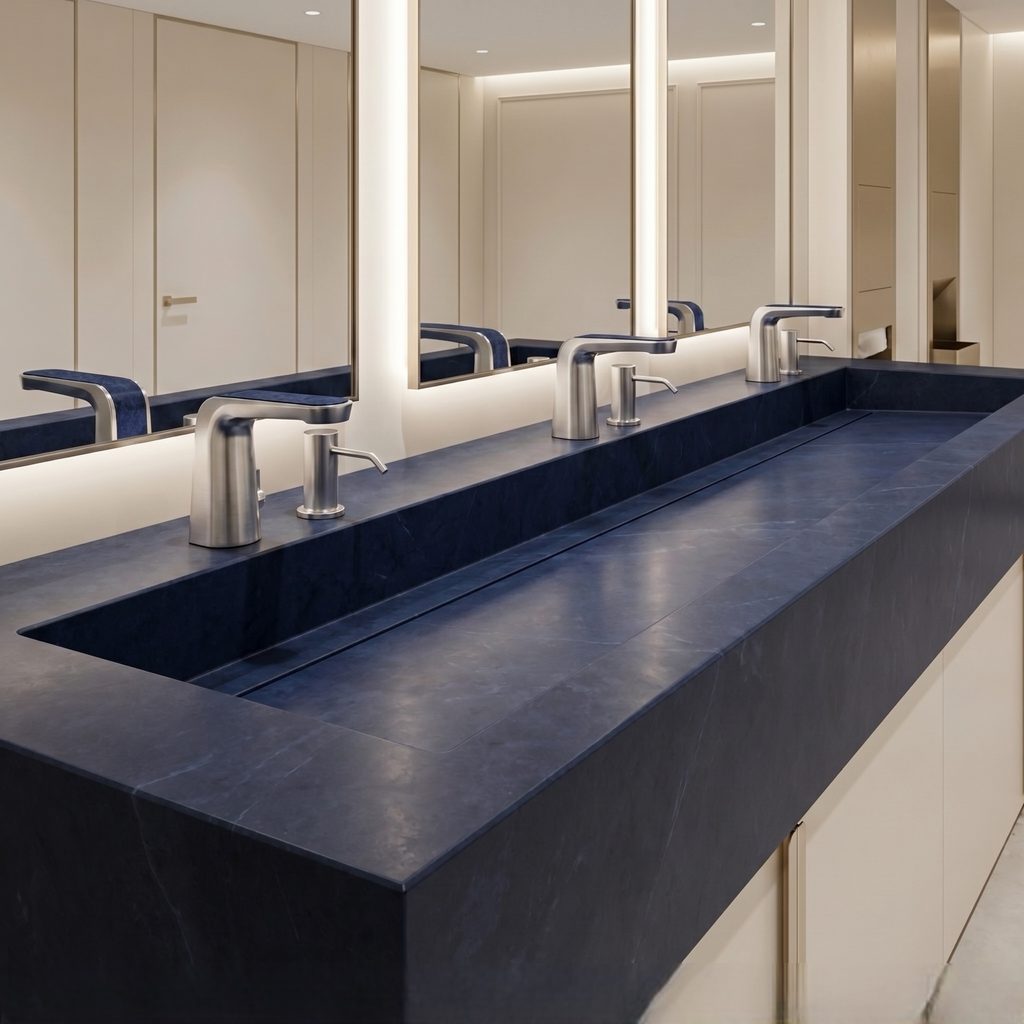
Restaurant Application Examples
Faucet configuration should reflect the environment, traffic level, sink geometry, and maintenance requirements of each food-service space.
Fast-Casual Kitchen
A wall-mounted or deck-mounted commercial sensor faucet with controlled splash, simple service access, and a durable finish can support repeated handwashing between food preparation, cleaning, and service tasks.
Fine Dining Back-of-House
A hardwired sensor faucet with temperature-control provisions can provide dependable operation and support planned maintenance in continuously operated kitchens.
Food Truck or Kiosk
Compact battery-powered sensor faucets can be considered where the mobile handwashing installation and water systems meet applicable local requirements.
Dish Room
Wall-mounted touchless faucets can keep the sink deck clear while providing a durable handwashing fixture for wet, high-activity service environments.
Employee Restroom
Deck-mounted sensor faucets with automatic shutoff and controlled flow can support frequent employee use while simplifying fixture operation.
Public Handwashing Area
Durable sensor faucets with accessible operation, serviceable components, and vandal-resistant outlet options can support customer-facing restroom applications.
Practical Selection Guidance
Restaurant touchless faucets should be selected according to the installation rather than a general product ranking. Important considerations include commercial-grade construction, appropriate water flow, automatic shutoff, sensor reliability, service access, potable-water compatibility, outlet durability, and the available power source.
Wall-mounted configurations can be useful in preparation and dishwashing areas where keeping the sink deck clear is desirable. Deck-mounted faucets can simplify many standard sink installations and retrofits. Hardwired power can reduce routine battery maintenance in heavily used facilities, while battery-powered models can make some retrofit installations more practical.
Water-Use Considerations
Automatic shutoff can help limit unnecessary run time when users move their hands outside the sensor detection zone.
In a restaurant with frequent handwashing cycles, small reductions in unnecessary run time can accumulate over daily operation. Actual water use depends on faucet flow rate, sensor timing, water pressure, handwashing duration, user behavior, and maintenance condition.
Water-efficiency decisions should therefore consider both rated flow and how the complete faucet-and-sink installation performs during normal operation.
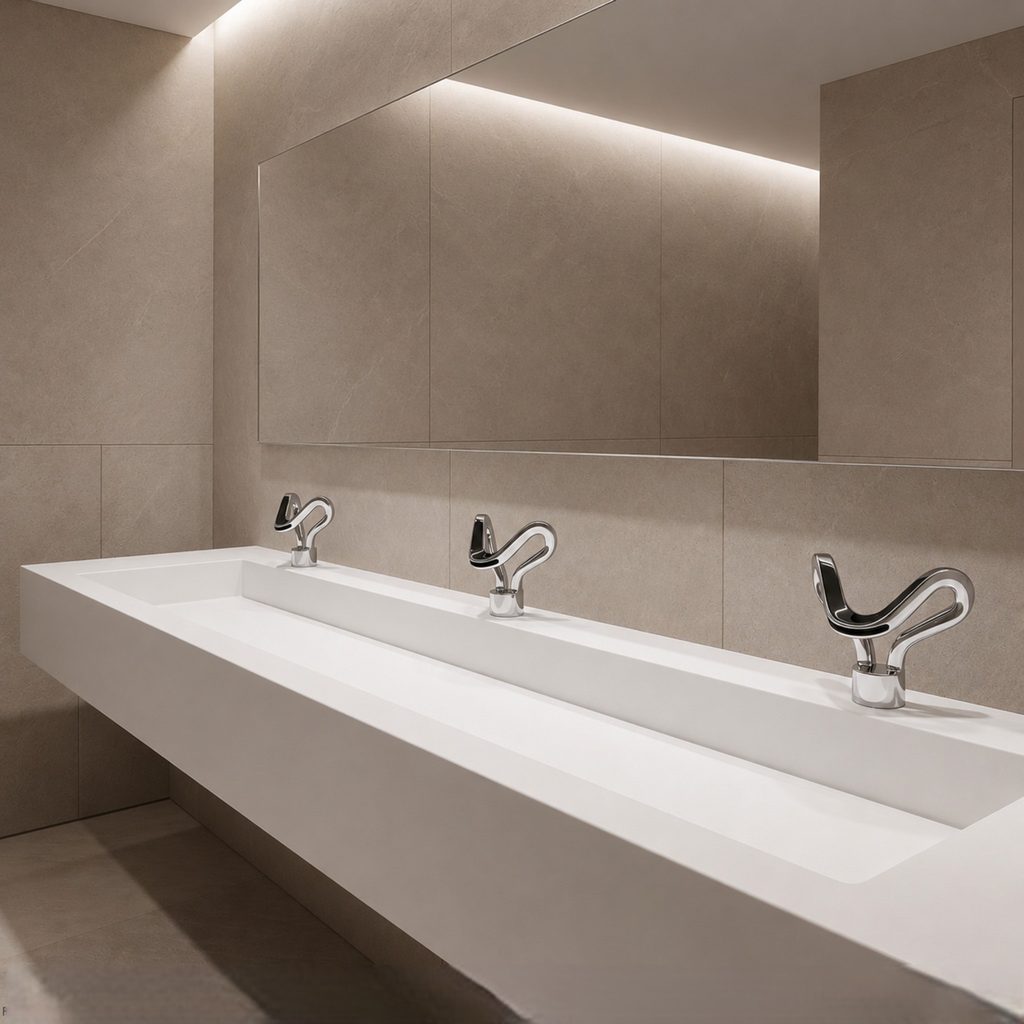
Installation Planning
Coordinate the faucet, sink, water supply, power source, and service access before installation.
Measure the Sink
- Mounting-hole diameter
- Deck or wall thickness
- Spout reach relative to the basin
- Basin depth and splash potential
- Clearance behind and below the sink
Plan the Power
- Battery compartment location
- Transformer or electrical connection location
- Controller accessibility
- Shutoff-valve access
- Solenoid service clearance
Check Water Delivery
- Hot and cold supply availability
- Mixing-valve configuration
- Applicable handwashing temperature requirements
- Pressure and flow compatibility
- Aerator or laminar-flow outlet type
Coordinate the Handwashing Station
- Soap dispenser placement
- Paper towel or hand-drying access
- Required handwashing signage
- Unobstructed sink access
- Routine faucet and sensor cleaning
Frequently Asked Questions
Common specification and installation questions about touchless faucets for restaurant handwashing stations.
Are touchless faucets required in restaurants?
Requirements vary by jurisdiction. Food-service regulations generally focus on providing approved and properly equipped handwashing facilities. Touchless operation can reduce handle contact and simplify faucet use, but final requirements should be confirmed with the local authority having jurisdiction.
What flow rate is appropriate for a food-service hand sink?
Commercial handwashing faucets are available in several flow configurations, including low-flow options. The appropriate rate depends on local requirements, sink dimensions, water pressure, splash performance, and the intended application.
What is the difference between battery and hardwired sensor faucets?
Battery-powered faucets can simplify retrofit installations where electrical service is unavailable. Hardwired faucets can reduce routine battery replacement in frequently used facilities and can be coordinated during new construction or major renovation.
Should a restaurant hand sink use a mixing valve?
A mixing valve can provide controlled tempered water where both hot and cold supplies are available. The required configuration should be coordinated with the plumbing design and applicable local requirements.
What should be checked before selecting a touchless faucet?
Confirm sink dimensions, faucet mounting type, spout reach, water supplies, power availability, sensor location, service access, applicable certifications, expected traffic, and maintenance requirements.
Technical and Regulatory References
These resources provide additional information related to food-service handwashing, plumbing, water efficiency, faucet certification, and accessibility.